
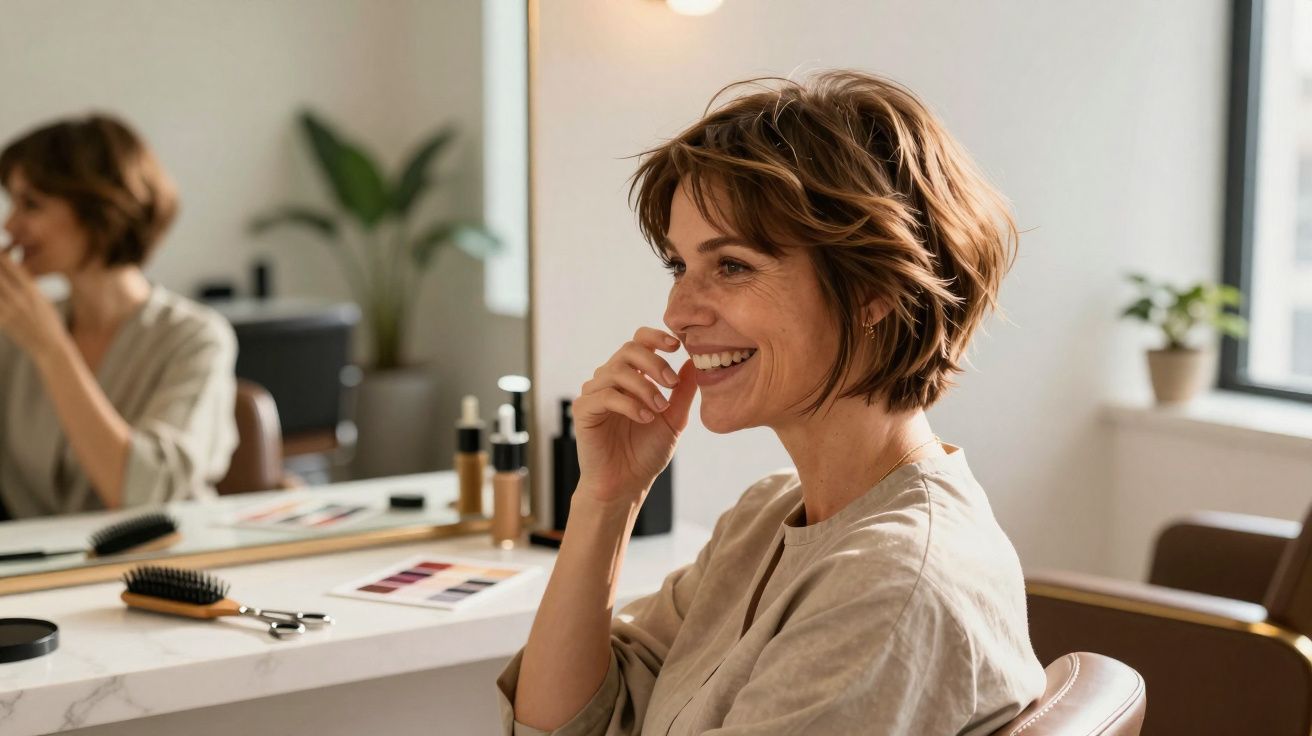
Going ultra-short after 50 can seem like a gamble, but the right pixie cut can quietly define your features and take the edge off time-earned lines.
In salons from London to New York and LA, stylists say the pixie cut has become the quickest route to a fresher-looking face after 50. It isn’t the length alone that makes the difference; it’s the way the cut is shaped, texturised and coloured to work with your individual features.
Why the pixie cut is booming after 50
From social feeds and red carpets to everyday Zoom meetings, women in their 50s, 60s and beyond are trading mid-length styles for crisp, light pixies. The shift isn’t purely about ease. A thoughtfully cut pixie can visually lift the face, show off the neck and spotlight the eyes - three areas closely tied to how old (or young) we appear.
"When a pixie is tailored to your bone structure, it can act like a soft-focus filter for the face, without touching a needle or scalpel."
Crucially, today’s pixie looks nothing like the old “helmet” cliché. Modern versions are intentionally layered, feathered, asymmetric and a little imperfect. That natural-looking movement is what keeps them feeling current and youthful rather than stuck in the past.
Picking the right pixie cut after 50 for your face and lifestyle
Choosing a version of the pixie cut that suits your features
“Pixie” is an umbrella term for several different shapes. Knowing the main options makes it easier to ask for what you actually want in the chair.
- Soft classic pixie: Kept short through the back and sides, with extra length on top and gentle layers. Particularly flattering on round or oval faces.
- Textured grown-out pixie: A touch longer overall with plenty of feathering. A smart choice if you feel wary about going very short for the first time.
- Tapered pixie: Closely cropped at the nape and sides with a more defined top. Suits strong jawlines or longer necks.
- Hybrid bixie/boxie cuts: A bob–pixie blend with more length at the front. Useful if you want an anti-ageing lift but still prefer some hair to move and style.
Bringing photos can help, but a strong consultation should centre on what you’d like to emphasise most - cheekbones, eyes, lips or neck - and then tailor the cut around that priority.
How much styling time do you realistically give your hair?
A pixie can be either beautifully low-maintenance or surprisingly hands-on, depending on your hair texture and daily habits. For instance, fine straight hair often falls into place with a quick blast from the dryer and a small amount of product. Thicker or curlier hair may need more shaping to keep the silhouette clean and defined.
"Before scissors touch hair, be honest with your stylist about how many minutes you’ll spend styling on a weekday morning."
If you prefer to air-dry completely, ask for a pixie cut designed to work with your natural texture - not one that depends on round brushes or straighteners to look polished.
Four pro tricks that make a pixie cut look 10 years younger
Build movement through the front
The front section delivers much of the anti-ageing impact. A longer, airy fringe that angles slightly to one side brings energy into the cut and draws the eye straight to your eyes.
- It grazes forehead lines rather than putting them on display.
- It softens the eye area, where skin can look more tired.
- It can suggest higher cheekbones when it curves into the sides of the face.
Stylists often shape this part on dry hair so they can see precisely how strands land across lines, lids and brows. The aim isn’t to cover your face, but to skim and subtly blur the areas you’d rather not spotlight.
Layer generously for lift and volume
A flat, one-length short cut can make thinning more obvious and can also make the face look heavier. After 50, hair density often shifts, particularly around the crown and hairline.
"Generous layering through a pixie builds volume where hair has started to look sparse, and keeps the overall shape lively instead of stiff."
In a classic pixie cut, that shaping typically looks like this:
| Area | Recommended shape |
|---|---|
| Back of the head | Shorter and tapered to reveal the neck and “push” the head shape upwards |
| Around the ears | Slightly longer, softly cropped to avoid a harsh outline |
| Top section | Longest, with choppy layers for height and movement |
This kind of sculpting stops the cut from slumping into a flat cap shape. It can also help camouflage thinning by guiding hair over sparser areas.
Add subtle asymmetry for energy
Hair that’s perfectly symmetrical can read slightly formal. Introducing a small imbalance - a deeper side part, extra length on one side, or a sweeping fringe that leans left or right - gives an immediate sense of lift and vitality.
Stylists generally choose the direction of the asymmetry by looking at:
- Your natural parting and growth pattern.
- The side where your hair sits more smoothly.
- Which side of your face you prefer in photos.
That diagonal line helps the pixie cut trace the jawline and cheekbones, creating a lifted effect that tends to look youthful and photographs well.
Choose a feathered fringe that flatters most faces
A soft, texturised fringe is one of the most forgiving details at any age, and it’s especially helpful post-50. Rather than a heavy, blunt block, it’s about finer ends and small spaces between strands.
"A feathered fringe gently frames the face while pulling focus away from crow’s feet, eye bags or a lined forehead."
It also keeps your options open: wear it forward, sweep it sideways, or blend it into the rest of the cut when you’d rather show more forehead.
Pixie cut mistakes that can make you look older
The ultra-rigid “helmet” cut
One of the quickest ways to add years to a pixie is stripping out all movement. If the hair is cut to the same length everywhere, with little texture or layering, it can sit like a hard shell and exaggerate strong angles in the face.
Clues your pixie cut is drifting into “helmet” territory:
- The top feels weighty and sits flat.
- The sides fall straight down from the parting.
- Styling products make it stiffer rather than fuller.
To correct it, ask for soft internal layers and point-cut ends to break up the firmness and let the hair move again.
Overly strict styling and sharp partings
Slick sides, a razor-straight part and rigid gel can quickly turn a fresh pixie cut into something severe. Heavy control products can highlight the scalp, emphasise thinning and draw attention to any natural unevenness in facial features.
A modern, younger-looking pixie usually looks best with:
- Light mousse or a volumising spray at the roots.
- A flexible cream or paste through the ends.
- Fingers (not a fine-tooth comb) for the finishing touches.
The ideal finish is slightly undone, with a few irregular strands - the kind of imperfection that feels relaxed and up to date.
Flat, monotone colour
Even a perfectly executed cut can look lacklustre if the colour is too flat. One solid shade all over can make hair look dense and heavy, visually shortening the neck and pulling the face down.
"Soft contrast is your ally: a mix of tones just one or two shades apart lifts the complexion and adds depth without screaming “fresh dye job”."
Strong choices after 50 include:
- Fine highlights or lowlights threaded through the top.
- Subtle balayage around the face to reflect light.
- Tonal glosses that brighten natural grey rather than masking it completely.
Grey hair can look especially striking with a pixie cut when it’s glossy and multi-tonal, not dull or yellowed - and regular toning helps maintain that clarity.
Letting the shape overgrow
With short hair, structure disappears quickly. When the nape thickens and the fringe starts falling into your eyes, the whole cut can begin to droop - and the tidy, face-lifting effect goes with it.
Most stylists advise trims every four to six weeks for a pixie cut. That doesn’t always mean starting from scratch; it can be as simple as:
- Tidying the neckline.
- Re-texturising weighty areas on top.
- Dusting the fringe so it sits above or just on the brows.
This light upkeep keeps the style looking deliberate, rather than like an overgrown crop you’re simply putting up with.
Extra pointers: ageing, texture and confidence
Two terms come up repeatedly with pixie cuts: “tapering” and “degrading” (layering). Tapering is the gradual shortening of hair towards the neck or ears so the shape narrows smoothly instead of ending abruptly. Layering means cutting varied lengths within the same area so strands can overlap and move, adding volume where growth has slowed.
Picture three women in their late 50s: one with fine, thinning hair; one with thick waves; and one leaning into silver. Each of them can wear a pixie cut, but the fine detail should change. The first typically needs careful layering and lightweight products so the style doesn’t collapse. The second often looks best when bulk is removed at the sides while keeping a softer, curlier top. The third can look particularly bold with a cool gloss and a sharp nape, allowing the silver to work like jewellery against her skin.
There’s a psychological side as well. Going short can feel like a declaration that you’re no longer using hair as a shield. Many women say a well-cut pixie cut after 50 doesn’t just brighten the face; it also nudges their style forward - from statement earrings to cleaner, sharper tailoring. When the haircut and wardrobe feel aligned, the “10 years younger” effect becomes less about chasing youth and more about looking confidently current.



Comments
No comments yet. Be the first to comment!
Leave a Comment