
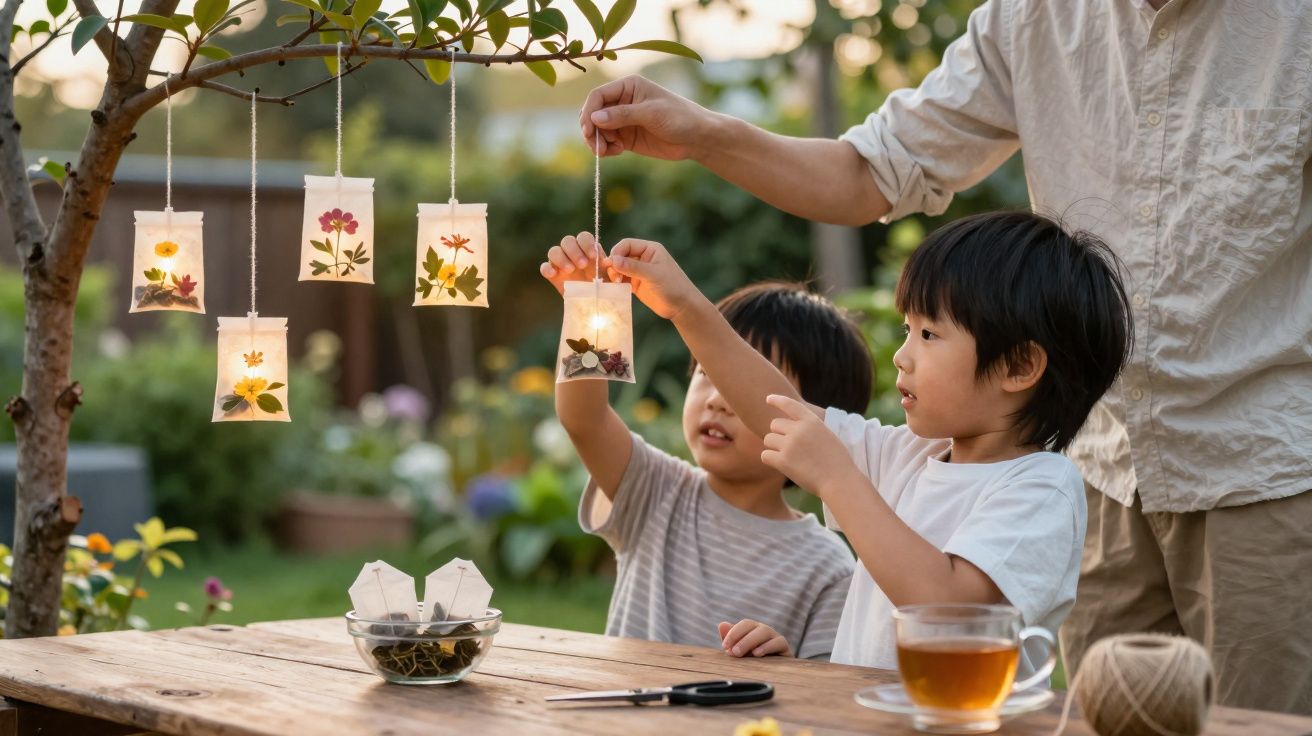
Tea bags tend to go in the bin almost the moment you’ve finished brewing. It’s a pity, really, because their faintly translucent paper, warm amber tint and handy size make them ideal for atmospheric garden lights. A DIY idea from the United Kingdom shows how used tea bags can be turned into enchanting lanterns with very little effort - and without spending a fortune on solar fairy lights.
Why used tea bags cast such a beautiful glow
If you drink plenty of tea, you already have more than enough raw material: used paper tea bags. Once the tea leaves are removed and the bag is dried, you’re left with delicate paper with a gentle brownish stain - and that’s exactly what makes this upcycling trick so appealing.
"The paper of a dried tea bag works like a natural filter: it softens harsh light and creates a gentle, golden glow."
Another bonus: you don’t pay anything extra. While designer lanterns and solar garlands can quickly become expensive, these lights rely almost entirely on items you already have at home. That saves money and cuts down on waste - a double benefit that many people find genuinely satisfying.
Thousands of photos of these handmade lights are now shared on social media. In plenty of kitchens, you’ll even spot a jar beside the kettle where rinsed, dried tea bags are collected. A simple tea break becomes a little stockpiling routine for the next crafting session.
Step by step: making lanterns from used tea bags
For a small, cuboid lantern you’ll need at least eight used tea bags. The more you have, the larger you can make your light. The key point is to use bags made from paper, not plastic-like mesh.
Materials to gather
- used paper tea bags (well rinsed and fully dried)
- white craft glue, diluted with a little water
- pressed flowers or leaves, flat paper snippets or confetti
- thin wooden sticks, skewers or lolly sticks
- LED tealights or a battery-powered string of lights
- optional: a hot glue gun for stronger joins
Preparing the tea bags: the most important step
To turn the bags into sturdy “windows”, a little preparation is essential:
- Right after brewing, carefully cut open the tea bag along one side.
- Remove the tea leaves, then give the paper a quick rinse with water.
- Open the paper out completely and lay it flat on kitchen roll.
- Leave it to dry thoroughly - ideally overnight - so no moisture remains.
Once fully dry, the papers often look lightly marbled in brown and beige tones. That natural pattern later creates a lively glow, quite different from the flat look of plain white paper.
Turning flat tea bags into a glowing mini tower lantern
Creating the decoration - flowers, leaves and silhouettes for tea bag lanterns
Now for the creative part. Each tea bag becomes a semi-transparent picture panel:
- Use a brush to apply a thin layer of diluted glue to the tea bag paper.
- Arrange pressed flowers, fern tips, grasses or paper snippets on top.
- Brush another light coat of glue over everything to hold the pieces in place.
- Allow it to dry completely, until the paper feels a little firmer and more stable.
Each finished panel will form one side of the lantern. If you prefer a more minimal look, leave some bags undecorated - the plain paper still produces a calm, attractive lighting effect.
Building the frame and assembling the lantern
To make the lantern stand securely, the paper needs a frame. Wooden sticks work particularly well:
- Cut the wooden sticks to match the edge length of the tea bag paper.
- Glue four sticks into a rectangle to create a frame.
- Fix the tea bag paper to the back of the frame, or sandwich it between two frames.
- Make four of these panels for the lantern’s sides.
- Join the sides into a cuboid using hot glue or strong craft glue.
"Important: when you’re working with paper, there must be no open flame inside the lantern. Use only LED tealights or battery-powered light sources."
Finally, place an LED tealight inside, or thread a small string of lights through the tower. The amber tone of many LEDs enhances the tea-stained warmth of the paper.
Where handmade tea bag lights look best in the garden
The finished lanterns are delicate because they’re mostly paper. Even so, they can be used outdoors very effectively - as long as you’re sensible about placement and weather.
Good outdoor spots
- on the garden table as a central mood light
- on windowsills or along the top of low walls
- on steps and stairs to mark pathways softly
- hanging under a pergola or on a balcony, well sheltered from rain
If you use the lanterns outside, it’s best to bring them back indoors after the gathering. Damp air, wind and dew can quickly make the paper ripple or turn brittle. Stored in a dry place, the lights last much longer and can be reused over several summer evenings.
A family project instead of a throwaway habit
In some homes, this idea has already turned into a regular ritual: when tea is brewed, the used bags no longer go straight into the bin, but into a collecting jar. Children can gather flowers, press them, and help later with decorating. Adults can handle the glue, frame building and the electrics.
That’s how a simple hot drink becomes a small creative cycle: drink tea, save the bags, build a light. Especially on rainy afternoons or during school holidays, it’s an easy craft activity that produces a visible result by evening.
What to consider for safety and durability
Paper and light can work beautifully together, but a few basic rules matter. Stick to them and you’ll enjoy your lanterns for a long time.
- LEDs only: no real candles, no flame torches, and no incense nearby.
- Keep them dry: store the lanterns indoors after use, away from moisture.
- Use sturdy frames: choose slightly thicker wooden strips so the tower doesn’t topple with every breeze.
- Watch the power source: replace batteries in time so they don’t leak.
If you want to use the lanterns in the garden more often, you can lightly seal the wooden frames with a water-based clear varnish. That helps protect the wood from humidity without changing the look too much. The tea bag paper itself should be left untreated so it stays nicely translucent.
Variations for balcony, terrace and indoors
The basic idea is easy to adapt. On a balcony, slim, elongated lanterns work well because they take up very little space. Indoors, small light boxes look lovely on a windowsill - for example, with winter-themed paper motifs when it gets dark early outside.
You can also mix different types of tea: black tea, green tea and rooibos each stain the paper slightly differently. It’s worth playing with size, too: stacking two rows of bags creates a taller column, while smaller tea bags make a more delicate table light.
At its heart, the idea highlights how much potential sits in everyday leftovers. Something that would normally be treated as pure waste becomes, with a few simple steps, an object that creates atmosphere and turns into a talking point at the next garden gathering. If you love tea, you’ve almost always got the materials close at hand.





Comments
No comments yet. Be the first to comment!
Leave a Comment