
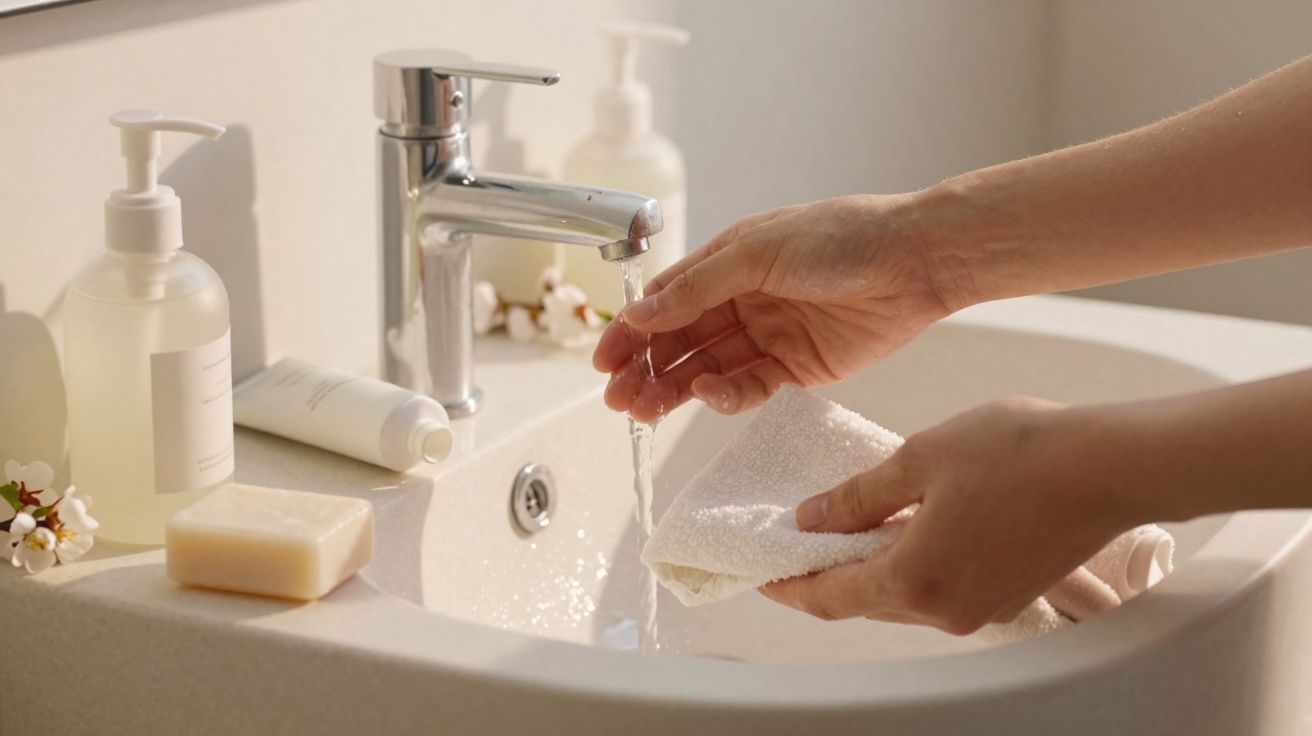
The real game-changer is often not in the tube at all, but right there by the sink.
A lot of people spend a small fortune on hand creams through winter and early spring - then feel cheated when their skin still feels tight, stings and splits. The underlying reason is surprisingly simple: in most cases it is not the “wrong” cream, but an unhelpful hand-washing routine. If you adjust a few key habits, you typically need far fewer products - and often end up with softer hands than before.
The “more is more” myth with dry hands
When our hands get dry, most of us respond on autopilot: more grease, more cream, more products. One tube in the car, one by the bed, another at work - and yet the knuckles crack and the skin stays rough.
That constant reapplying is driven by a common misunderstanding. We only see the outcome - tight, dry skin - and try to fix it with ever richer textures. Meanwhile, we forget that the skin has a highly effective protective layer of its own.
"The skin has its own protective barrier. If you destroy it every day by washing, no cream in the world can save it long-term."
This protective layer - the so-called hydrolipidic film - is made up of water and fats. It locks moisture into the skin and shields it from irritants. When it is repeatedly stripped away, a vicious cycle starts:
- harsh washing dissolves fats and weakens the barrier
- the skin feels dry and tight
- you apply cream and it improves briefly
- the next wash damages the barrier again
The result is that the skin becomes used to an artificial “lipid top-up” and feels increasingly sensitive without cream. If you tackle the cause instead - namely, how you wash your hands - you can interrupt the cycle.
Water too hot, hands too dry: what research says about the hand-washing routine
One of the most overlooked factors sits right at the basin: the temperature control. Many people turn the tap almost fully hot because warm water feels “cleaner”. Others opt for icy water, either to save energy or on principle. Both extremes are unkind to the skin.
Research organisations such as the French institute Inserm recommend a temperature of around 30 to 35 degrees for hand hygiene. In that range, the interaction between soap, water and skin is at its gentlest.
"Gentle hand care starts with lukewarm water - not with the most expensive cream."
What the wrong temperature does:
- Water that is too hot (above roughly 35–40 degrees): strips lipids from the outer skin layer, leaves the barrier porous, speeds up moisture loss, and makes skin brittle.
- Very cold water: may preserve skin fats a little better, but makes soap lather less effectively. People then rub harder and for longer - which irritates the skin through mechanical friction.
So the simplest lever for healthier hands is to set the water so it feels comfortably lukewarm. No burning, no shivering. This small adjustment reduces stress on the skin with every single wash.
The right cleansing bar: why soap is not all the same for dry hands
Temperature matters - but the cleansing product matters just as much. Traditional, strongly de-greasing soaps with a high pH clean thoroughly, but they can remove almost all of the skin’s natural oils.
That is why dermatologists increasingly recommend so-called re-fatting soaps. They wash effectively without stripping the barrier bare.
"A good bar of soap can do more for your hands than three different luxury creams."
Re-fatting soaps often include ingredients such as:
- oils (for example almond oil, olive oil)
- plant butters (for example shea butter)
- glycerin as a moisture binder
During washing, these ingredients can leave a very thin protective film on the skin. Studies indicate that this can reduce post-wash moisture loss by up to half.
How to spot a skin-friendly soap
A quick glance at the packaging can be worthwhile. Helpful pointers include:
- the mildest surfactants possible; avoid harsh staples such as Sodium Lauryl Sulfate
- a pH close to the skin’s natural level
- no “squeaky clean” feel after rinsing - skin should feel smooth, not painfully dry
If you follow these criteria, you reduce the daily load on your skin with every wash. The knock-on effect is that you naturally reach for hand cream less often, because your hands are no longer constantly “calling” for help.
After washing: the underestimated mistake when drying
The next critical moment arrives after the last drop of water. Many people vigorously rub their hands dry with a towel, hoping that equals being “thorough”. For skin, it is more like a stress test.
When the skin is wet, the outermost layer is more vulnerable and the cells swell slightly. Strong friction can create tiny повреждения that accumulate over time.
"If you rub your hands dry every day, you are working against your own skin barrier - no matter which cream you use afterwards."
A gentler option is to pat rather than scrub. It sounds trivial, but it makes a noticeable difference. A more skin-friendly approach:
- use a clean, soft towel
- press hands lightly instead of rubbing back and forth
- dry between the fingers carefully, but gently
Important: do not simply let your hands air-dry. As water evaporates, it also carries away the skin’s own moisture, which pushes dryness further. If you often get splits between the fingers, careful but gentle drying can help especially strongly.
Why spring quietly stresses your hands
Many people relax once winter is over and mentally file hand care away. That can be a mistake: in spring, dry hands often flare up again.
The reason is the stop-start weather and changing exposure - cool mornings, warmer afternoons, wind, and the first longer stretches outdoors. Gardening, walking with a pram, sport in the park - suddenly the skin is dealing with soil, pollen, tools and more frequent contact with water.
In one clinical observation on hand care in spring, just under nine in ten participants said their hands improved noticeably simply by switching to gentler washing and drying habits - even before they consistently added extra care products. That means careful handling of water, soap and towel has a measurable impact.
Minimalist routine: one product, clear steps
Once you internalise the habits above, you do not need to abandon moisturising - you can use it strategically. That saves money, time and an overflowing bathroom cabinet.
One possible minimal set-up:
| Step | What happens? |
|---|---|
| 1. Wash hands with lukewarm water | The barrier is not overheated; lipids remain more stable. |
| 2. Use a mild, re-fatting soap | Cleans while a thin protective film is maintained. |
| 3. Pat dry gently | Prevents micro-damage and reduces evaporation loss. |
| 4. Apply a glycerin cream in the evening | Binds moisture overnight and supports regeneration. |
For many people, a straightforward cream containing glycerin is entirely enough to keep hands supple over 24 hours - provided the skin is not being repeatedly stressed during the day. With an intact barrier, glycerin can hold water effectively without needing reapplication every few hours.
When more care is useful - and when it is not
Even with a minimalist routine, there are situations where extra support makes sense: frequent disinfection in healthcare settings, heavy occupational exposure to solvents, or existing skin conditions such as eczema. In these cases, dermatological advice should clarify which products are genuinely necessary.
Long-term “over-caring” without real strain, by contrast, achieves little. Several hand creams used in parallel - especially those containing fragrance, alcohol or drying ingredients - can even irritate skin further. People who simplify their routine often find that fewer products lead to a more stable skin barrier.
What terms like barrier, glycerin and pH actually mean
A few technical terms come up again and again in hand care - and can quickly sound abstract. Understanding them makes it easier to judge your routine.
- Skin barrier: the outermost layer of skin, made up of cells and fats, like a brick wall with mortar. When the “mortar” is missing, moisture escapes and irritants get in more easily.
- Glycerin: a common ingredient in skincare that binds water. It works particularly well when the barrier is not being damaged repeatedly.
- pH: a measure of acidity. Skin sits slightly on the acidic side. Strongly alkaline soaps disrupt this balance and can weaken the skin’s defences.
If you keep these three factors in mind when you look at your sink set-up, you will usually make better decisions automatically. Over time, a slightly pricier mild bar of soap can achieve more than an entire arsenal of hand creams.
Ultimately, it comes down to one straightforward principle: it is not the most dramatic “treatment” that rescues your hands, but respectful handling of water, soap and towel. When you are mindful here, you often notice within a few weeks that the collection of tubes starts gathering dust - while your hands look better than they used to.






Comments
No comments yet. Be the first to comment!
Leave a Comment