
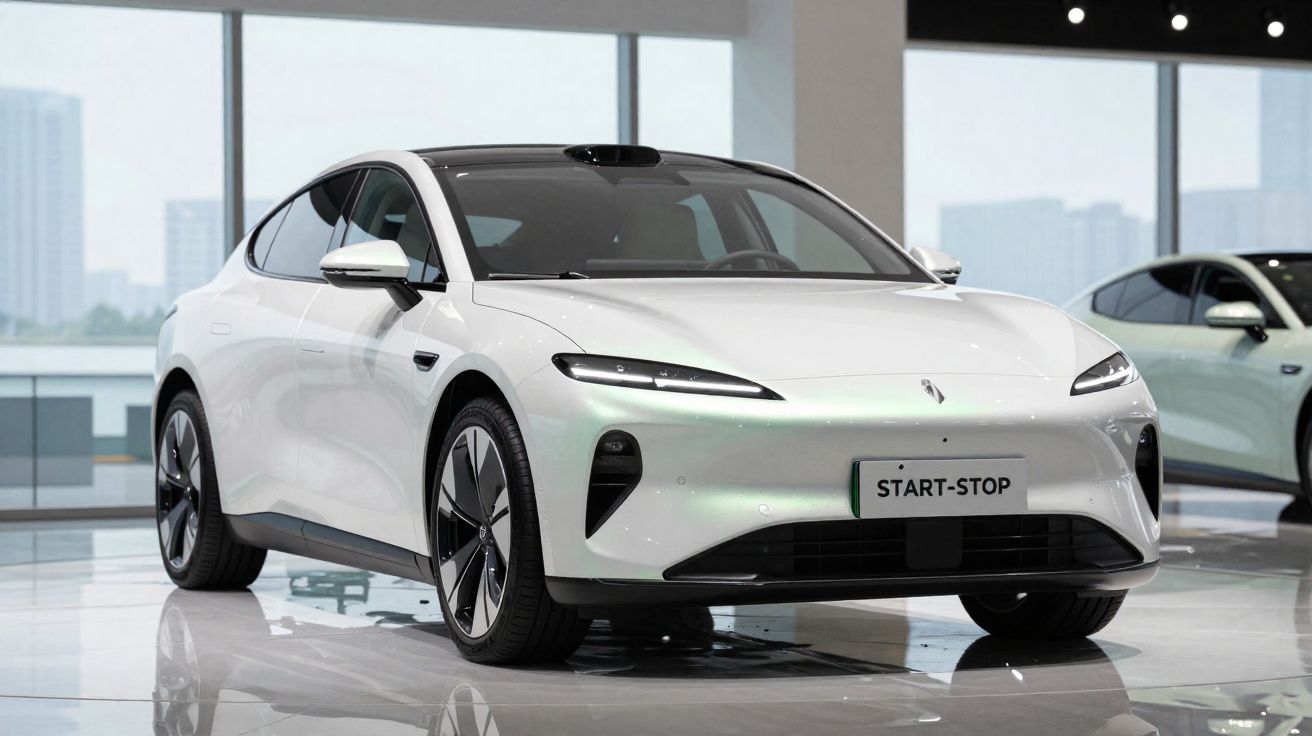
The US Environmental Protection Agency (EPA) has effectively pronounced a death sentence on the start-stop system in the United States. In a landmark move, the agency has scrapped the off-cycle fuel-economy credits that previously encouraged manufacturers to fit start-stop technology to their vehicles.
This change sits within a wider package that rolls back the 2009 Greenhouse Gas (GHG) Endangerment Finding, introduced during Barack Obama’s presidency. As a result, all subsequent federal emissions rules are also set to be withdrawn for vehicles and engines from model years 2012 to 2027 and beyond - see the full statement.
Speaking at the White House, EPA administrator Lee Zeldin argued that this reshaping of the rules would help buyers save an average of 2400 dollars - around 2000 euros - when purchasing a new car.
Labelled by the government as an “almost universally hated” feature, start-stop will no longer be rewarded under federal rules, giving carmakers the freedom to build vehicles without this technology.
“As an additional bonus, the regulatory credit awarded outside the official emissions tests to the start-stop system was removed”.
Lee Zeldin, EPA administrator
In its own statement, the agency said that “manufacturers should not be forced to adopt or be rewarded for technologies that are merely a climate participation trophy with no material benefit”. It also stated that “today’s announcement ends all off-cycle normal emissions credits, removes EPA incentives for the start-stop button, and restores consumer freedom of choice”.
Will the start-stop system disappear in the USA?
Even though there is no outright ban, the future of the start-stop system now depends on brand-by-brand commercial decisions rather than government regulation.
Under these new measures, the US administration has created room for manufacturers to simplify their vehicles. Start-stop requires pricier hardware, such as reinforced batteries and more robust starter motors - expenses brands may now choose to cut in order to price their models more competitively.
As a result, the start-stop system loses importance and could, in time, stop being standard equipment or even vanish entirely from future models sold on the US market.
What is the start-stop system?
The start-stop system was developed to reduce average fuel consumption and polluting emissions in urban driving. Whenever the vehicle comes to a halt - for instance, at traffic lights - the engine automatically switches off and then restarts when the driver releases the brake pedal or operates the clutch.
In type-approval test cycles, this function can slightly lower the declared fuel consumption and, therefore, the official carbon dioxide (CO2) emissions.
It is worth stressing, however, that this decision applies only to the US market. In the European Union, the focus is not on meeting fuel-consumption averages (the US CAFE regulation), but on CO2 emissions targets. That is why the start-stop system remains a relevant tool for manufacturers to comply with the limits set in Brussels.





Comments
No comments yet. Be the first to comment!
Leave a Comment