
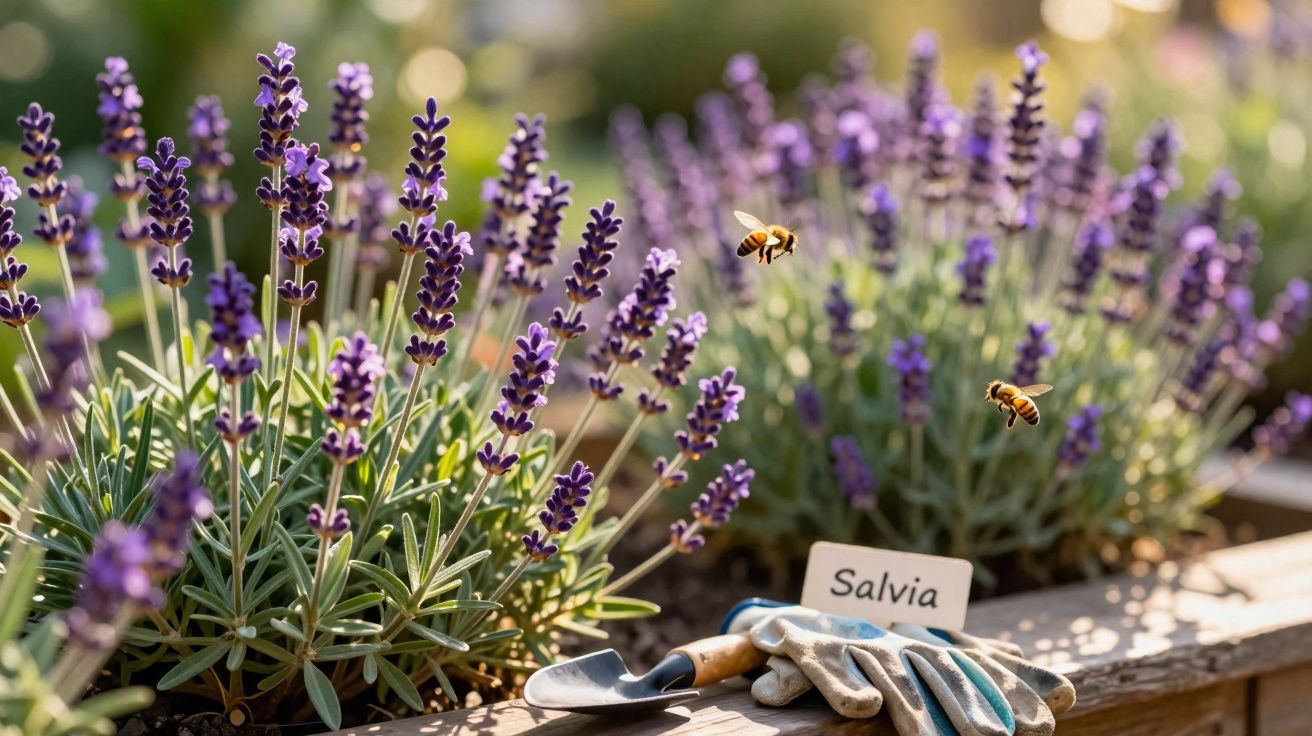
Heat, drought, hardly any time for maintenance - yet a garden bursting with life?
A modest-looking perennial can make that happen almost effortlessly.
Anyone who has stood in recent summers staring at a scorched lawn, unsure what to do next, will recognise the issue: traditional garden plants are coping worse and worse with prolonged dry spells. At the same time, the desire to support bees and other beneficial insects is growing. Many people reach for lavender out of habit. Yet landscape designers have long been praising a different long-flowering plant - one that delivers more, asks for less, and draws insects in as if by magic.
Why professionals are suddenly choosing perennial sage (Salvia)
In professionally planted borders maintained by councils, architects, and landscaping contractors, it is now showing up almost everywhere: perennial sage - botanically Salvia. On the shop bench it can look fairly unremarkable, but once planted it turns a bed into a small burst of colour - reliably, year after year.
Perennial sage is now regarded by planners as one of the most dependable flowering perennials for dry, sunny positions - and as a magnet for wild bees.
Unlike culinary herbs such as the classic garden sage that many people only know from roast dinners or tea, most ornamental Salvia varieties have been bred specifically for decorative planting schemes. They offer long flower spikes, strong colours, and a compact growth habit.
Months of flowering instead of a brief show
As soon as the soil begins to warm in spring, perennial sage gets going. Slender flower spikes then rise above the foliage, often in:
- deep royal blue






Comments
No comments yet. Be the first to comment!
Leave a Comment