
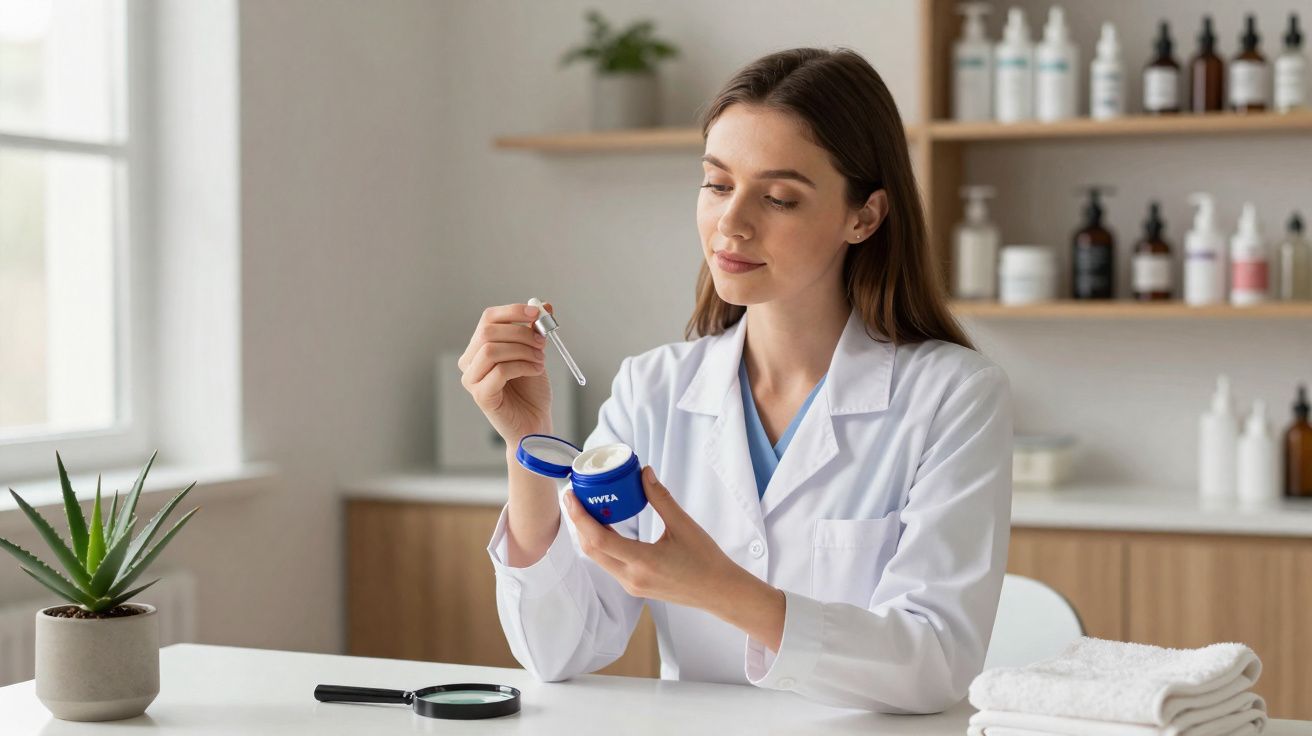
Behind that familiar blue metal lid, though, is a formula that still splits professional opinion. Is Nivea’s classic blue cream genuinely a sensible skincare essential, or mainly a soothing throwback that smells of growing up?
The bathroom staple that never went away
Nivea Creme arrived in 1911. Over 100 years on, it continues to shift millions of tins annually, even with shop shelves overflowing with serums, essences and techy moisturisers. In France, sales were reported at roughly 3.6 million tins in 2023 - meaning an extraordinary number of blue pots are bought every hour.
In plenty of homes, the blue tin is the all-purpose fix: face moisturiser, hand cream, elbow rescuer and last-minute lip balm. It stays inexpensive, the look hardly evolves, and the fragrance sparks instant nostalgia. That sentimental hook helps explain its longevity - but dermatologists who have scrutinised the ingredients also point to practical reasons.
"Launched in 1911, Nivea’s blue cream still sells by the millions – and not just because it reminds people of childhood."
What a dermatologist notices in the Nivea Creme blue tin
When dermatologists are asked to assess this classic, they typically begin with what matters most: the INCI list. On paper, Nivea Creme is not a modern, innovation-led product. It’s a traditional water-in-oil emulsion that relies on occlusives and emollients to reduce water loss and keep hydration in the skin.
The main hydrating components in the formula
Dermatologists reviewing the product usually draw attention to three broad ingredient groups:
- Glycerin: a humectant that pulls water into the upper layers of the skin and supports hydration retention.
- Fatty ingredients and waxes: materials that create a semi-occlusive layer at the surface and slow moisture evaporation.
- Butters and oils such as shea: which help smooth roughness and leave skin feeling softer and more flexible.
Together, these explain the hallmark feel: rich, dense and a little waxy. For dry, scaly patches, that thickness is often an advantage rather than a drawback. Many dermatologists see it as a dependable option for:
- Hands that are washed repeatedly during the day
- Dry, flaky shins in winter
- Coarse heels, knees and elbows
- Small areas irritated by rubbing, such as around the nose when you have a cold
"Dermatologists generally agree: as a basic moisturiser for dry, non-acne-prone skin, the classic blue cream does its job."
Who is classic Nivea actually best for?
From a dermatologist’s perspective, a balm this rich won’t suit everyone. It can moisturise effectively, but that doesn’t automatically mean it’s right for every face - or for every context.
| Skin type / situation | How the blue cream usually performs |
|---|---|
| Very dry or rough body skin | Often helpful; reduces tightness and scaling when used regularly. |
| Normal to slightly dry facial skin | Can work as an occasional night cream, especially in cold weather. |
| Oily or acne-prone facial skin | May feel too heavy and can aggravate clogged pores in some people. |
| Compromised skin barrier (after procedures, strong treatments) | Occlusive texture can help lock in moisture, but advice from a dermatologist is recommended. |
| People sensitive to fragrance | Fragrance content can trigger irritation or redness in reactive skin. |
As a result, many dermatologists position it as a solid body moisturiser and a targeted fixer for dry patches - rather than a one-size-fits-all face cream that belongs in every routine.
Hydration, yes - a full routine, no
Even dermatologists who rate Nivea’s moisturising ability tend to make the same caveat: one product cannot cover every skin priority. The blue tin can hydrate and soften, but it is not a substitute for concern-specific treatment.
What the blue cream does well
Dermatologists often highlight several straightforward advantages:
- Powerful occlusive performance: it lowers transepidermal water loss, particularly in dry conditions.
- Budget-friendliness: it makes basic moisturising more accessible for people watching costs.
- Long-wearing texture: a little spreads far, and the thick film doesn’t disappear quickly.
Studies run by the brand as well as independent groups report measurable hydration improvements lasting for hours after use. For everyday dryness, that level of support is widely considered perfectly adequate.
"Nivea’s blue cream solves one piece of the puzzle: hydration and softness. The rest of your routine still needs to work on your specific issues."
Where it’s limited in a modern routine
Contemporary dermatology looks beyond basic moisturising. Many people want products that address pigmentation, acne, ageing signs, sensitivity and pollution-related stress. In those areas, this heritage formula remains fairly restrained:
- No exfoliating acids to refine texture or decongest pores.
- No antioxidants such as vitamin C to help neutralise free radicals.
- No dedicated anti-ageing actives like retinoids or peptides.
- No SPF, which is still the foundation of anti-ageing protection.
That’s why dermatologists often label Nivea Creme a “supporting product”. It can keep skin comfortable, but if you’re dealing with acne, melasma, rosacea or visible photoageing, you’ll usually need other targeted steps alongside it.
How dermatologists suggest using Nivea in 2026
In practice, many dermatologists aren’t telling patients to ditch the blue tin. Instead, they tend to present it as a useful, no-nonsense tool within a broader routine - especially for anyone who prefers simplicity or can’t justify several specialist products.
Practical ways to work the blue cream into your routine
- As a night-time occlusive: used last, over a lighter moisturiser or serum, to seal hydration in.
- As a seasonal buffer: applied to cheeks and around the nose before cold, blustery weather to reduce dryness and redness.
- As a hand and foot mask: layered thickly under cotton gloves or socks, particularly overnight.
- As after-wash relief: smoothed onto areas that feel tight post-shower or after frequent handwashing.
The consistent message from dermatologists is to treat it like a barrier-supporting balm for dry areas - not a miracle cream that can single-handedly tackle every concern.
What to consider before applying it all over your face
Although many people get on fine with it, dermatologists tend to be careful with two groups: those prone to acne and those whose skin is highly reactive to fragrance.
- Risk of blocked pores: the heavy, occlusive layer can trap sebum and dead skin if applied thickly over breakout-prone zones.
- Fragrance sensitivity: people with eczema, rosacea or a track record of cosmetic allergy may react to the added perfume.
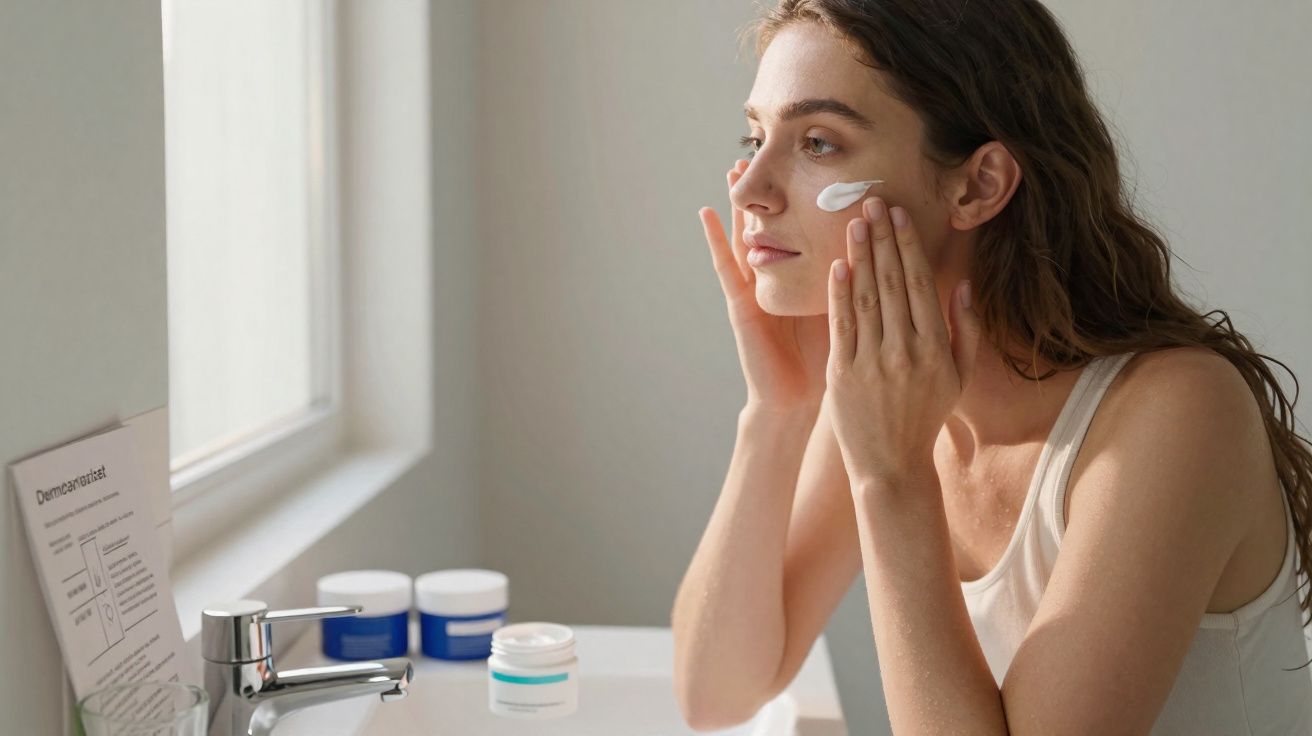
Dermatologists commonly recommend patch-testing first - for example behind the ear or along the neck - before using it across the face. If you’ve had significant contact dermatitis in the past, fragrance-free options are typically placed higher on the list.
Beyond Nivea: building your overall skincare approach
Debate about the blue cream often leads to a bigger question: what does a well-built routine actually require now? Dermatologists generally organise guidance around a few essential pillars, rather than relying on one hero product.
- Gentle cleansing: a non-stripping cleanser that supports the skin barrier.
- Targeted treatment: ingredients such as niacinamide, retinoids, vitamin C or azelaic acid, matched to your needs.
- Moisturising step: where a cream like Nivea can be useful for rough or very dry areas.
- Daily sun protection: broad-spectrum SPF to help prevent dark spots, wrinkles and texture changes.
Seen this way, the blue tin is one helpful component among several. It tends to work best when the rest of the routine is cohesive: sunscreen for prevention, actives for correction, and a robust cream to lock hydration in where it’s needed.
For people on tight budgets or anyone uninterested in multi-step regimens, dermatologists often favour a simple plan that’s genuinely sustainable. In that setting, an inexpensive, dependable hydrator like Nivea can be worthwhile - provided expectations match its role: to protect, soften and retain water in the skin, rather than fundamentally change how skin functions.





Comments
No comments yet. Be the first to comment!
Leave a Comment