
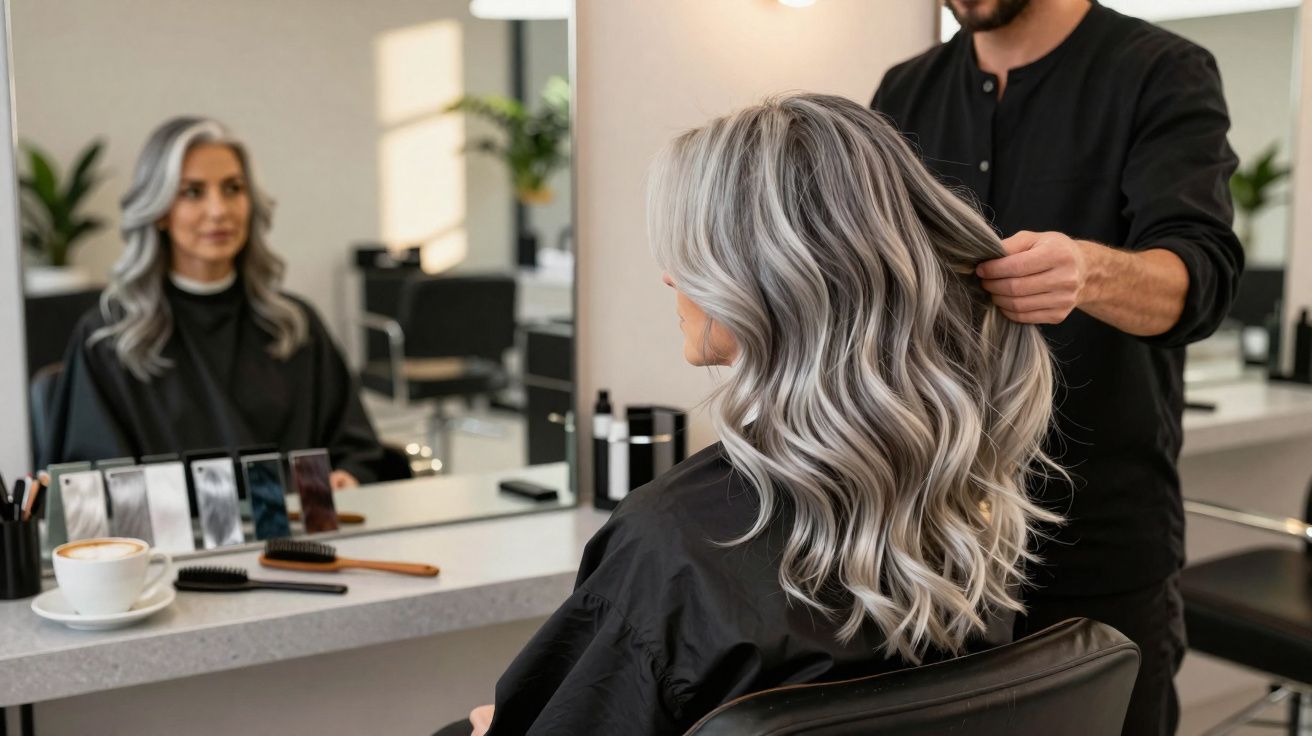
Grey hair was once the first thing many people tried to disguise.
In 2026, it is increasingly being worn on purpose - with confidence and edge.
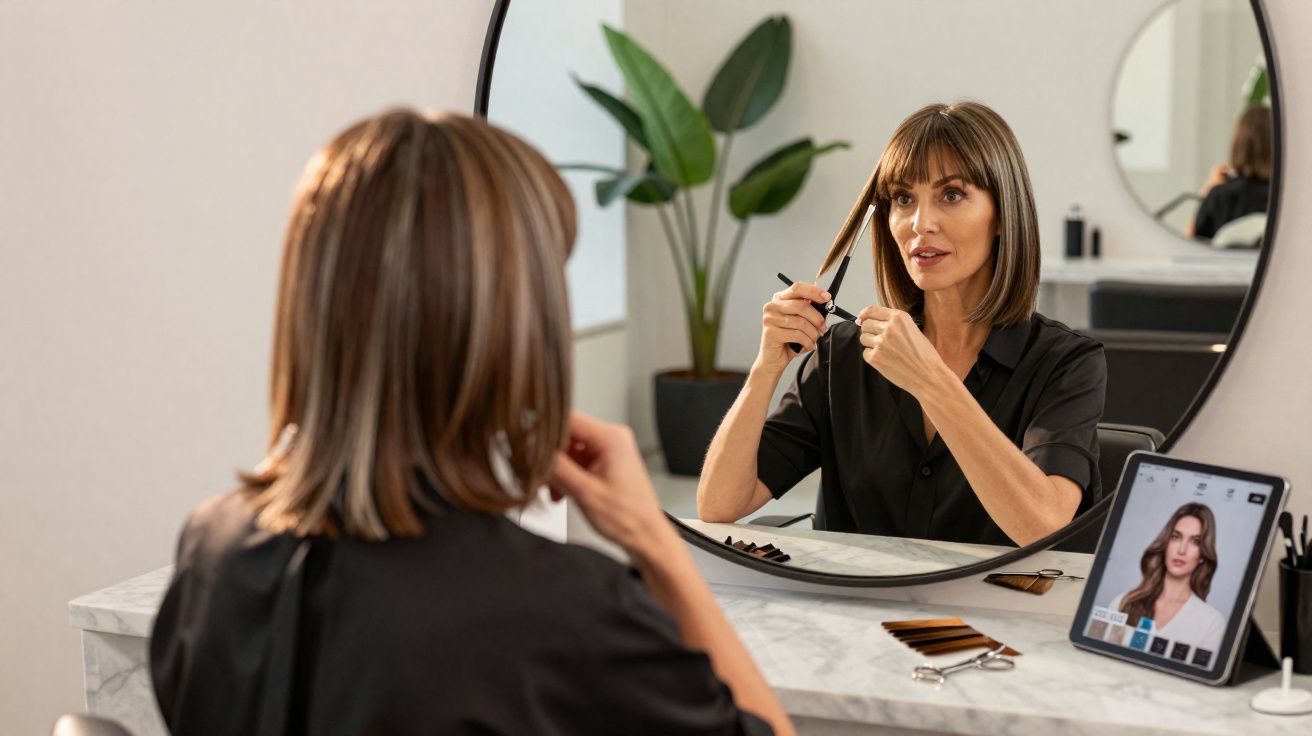
In salons across London, New York and Los Angeles, colourists describe a noticeable change in what clients ask for. Rather than “cover my greys”, the brief is more like: “make them look intentional”. One method leading the shift is a technique some stylists have dubbed “high-low salt and pepper balayage” - designed to work alongside natural silver strands instead of battling them.
What salt and pepper hair really means in 2026
Salt and pepper hair is the natural mix of a deeper base colour with grey or white strands. Depending on the cut and the colouring, the contrast can read as soft and smoky, or bold and graphic.
For years, the default solution was full-coverage colour to hide the change. The downside was predictable: roots would show within weeks, pushing people into frequent - and often expensive - maintenance visits. The newer approach assumes the grey is arriving, then uses colour placement to make it look considered and flattering.
"Salt and pepper balayage is less about hiding age and more about polishing what your hair is already doing on its own."
The “high-low” element means placing both lighter and darker tones next to each other, rather than applying one uniform shade. Done well, it builds dimension, adds shine, and makes the grow-out feel more natural.
How the “high-low” balayage technique actually works
High-low salt and pepper balayage is built around two opposing actions: lifting brightness in selected areas and adding depth elsewhere. The aim is to manage contrast so grey strands look styled and cohesive, not randomly dispersed.
Step-by-step approach in the salon
- Assessment: The colourist maps where your greys are concentrated first - at the temples, along the parting, near the front hairline, or at the crown.
- Placement: Lighter sections are painted close to the greys to blur harsh borders and bring light around the face.
- Depth: Slightly deeper lowlights are threaded between the silver and lighter pieces so the overall colour does not look flat or washed out.
- Blending: Colour is applied and softened by hand, steering clear of crisp foil lines or blocky deposits.
- Toning: A toner or gloss is used to manage warmth - cooling brassy yellow tones or softening overly steely blue notes.
Unlike many traditional highlights that begin right at the root, high-low balayage is often started slightly further down the hair shaft. This makes regrowth less obvious and can lengthen the time between appointments.
"The technique plays with contrast instead of pretending the grey is not there, which can make regrowth less stressful and less expensive."
What clients actually want from the trend
While industry conversations can get caught up in naming and technique, most clients want straightforward outcomes: to look polished, to avoid glaring roots every three weeks, and to stop feeling obliged to conceal every grey.
For some, salt and pepper balayage is a transition tool - helping them move from traditional dye to fully natural grey. For others, it is the final destination: a modern signature look that feels intentional and relatively low-pressure.
| Client goal | How high-low balayage can help |
|---|---|
| Grow out permanent dye | Adds blended highlights and lowlights so the line between dyed and natural hair is less harsh. |
| Keep some depth | Uses lowlights to stop hair from going fully silver, keeping a darker frame around the face or in the underlayers. |
| Look less “tired” | Strategic lighter pieces lift the complexion, particularly around the fringe and cheekbones. |
| Reduce salon visits | Soft placement and hand painting make regrowth lines less visible, stretching appointments to 10–16 weeks. |
Why stylists are divided
The look photographs beautifully and stands out on social media, yet many professionals still disagree on how universally suitable it is - and on how easy it is to deliver consistently.
The case for salt and pepper balayage
Plenty of colourists view it as a contemporary middle ground between going fully silver and committing to constant root coverage.
- It supports ageing hair without pushing someone to go entirely grey overnight.
- By combining cooler and warmer tones, it can suit a broad range of skin tones.
- It softens harsh demarcation lines, so missed appointments are less noticeable.
- It feels fashion-forward, aligning with the “expensive grey” and “cool-girl silver” aesthetic.
Advocates also point to the sense of control: clients decide how much grey is shown - and where - rather than letting it appear wherever nature happens to place it.
The sceptical point of view
More cautious stylists argue that the contrast management is technically challenging. If the tonal balance is even slightly off, the result can look uneven or patchy rather than refined.
Some also feel the phrase “salt and pepper balayage” can promise more than it delivers. Clients who are already very grey may not have much scope for darker lowlights without needing regular upkeep. Meanwhile, those with only a small amount of grey may see such a subtle shift that the price feels hard to justify.
"Real hair does not behave like a filtered Instagram reel, and stylists warn that expectations need to stay grounded."
There is also a broader question within the industry: do trends like this genuinely offer freedom, or do they simply repackage age-related anxiety as a “style upgrade”?
Key technical choices that change the result
No two heads of salt and pepper balayage look identical. Several decisions determine whether the finish reads as chic, edgy, or more understated.
Tone: cool, warm or neutral
Grey hair reflects light differently from hair with natural pigment. With the right toner, a colourist can guide the overall tone in a specific direction.
- Cool silver: Often suits rosier skin tones, or anyone after a clean, minimalist, near-metallic finish.
- Soft beige: Brings warmth and can make fine lines and texture around the face appear less pronounced.
- Neutral ash-brown mix: Keeps the look restrained - ideal if you are only just starting to grey and do not want a dramatic change.
Very cool toning can make certain complexions appear washed out, while too much warmth can tip the colour towards yellow. This tight margin for error is one reason professionals disagree about the technique.
Cut and styling for high-low salt and pepper balayage
A well-judged cut is often what makes the colour look truly deliberate. A layered bob, a textured shag, or soft long layers will each reveal the light/dark interplay in different ways.
Styling matters just as much. A sleek blow-dry shows clearer “ribbons” of tone, while loose waves diffuse the colour into a softer, mistier blend. Natural curls can look especially striking, as grey coils catch the light against deeper spirals.
"Without a considered cut, even the most precise salt and pepper balayage can disappear into a haze of uneven texture."
Maintenance: more low-key, not zero effort
Reduced maintenance is a major draw, but it is not the same as maintenance-free.
- Gloss appointments: A clear or tinted gloss every couple of months can bring back shine and rebalance tones as they fade.
- Targeted trims: Frequent trims help prevent frayed ends, which can make grey appear harsher, from overwhelming the shape.
- Gentle products: Sulphate-free shampoos and UV protection help minimise yellowing and dryness in both lightened and naturally grey strands.
- Purple or blue shampoo: Used sparingly, these can counter unwanted warmth - particularly in hard-water areas.
If your natural base is very dark, the lighter sections may need extra conditioning masks, as lifting pigment can leave hair more porous.
Who suits salt and pepper balayage – and who might not
Results vary widely depending on colour history, hair texture, and how greying is distributed.
People who often get the most satisfying outcome typically have:
- At least 20–30% natural grey already visible.
- The flexibility to accept some unevenness as their grey pattern continues to evolve.
- Medium to thick hair that can hold noticeable contrast.
- The patience for at least one longer, more meticulous appointment.
If hair is very fragile or has been heavily over-processed, many colourists will recommend a slower approach - leaning on lowlights and gentle toners rather than significant lifting. And if there is barely any grey yet, classic balayage or subtle babylights may do more to soften future regrowth with less expense.
Words and ideas worth unpacking
Salon terms around grey can be surprisingly opaque. Knowing the basics can make consultations clearer:
- Balayage: Freehand painted lightening that creates a soft, graduated effect rather than crisp foil lines.
- Lowlights: Darker strands added back in to create depth and avoid an overly light, one-note finish.
- Demarcation line: The visible border between coloured hair and new growth that many people want to avoid.
- Banding: Uneven stripes left by repeated colour applications; salt and pepper balayage is often used to blur these.
With the language in place, clients can ask for specifics - less contrast at the parting, cooler tones around the face, or deeper lowlights underneath - rather than relying on vague requests like “make it look nice”.
Real-life scenarios: how the trend plays out
Picture someone with dark brown hair that is now around 40% grey at the temples and through the fringe. A high-low approach might include soft ash-brown lowlights through the crown, brighter silver-blonde ribbons around the face, and a cool gloss over the natural grey. The back keeps its depth, while the front becomes a deliberate, almost editorial silver frame.
Now imagine another client who is predominantly grey on top with darker hair underneath. In that case, a colourist might enhance the silver using a light icy toner, then paint lowlights beneath to stop the overall look becoming washed out. As the hair moves, the darker layers flicker through, giving the impression of thicker, more textured hair.
The trend is not risk-free. Someone expecting near-effortless upkeep may feel let down if earlier colouring means multiple correction sessions are required before the look is achievable. And for clients who carry strong feelings about ageing, leaning into grey can bring up emotions they did not anticipate. For that reason, many stylists treat a salt and pepper balayage consultation as much about mindset as it is about technique.
For anyone considering it, the key advantage is flexibility and choice. Instead of chasing a single flat shade that never quite matches new growth, high-low salt and pepper balayage offers a way to style the change as it happens - treating age as another texture to shape, rather than a flaw to erase.


Comments
No comments yet. Be the first to comment!
Leave a Comment