
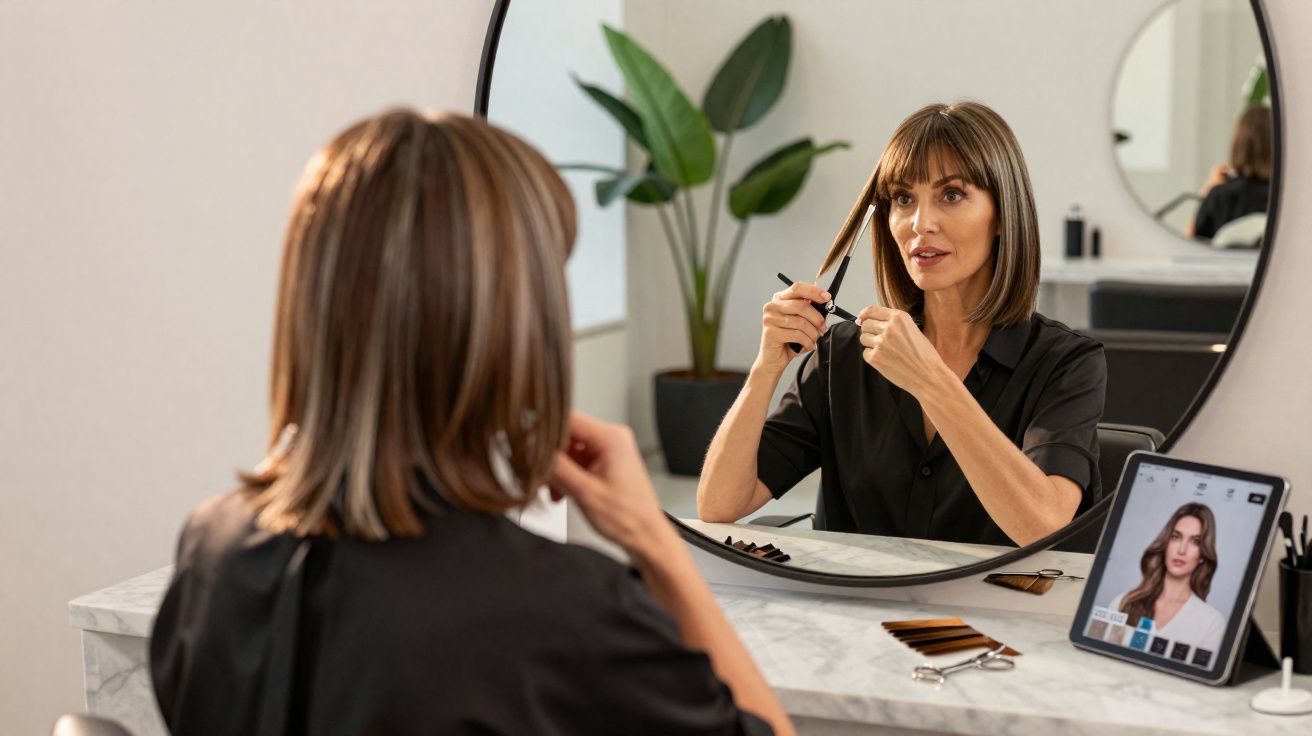
The scissors are getting braver again, and women over 50 have unexpectedly become the focal point of 2026’s biggest hair arguments.
Following years dominated by safe bobs and barely-there layers, stylists are now pushing for cleaner, bolder and more daring cuts for mature women-insisting the right shape can soften visible lines and make the eyes look a few years more refreshed. Not everyone is convinced, but the debate is gathering pace.
Why 2026 is a turning point for haircuts for women over 50
With age-neutral beauty messaging everywhere and remote working now firmly embedded, more women feel free to try something different. There is less pressure to comply with office “rules”, and a stronger desire to make hair reflect personality rather than a birth year.
In salons, stylists say clients in their 50s and 60s are turning up with reference images of celebrities, influencers and even TikTok creators who are ten or twenty years younger. The brief is consistent: more movement, more lightness and a touch of edge-without looking like they are forcing it.
"Hair after 50 in 2026 is less about hiding age and more about adjusting lines, volume and colour so the face looks fresher and more awake."
Out of this shift comes a set of looks that strongly divide opinion. Some hairdressers love the confidence and modern energy; others caution that certain trends can sharpen features or draw attention to thinning.
The controversial cuts everyone is talking about
The micro bob: sharp, chic and unforgiving
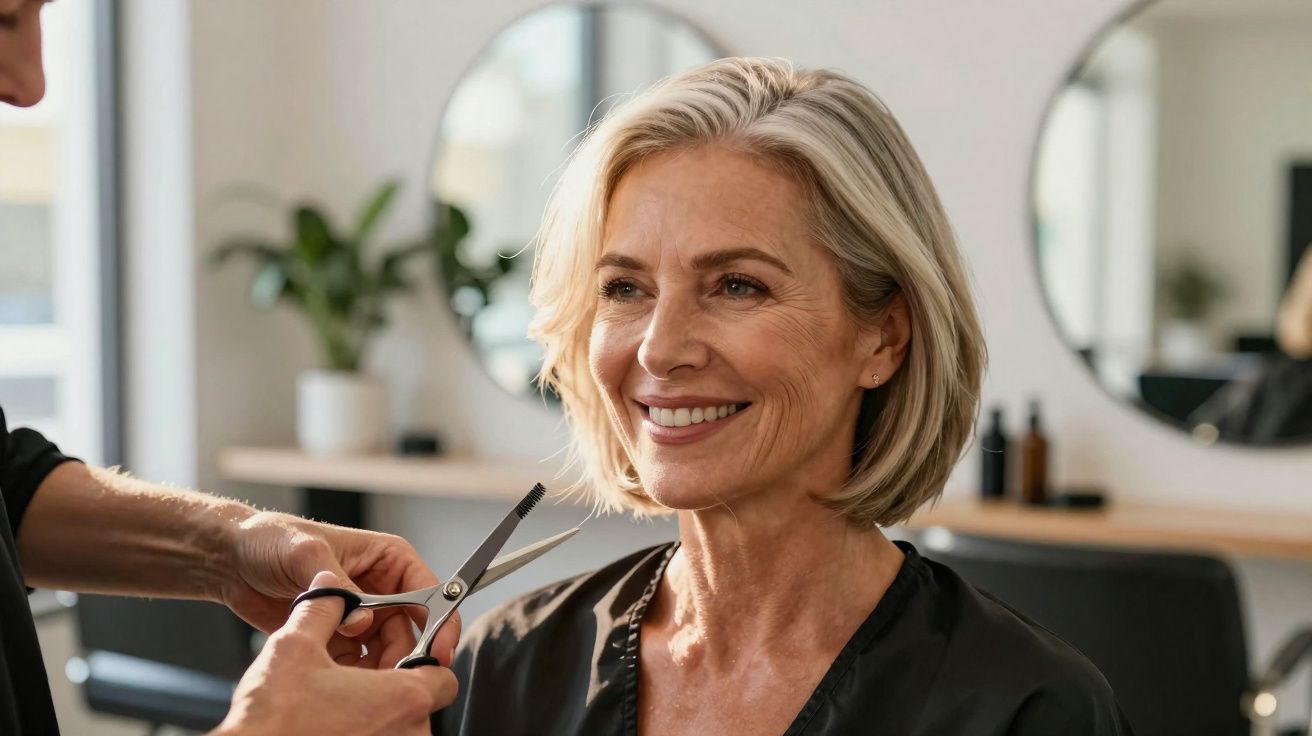
Sitting somewhere between cheekbone and jawline, the micro bob is typically blunt and straight. For 2026 campaigns, it is often styled on silver hair with a high-shine finish, paired with a fringe or a centre parting.
Those in favour say the shorter outline reveals the neck, lifts the profile and pulls focus straight to the eyes. On a pronounced jaw, it can read as strikingly contemporary.
Those against it say a severe, dead-straight micro bob can emphasise jowls or a dropping jawline-particularly if there is no softness through the sides.
"The same micro bob that looks high-fashion on one woman can look severe on another, depending on jaw shape and hair density."
Hairdressers who recommend this style for women over 50 often modify it by using:
- gently textured ends rather than a rigid, hard edge
- a discreet undercut at the nape to keep volume in proportion
- a side-swept fringe to soften the overall geometry
The shag revival: layered chaos or instant facelift?
The updated shag-already a favourite with younger clients-moves decisively into the 50+ space in 2026. Expect layers through the crown, feathered tips and a fringe that blends into the sides.
Supporters argue the built-in motion creates a lift effect around the cheekbones and makes finer hair appear fuller through controlled “messiness”. The textured finish can also make grey regrowth less obvious, as it distracts from harsh lines of demarcation.
Sceptics counter that overdoing crown layers can shrink the silhouette, leaving hair looking wispy and fatigued rather than buoyant and lively.
| Shag benefit | Potential drawback |
|---|---|
| Softens facial lines | Can frizz on naturally wavy hair without styling |
| Adds crown volume | May expose thinning areas if over-layered |
| Blends grey and highlights | Requires regular shaping to avoid a messy look |
The new pixie: cropped, spiky and surprisingly divisive
The pixie has long been a default option when density starts to dip. In 2026, it returns with harder lines and more attitude-sometimes featuring shaved sides, asymmetric fringes or longer front sections.
Advocates say a precisely cut crop can frame the face beautifully, show off cheekbones and project a purposeful confidence that reads as youthful rather than merely “practical”.
Colourists often modernise the look with stronger tones-icy platinum, copper or soft rose-so the overall result feels current rather than “mumsy”.
"What makes the 2026 pixie controversial is not the length, but the attitude: it is meant to look chosen, not imposed by age."
However, the most angular versions can be unforgiving on very sharp features, and they can expose scalp areas where thinning is more noticeable. If it is not tailored properly, a pixie may reveal more than the wearer intended-especially around the crown and hairline.
Fringes: the small change with big impact
Bottleneck, curtain and baby bangs after 50
Fringes-or bangs-remain one of this year’s biggest salon battlegrounds. Some stylists still steer mature clients away from them, worried about upkeep and awkward cowlicks. Others argue that, done well, a fringe can take five years off in a single appointment.
For women over 50, the leading 2026 fringe trends include:
- Bottleneck fringe: tight between the brows, widening towards the temples; especially flattering on rounder faces.
- Curtain fringe: parted in the middle and skimming the cheekbones; useful for softening forehead lines.
- Soft baby bangs: shorter and feathered; above the brows without a razor-straight finish.
These options create a more vertical visual line, which can shorten the look of a long forehead or blur horizontal wrinkles without forming a heavy “bar” of hair.
"Many colourists say adding a soft fringe is the fastest route to a younger look without changing the overall length of the hair."
The pushback is mostly practical: fringes need trimming roughly every three or four weeks to stay in shape, and they can be inconvenient when exercising or in humid conditions. Some women appreciate the structure, while others find the maintenance restrictive.
The role of colour: why “less flat” beats “more blonde”
In 2026, the success of a cut often depends as much on colour as on shape. Stylists are moving away from single, solid blocks of dark dye and from intensely bright blonde.
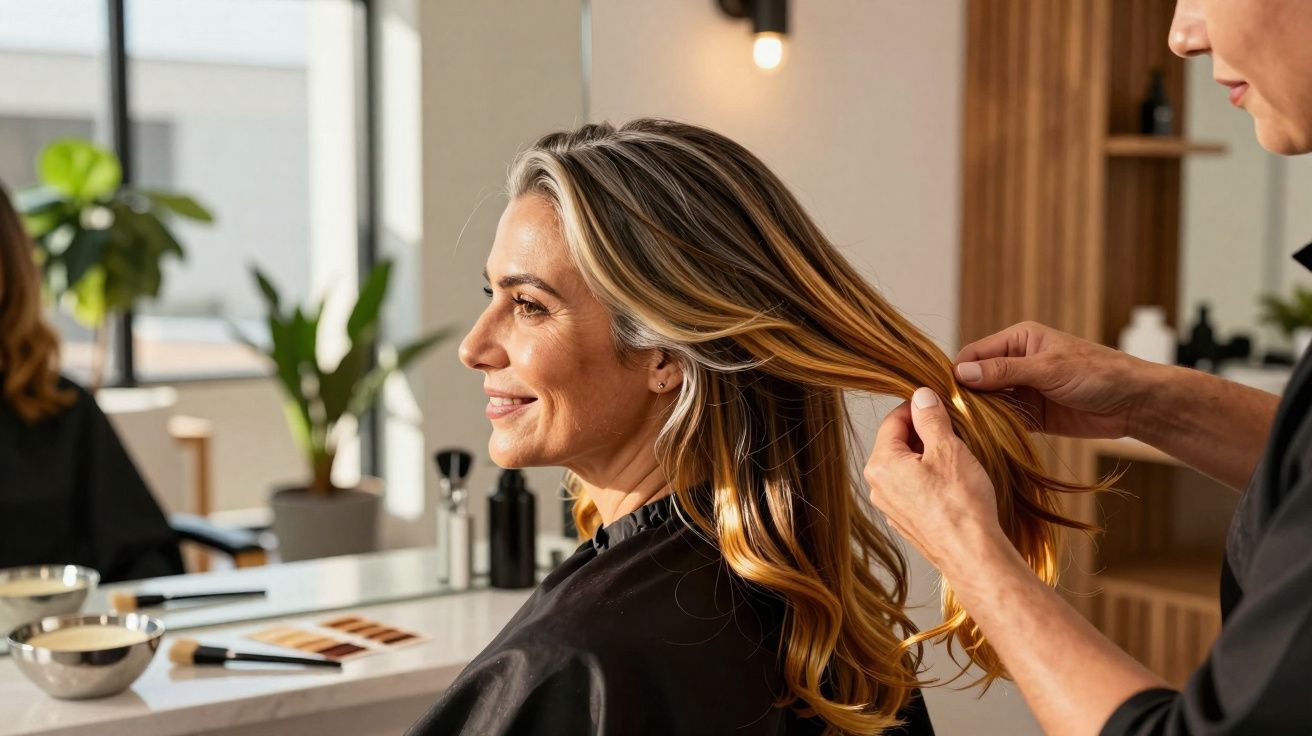
Instead, multi-dimensional colour-built from two or three gentle tones-tends to sit better against ageing skin, which often loses contrast. Deep, flat shades can make features look harder, while very bright blonde can remove warmth and make the scalp appear more obvious.
Trends that are gaining momentum include:
- soft “smoky” mixes of grey and beige blonde
- warm chocolate shades with caramel pieces around the face
- toned-down copper and cinnamon for olive skin
- silver gloss applied over natural grey to reduce yellow undertones
"A young-looking cut on a flat, blocky colour can still age the face; gentle dimension is doing more work than people think."
Matching cut to face, lifestyle and hair health
The most hotly argued point around these 2026 styles is not whether they are fashionable, but whether they work for real life for women over 50.
Before committing to a major change, many stylists now begin with three quick assessments:
- Face structure: jawline, cheekbones, nose length and forehead height.
- Hair status: temple thinning, crown density, natural texture and natural parting.
- Daily routine: styling time available, willingness to book frequent trims, and access to products and tools.
For example, someone with fine hair and slight thinning at the crown may avoid an extreme shag, choosing instead a softly layered bob that sits just below the chin with light graduation at the back. It still feels modern and mobile, but the weight line helps protect volume.
Likewise, a regular swimmer who dislikes blow-drying may be better with an easy-care pixie with gentle texture, rather than a fringe-heavy look that demands a round brush each morning.
Common myths about ageing and haircuts
This year, several long-standing “rules” about hair after 50 are being challenged. Stylists and dermatologists point to shifting evidence and improved products.
- “Short hair is mandatory after 50.” Hair can stay longer and still look fresh if the ends remain healthy and the layers lift and frame rather than dragging the face down.
- “Grey must be hidden completely.” Partial blending using highlights and lowlights can create a softer transition that many women find more flattering than full coverage.
- “Fringe equals youthful, always.” On fine hair, a thick blunt fringe can expose thinning at the parting and draw attention to sparse temples.
"The 2026 conversation is less about strict rules and more about strategy: where do you want the eye to go, and what do you want it to ignore?"
Practical scenarios: how a small tweak changes the whole effect
Hairdressers often say small refinements make a bigger difference than dramatic reinventions. A typical example is a straight, shoulder-length bob that has started to feel heavy and flat.
Instead of cutting it into a pixie, a stylist may choose to:
- lift the back by one centimetre to introduce a gentle angle
- place internal layers near the nape to encourage movement
- lighten two or three face-framing strands to soften visible lines
The end result looks lighter and more energetic without sacrificing length. Online, these “micro-makeovers” often feel more realistic than extreme before-and-after transformations.
Another frequent situation involves women who have embraced natural grey but now feel slightly washed out. Rather than returning to full dye, colourists may suggest a clear, lightly tinted gloss every couple of months. The grey remains, but shine and tone improve-an effect that tends to read as naturally younger.
Risks, benefits and how to talk to your stylist
Choosing a controversial cut always comes with some level of risk. Very short styles or heavy layering can take months to grow out if the result feels wrong. Chemical services-particularly bleaching-can also increase breakage on hair that is already fragile.
At the same time, a well-chosen change can boost confidence, encourage better grooming routines and even improve social energy. Many people carry themselves differently when their hair feels intentional and up to date rather than apologetic.
Stylists advise bringing photos of looks you like on people across a range of ages-not only models in their twenties. Note precisely what you are drawn to in each image: the fringe shape, the volume placement, the colour around the face. Clear specifics give your hairdresser more freedom to adapt trends to your features.
"A good 2026 cut for women over 50 does not chase youth; it rearranges shape, light and texture so the face looks rested, open and intentional."
If you are not ready to commit, digital hair apps and temporary clip-in fringes or extensions can act as a dress rehearsal. You can approximate a micro bob by tucking hair into a polo neck or scarf, or mimic a fringe by pinning sections across the forehead. Small trials like these make the final choice feel less like a leap and more like a measured decision.


Comments
No comments yet. Be the first to comment!
Leave a Comment