
Morning routines are quietly shifting for the over-60s, and the newest habit does not even involve leaving the bed.
From Europe to the United States, “bed Pilates” is gaining popularity as a gentle way to rouse the body, look after the back and gradually refine the waistline-particularly after 60, when joints can be grumbly and traditional crunches can feel downright punishing.
Why “bed Pilates” resonates with women (and men) over 60
After 60, it is normal for muscle tone to reduce, hormones to change and the lower back to start issuing regular warning signs. Even so, plenty of people still want a flatter, firmer stomach, yet feel put off by gyms or demanding training programmes.
Bed Pilates uses slow, carefully controlled movements on a soft surface, prioritising deep breathing and core stability over force or speed.
More doctors and physiotherapists are suggesting this approach for older adults because it works the deeper abdominal muscles, can aid digestion and is kinder to vulnerable joints. Rather than one explosive workout a week, it is built around short, frequent sessions that slip neatly into a morning routine.
The main principle: a flatter stomach depends on the deep core muscles
When most people think about “abs”, they picture the visible six-pack near the surface. For a flatter stomach after 60, the key player is deeper: the transverse abdominis. It works like a natural corset, gently drawing the abdomen in and supporting the spine.
Bed Pilates movements focus on this area and also involve the pelvic floor, which can weaken with age, childbirth, menopause or prostate issues. Training both areas together can improve appearance while also boosting day-to-day comfort and confidence.
Exercise 1: controlled abdominal breathing while lying on your back
Safe set-up
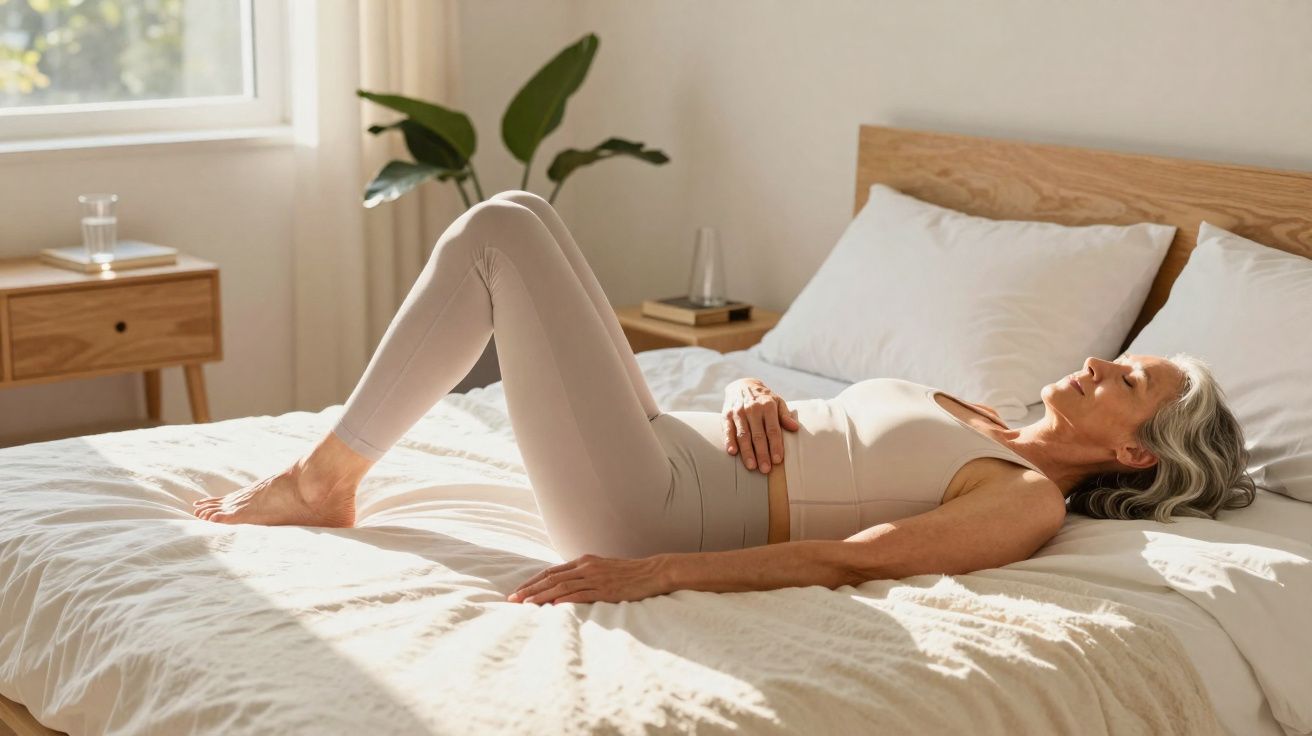
Lie on your back in bed with your knees bent and your feet flat on the mattress, about hip-width apart. Rest one hand on the lower abdomen and the other on the chest. Soften your shoulders and unclench your jaw. Lengthen your back without pressing it flat.
Step-by-step breathing practice
- Breathe in slowly through your nose, allowing the lower belly to rise gently into your hand.
- Breathe out through lightly pursed lips, as though you are blowing out a candle.
- As you exhale, draw your navel subtly towards your spine, without holding your breath.
- Keep the chest as quiet as you can; the motion should be led by the belly.
- Fully release between breaths, then repeat.
Aim for 10 to 12 controlled breaths each morning: this “invisible plank” activates the deep core and pelvic floor without straining the neck or lower back.
It can seem almost too simple, but rehabilitation research indicates that deep breathing paired with abdominal engagement improves spinal support, eases pressure through the lumbar area and helps prepare the digestive system for the day.
How this supports a flat stomach after 60
By repeatedly drawing the transverse muscle inwards, you encourage the abdomen to rest closer to the spine. Many women over 60 find their waist looks smoother and their clothes sit better, even without losing large amounts of weight.
This breathing approach can also gently stimulate the intestines. With less bloating and more regular transit, the stomach often appears flatter-particularly later in the day, when swelling commonly shows up.
Exercise 2: modified bed Pilates toe tap on the mattress
Getting into the “tabletop” position
Lie on your back again. Recreate the same deep abdominal engagement you used for the breathing drill, then:
- Lift one knee so it is stacked above the hip, then bring the other up, so both legs form a 90-degree angle at the hips and knees (“tabletop”).
- Rest your hands on your hips or down by your sides.
- Press the lower back gently into the mattress, as if you are trying to remove any gap.
If this feels challenging already, simply hold the position for a few breaths, lower your feet and take a rest. As it becomes easier, progress to the full toe tap.
The toe tap, adjusted for older backs
Once you are in tabletop, keep the abdomen lightly drawn in and the pelvic floor lifted:
- Inhale to prepare, maintaining contact between your lower back and the mattress.
- As you exhale, lower the toes of your right foot slowly towards the mattress and tap lightly.
- If your lower back arches or lifts, shorten the movement range.
- Inhale as you return the leg to tabletop.
- Switch sides and alternate.
Start with 8 to 10 taps per leg, performed slowly and quietly; quality of control matters more than how many you do.
This straightforward sequence strengthens the lower abdominals and hip flexors, steadies the pelvis and teaches the body to move the legs without yanking the lower back into the work.
Why a mattress can be helpful after 60
A bed is supportive yet forgiving. It reduces pressure on bony areas such as the sacrum and dampens stress through the spine. For older adults living with arthritis, osteoporosis or ongoing back tightness, this cushioning can make regular practice more achievable.
At the same time, a mattress still provides enough resistance for the muscles to engage. The difficulty comes from control rather than impact.
Protecting the pelvic floor: the overlooked ingredient for lasting results
Classic sit-ups and aggressive abdominal exercises can force pressure downwards onto the pelvic organs. For many women after menopause-and many men as well-this may worsen incontinence or increase prolapse risk.
Engaging the pelvic floor during every effort supports internal organs, shapes the waist and protects long-term pelvic health.
Before each exhale, picture gently lifting the muscles between the pubic bone and tailbone, as if you were trying to stop the flow of urine. Keep the contraction light, hold it for only a few seconds and always match it with steady breathing. Over time, better pelvic support can reduce leaks when laughing, coughing or sneezing.
Consistency matters more than intensity, especially after 60
What tends to happen within three weeks
Coaches who work with older adults often see the same outcome: ten minutes of core work every morning beats a single hard session on Saturday. Muscles and connective tissues respond best to regular, manageable effort rather than occasional, draining workouts.
| Timeframe | Typical changes with daily bed Pilates |
|---|---|
| 1 week | Better body awareness, easier breathing, milder back stiffness on waking. |
| 3 weeks | Noticeably firmer midsection, improved digestion, more confidence when moving. |
| 2–3 months | Flatter-looking abdomen, stronger posture, less fear of bending or lifting. |
A steady pace also helps keep soreness in check, which can otherwise put off older beginners. When the routine feels doable, people are more likely to stick with it-and that is when progress adds up.
Extra benefits: digestion, energy and the “hara” idea
These movements are not only about the waistline. The gentle, repeated action of the abdomen and pelvis can massage the organs in the belly. After a few weeks, many people report less bloating and a calmer, more efficient gut.
In traditional Asian medicine, the area below the navel is known as the “hara”, often described as a centre of energy and balance. Whether or not readers relate to that perspective, it aligns with what science supports: a stable, strong midsection helps balance, breathing and digestion, which can leave people feeling lighter and less tired during the day.
Ageing muscles, sarcopenia, and why beginning at 50 can help
Sarcopenia-the age-related, gradual reduction in muscle mass-can start as early as the 40s and speeds up after 60. With less muscle, there is less support for the spine and organs, metabolism tends to slow and fall risk increases.
Two simple exercises in bed will not replace full-body training, but they form a realistic base to fight muscle loss in the centre of the body.
Starting in your 50s can help slow the decline. For those already retired, these movements offer a practical way to stay independent, manage stairs more comfortably and rise from chairs with less effort. Alongside walking, light strength work and good sleep, they support a steadier, more responsive body.
Practical tips, combinations and safety checks for bed Pilates
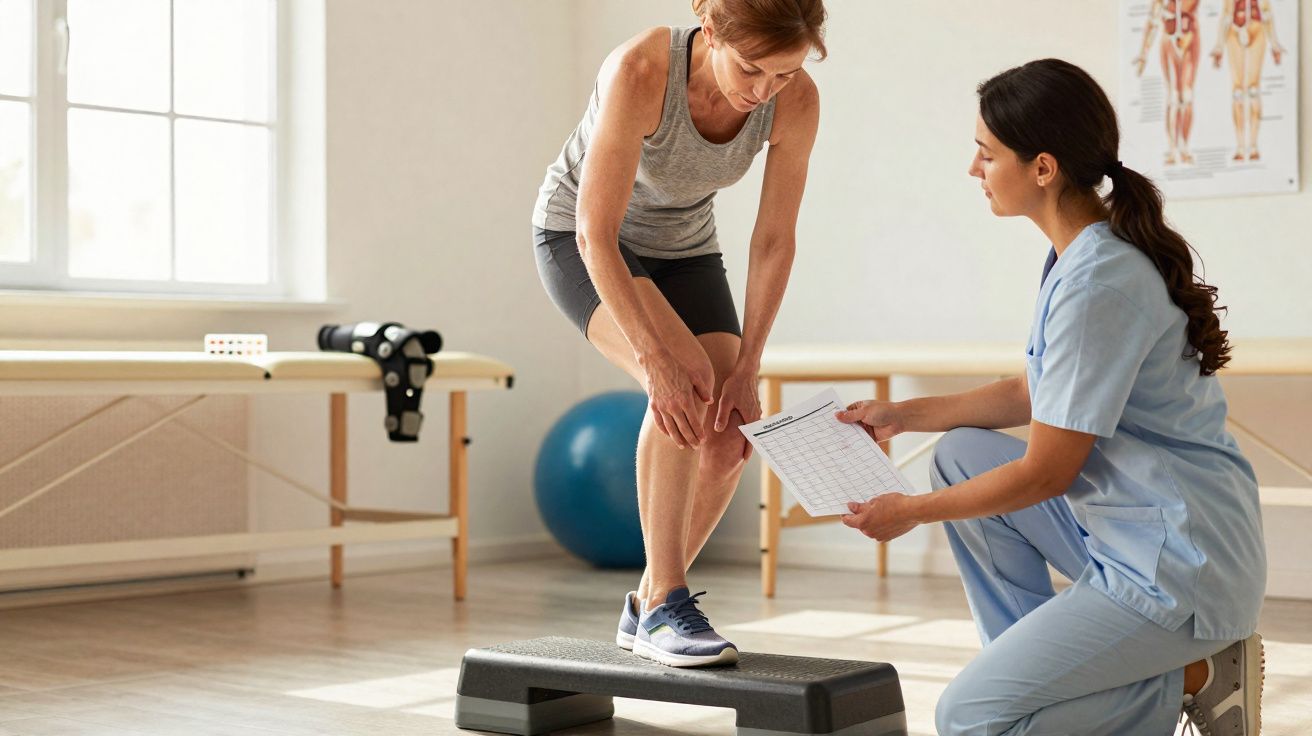
If you are new to exercise or managing conditions such as osteoporosis, herniated discs or recent surgery, you should still seek medical advice before beginning any routine, even a gentle one. A physiotherapist or Pilates teacher experienced with seniors can tailor positions and ranges of motion.
- Combine bed Pilates with a short morning walk to support circulation and mood.
- While still in bed, add gentle stretches for the hips and calves before the core work.
- Keep a small notebook on the bedside table to record how many breaths and taps you do each day.
- When fatigue is high, complete only the breathing set; consistency is more important than perfection.
If you like a plan, try a weekly “ladder”: begin with 6 breaths and 6 taps per leg in week one, then add two more each week until you reach 12 to 15 repetitions. If you notice pressure in the lower back at any stage, reduce the leg angle or return to breathing and pelvic floor work only.
In time, some people may move from the bed to a firmer surface such as a mat, or add standing balance exercises, light weights or resistance bands. For many over 60, though, keeping this quiet in-bed ritual becomes a fixed part of the day: a small, controlled effort that supports a more comfortable, flatter-feeling stomach and a more stable, resilient body.




Comments
No comments yet. Be the first to comment!
Leave a Comment