
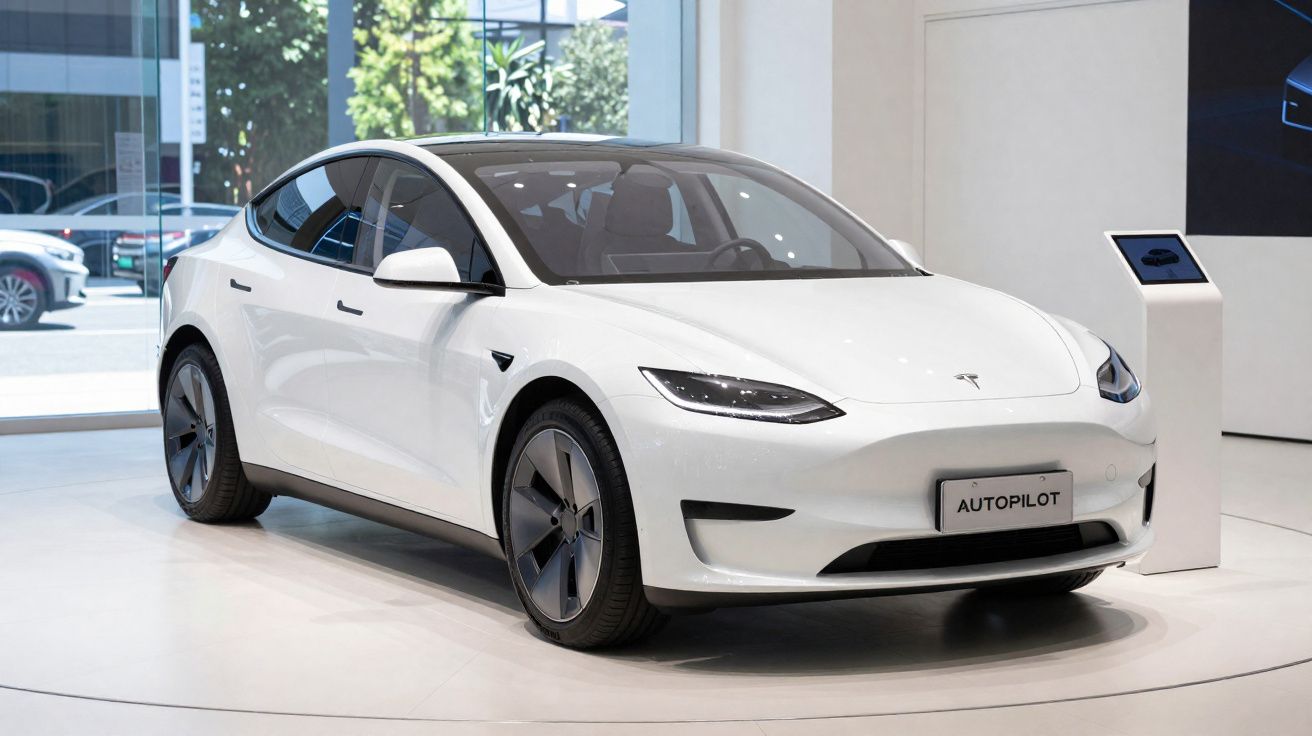
Tesla could face a 30-day halt to vehicle sales in California-one of its most important markets-because of the way it markets its driver-assistance systems.
The California Department of Motor Vehicles (DMV) has found that the labels the company uses-“Autopilot”, fitted as standard on most models, and “Full Self-Driving” (FSD), an optional package-amount to misleading advertising, since the vehicles do not operate in a fully autonomous manner.
“The California Department of Motor Vehicles (DMV) today released its decision in the Tesla administrative case (Case No. 21-02188 and 21-02189), which concludes that Tesla’s use of the terms ‘Autopilot’ and ‘Full Self-Driving Capability’ to describe the Advanced Driver Assistance Systems (ADAS) in its vehicles is misleading and violates state law,” the statement says.
What is at stake for Tesla Autopilot and Full Self-Driving?
Under the Society of Automotive Engineers (SAE) framework, Tesla’s Autopilot is classified as Level 2 automated driving. At this level, the driver must continuously monitor the road, spot hazards, and take control of the vehicle whenever required. Level 0 refers to vehicles fully controlled by the driver, while Level 5 denotes driving that is 100% autonomous.
This is not the first time the DMV has challenged Tesla’s terminology. In 2023, it had already demanded changes, prompting the manufacturer to alter “Full Self-Driving Capability” to “Full Self-Driving (Supervised)”.
Next steps
An Administrative Law Judge initially proposed suspending Tesla’s manufacturing licence and reseller licence for 30 days. However, while the DMV reached the same underlying conclusions, it reduced and deferred the penalties.
Tesla now has 60 days to implement corrective measures designed to prevent drivers from being misled. Expected actions include changes to advertising, updates to vehicle manuals, and clearer alerts explaining the system’s limitations.
If Tesla fails to meet the requirements within that timeframe, the DMV may impose a 30-day suspension of the brand’s reseller licence in California. The production licence, however, would remain in place. It is worth noting that the US carmaker operates one of its two US factories in the state of California.
“The DMV is committed to safety on California roads,” said Steve Gordon, the department’s director. “Today’s decision confirms that all manufacturers must meet the highest safety standards to protect drivers, passengers and pedestrians.”
Tesla’s US account on X has already responded to the decision: “This was a ‘consumer protection’ order about use of the term ‘Autopilot’, in a case where no customer came forward to say there was a problem. Sales in California will continue uninterrupted”.
In August, Tesla was found liable over a fatal crash that occurred in 2019 in the state of Florida involving a Model S equipped with Autopilot. The company was ordered to pay $329 million (approximately €280 million at the current exchange rate) to the victim’s family and the injured survivor. Tesla has appealed the ruling.
Comments
No comments yet. Be the first to comment!
Leave a Comment