
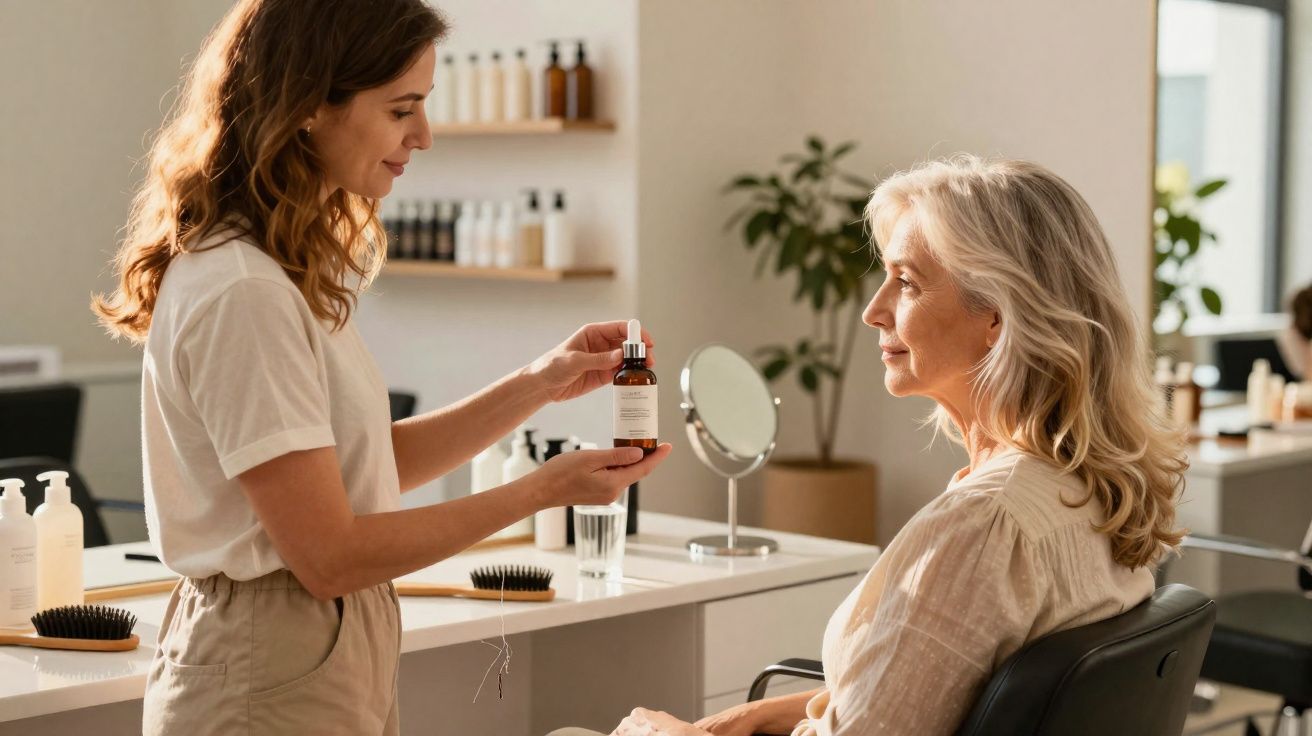
After the age of 50, plenty of women start to see their hair lose bounce, gloss and overall thickness - well before they feel prepared to let go of volume.
In the salon chair, stylists witness the same low-level disappointment on repeat: roots that appear less dense, ends that break, and blow-dries that have collapsed by lunchtime. One French hairdresser is particularly known for offering clients a practical, evidence-led way to help revive fine hair - and it begins with one category of product she is adamant they should take.
Delphine Courteille’s golden rule: nourish fine hair from within
Paris hairdresser Delphine Courteille has spent years working with women over 50 who are dealing with hair that has become finer and more sparse. Her first point often catches them off guard: the answer does not start with a spray, nor with a clever haircut, but with what the body receives.
"For fine, sparse hair after 50, the priority is internal care: targeted supplements that support growth and slow shedding."
Courteille recommends food supplements centred on algae and spirulina. These ingredients are naturally packed with proteins, minerals and antioxidants that help support the hair growth cycle. In France, she regularly points to Sunday Natural’s formulas as a reference, but the wider principle is the key takeaway: choose a high-quality, appropriately dosed supplement, ideally made with clean, traceable ingredients.
Why a supplement, and not yet another shampoo?
As oestrogen declines around menopause, hair follicles can shrink (miniaturise). With each cycle, the regrowth may come back slightly finer and more fragile. While topical products can make hair look plumper, they cannot completely replace what the follicle is no longer getting.
Nutricosmetics - supplements intended for skin, hair and nails - are designed to supply the follicle from the inside via the bloodstream. Algae- and spirulina-based blends commonly offer:
- Plant proteins that support keratin production
- Iron and trace minerals linked to normal hair growth
- B vitamins that support cell renewal
- Antioxidants that help fight oxidative stress in follicles
Courteille is straightforward about expectations: she tells clients supplements are not miracle cures, but a long-term support. Visible change most often shows up after at least three months of regular use, and it may take longer when shedding has been significant.
"Think of a hair supplement as fertiliser for a tired garden: it will not change the weather, but it can strengthen what still grows."
Small daily routine changes that help fine hair look denser
Supplements are only the starting point. Courteille also fine-tunes each client’s habits to suit how hair commonly behaves after 50: drier, more delicate, and typically less full at the roots.
Choose a moisturising shampoo instead of harsh “volume” cleansers
A lot of women with fine hair turn to strong, stripping shampoos in the hope of lifting the root. Courteille advises the reverse. She encourages gentle, hydrating formulas that help limit frizz and reduce breakage.
When hair fibres are dehydrated, they roughen and snap more easily, creating flyaways and making the hair’s overall bulk appear smaller. Properly hydrated strands sit more smoothly, catch the light better and hold a style more reliably - all of which can make the hair look denser.
One minute that changes everything: self-massage for the scalp
The other must-do in her routine is scalp massage. She asks clients to commit to at least one minute every day, using their fingertips to stimulate the scalp.
This quick daily practice can:
- Increase microcirculation around the follicles
- Spread natural oils more evenly through the hair
- Ease tight muscles that may limit blood flow
Massage can be done before washing, with a light oil, or at night on dry hair. Gentle circular movements, working from the nape up towards the crown, are sufficient. Regularity matters more than force.
"One focused minute of scalp work each day often does more for long-term volume than ten minutes with a round brush."
Haircuts that create the illusion of fullness after 50
Once internal support and a kinder routine are in place, the haircut becomes the next lever. Certain shapes suit fine, mature hair far better than others - for both volume and how the face is framed.
Layered bob: a discreet hero cut for fine hair
A layered bob is one of Courteille’s most reliable options for women who feel their hair has “disappeared” towards the ends. Cut at jaw length or slightly below, it:
- Takes away heaviness from droopy lengths
- Creates movement with soft layering
- Shifts attention to the face rather than thinning mid-lengths
A touch of tapering through the tips avoids a solid, boxy outline. A subtly angled bob - shorter at the back and longer at the front - can enhance the sense of density at the crown and along the jawline.
Pixie cut: crisp, short and more forgiving than expected
For anyone prepared to go shorter, the classic pixie remains a dependable choice. By keeping the neck and sides close while leaving more volume on top, attention goes to texture rather than sheer thickness.
Light, feathered pieces around the fringe and temples soften the look and can help disguise sparse areas near the parting. Styling creams or lightweight waxes can separate sections and create the impression of a fuller surface.
Soft shag: updated 1970s layers for easy volume
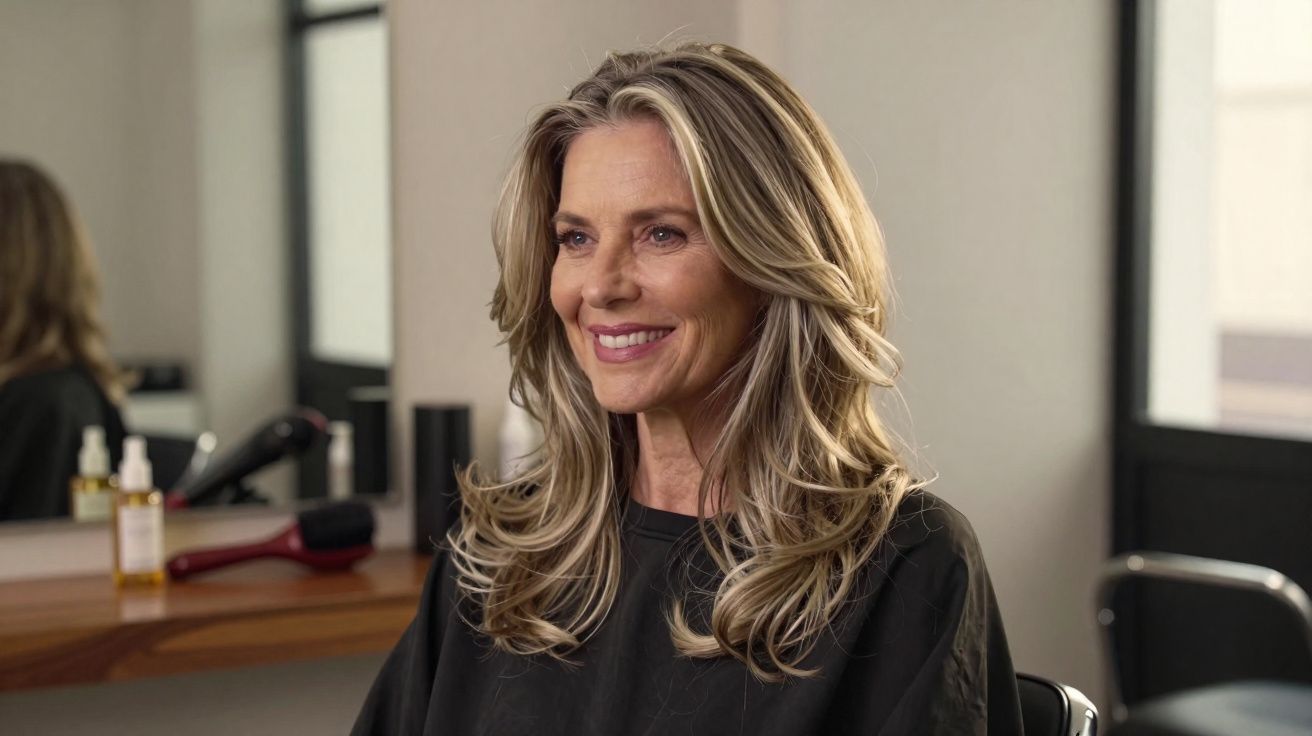
The soft shag - a modern, toned-down nod to the 1970s - can also be flattering on fine hair. It relies on multiple gentle layers and tapered ends to build lift and movement without harsh, obvious steps.
It suits chin, shoulder or longer lengths. With fine hair, moderation is crucial: overly aggressive layering can leave the bottom looking wispy. A “soft” shag keeps the outline relatively full, while adding air and shape around the crown and cheekbones.
| Cut | Best for | Main benefit for fine hair |
|---|---|---|
| Layered bob | Women wanting a classic, mid-length style | Illusion of thickness and movement around the face |
| Pixie | Those open to a short, low-maintenance look | Concentrates volume on top, hides sparse areas |
| Soft shag | Anyone seeking a modern, slightly undone style | Builds airy volume and texture without heavy styling |
Colour and styling techniques that are kinder to fragile hair
In addition to the cut, colour can deliver a strong 3D effect. Carefully placed highlights and lowlights can suggest depth and thickness, particularly around the crown and along the parting.
Courteille generally prefers soft, multi-tonal colour rather than stark, high-contrast streaks. Heavy bleaching can be a gamble on already delicate hair, as it can increase dryness and breakage. Subtle, face-framing brightness or a slightly lighter veil through the top layers can be enough to lift the complexion and mimic fullness.
"A well-placed highlight contour around the face often does more for perceived volume than adding another layer to the cut."
When it comes to styling, lighter formulas usually outperform heavy mousses and oils. Root-lifting sprays, airy foams and texturising powders add grip without coating fine strands. The biggest issue is product build-up, which can quickly drag hair down and make it look less lively.
What “fine” really means - and why the wording matters at 50+
“Fine” and “thin” are often used interchangeably, but professionals separate them. Fine hair describes strand diameter: each hair is narrow. Thin hair refers to density: fewer hairs per square centimetre.
After 50, both may shift. Individual strands often become finer, and overall density can fall due to hormonal changes, genetics, or conditions such as androgenetic alopecia. Knowing the difference makes it easier to set achievable aims. Products may temporarily plump the hair shaft and help maximise the density you already have, but they cannot create new follicles.
Courteille often asks clients to imagine three different situations. Someone with fine hair but high density can achieve striking volume with the right cut and styling. Another person with thicker strands but low density needs strategic layers and colour placement to make the scalp less visible. A third - with both fine and sparse hair - tends to see the best results from combining supplements, gentle routine adjustments, and a thoughtfully chosen short cut.
There is also a downside to pursuing volume at any cost. Frequent hot-tool use, repeated harsh colouring and aggressive styling products can push hair into a breakage loop. For women already noticing increased shedding, that can feel emotionally punishing. Courteille’s inside-out method offers an alternative: acknowledge that the hair has changed, support the biology behind it, and then use technique to showcase what remains rather than battling what has gone.


Comments
No comments yet. Be the first to comment!
Leave a Comment