
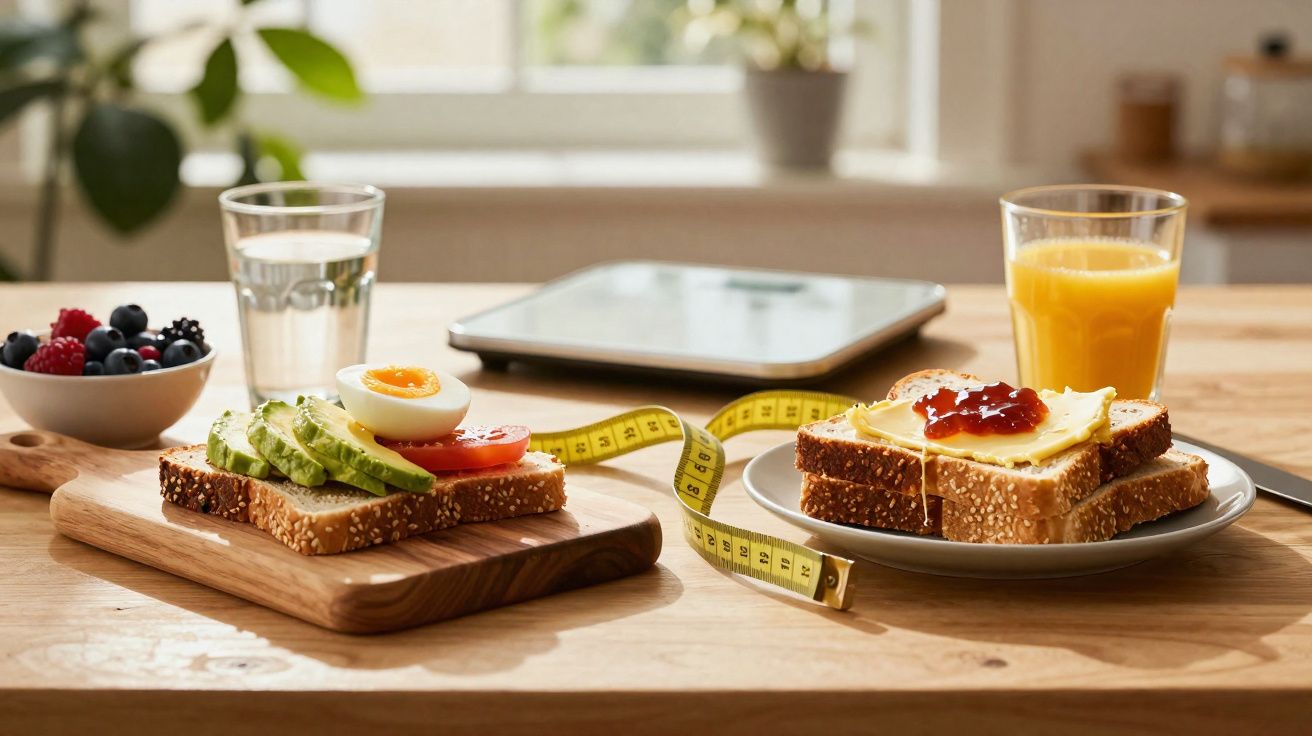
Reaching for the bread basket is part of most people’s morning routine. Whether it’s a fresh loaf from the bakery or crisp rusks from a packet, both can seem harmless-almost “light”. A dietitian now explains why that assumption can be misleading, and which option has a clear advantage when you’re trying to lose weight.
What’s really in your breakfast bread
In its traditional form, fresh bread is made from just a few ingredients: flour, water, yeast or sourdough, and salt. Depending on the type of flour used, the fibre content-and its effect on blood sugar-can vary a great deal.
- White bread / baguette: low in fibre, raises blood sugar quickly, often only keeps you full for a short time.
- Wholegrain bread: higher in fibre, steadier blood sugar response, keeps you satisfied for longer.
- Buckwheat bread or mixed loaves: often have a lower glycaemic index, which can be more favourable for your waistline.
Rusks sound straightforward: thin slices of bread that are baked twice. In reality, there is often much more going on. Many varieties include added fats, sometimes sugar, various additives, and noticeably more salt than a simple slice of bread.
"Rusks are concentrated energy: very little water, lots of calories-and often hidden fats and sugar."
Because rusks are dried during production, they lose water. That pushes both nutrients and calories per 100 g up significantly. It’s this “energy density” that can quickly derail weight goals when portion sizes slip out of view.
Rusks vs bread: the calorie comparison
What matters is not only what we eat, but how many calories are packed into the same weight. On that measure, rusks come off clearly worse.
| Product | Calories per 100 g (approx.) | Characteristics |
|---|---|---|
| Baguette / white bread | approx. 250 kcal | low fibre, airy texture |
| Wholegrain bread | approx. 220–240 kcal | more fibre, more filling |
| Rusks | approx. 380–420 kcal | twice-baked, energy-dense, often with added fat and sugar |
The dietitian highlights the gap plainly: 100 g of white bread contains around 250 kilocalories, while the same amount of rusks averages roughly 400. The higher figure is mainly due to added fat used in production, plus the loss of water during baking.
Why rusks can be so deceptive
Most people don’t judge portions by weight-they go by volume, meaning the number of slices. That’s where the problem begins. Rusks are thin, light and very crunchy. Four or five pieces disappear far faster than two thick slices of bread, yet they can still look like “hardly anything”.
"If you go by volume, you usually eat far more rusks than fresh bread-and end up in a calorie surplus without noticing."
On top of that, many rusks push blood sugar up more strongly than wholegrain bread. The body responds with a quick spike, often followed by a rapid dip. Mid-morning cravings and snacking are then almost inevitable.
For those reasons, the expert views rusks as a poor everyday staple. They are highly processed, often fortified with additives, and tend to be less filling than a good slice of wholegrain bread-despite having a higher energy density.
The better morning choice: bread with fibre and a lower glycaemic index
In a straight comparison, nutrition science largely favours fresh bread-especially varieties with a lower glycaemic index and a higher fibre content.
- Wholegrain bread: a reliable choice for anyone who wants to stay full for longer.
- Buckwheat bread or mixed bread with a high wholegrain proportion: a strong option for people with sensitive blood sugar.
- Sourdough bread: often better tolerated by many people and can provide a steadier sense of fullness.
Compared with that, rusks mainly score points for long shelf life and their crisp texture. For long-term weight management and stable energy levels, however, fresh bread usually offers clear advantages-provided the portion stays sensible.
The real fattening factor is often what goes on top
Many people focus only on whether they’re choosing rusks or bread. The dietitian points out that the biggest calorie hit is often the topping.
"The topping matters too: fat and sugar on bread can quickly turn a ‘light’ breakfast into a calorie bomb."
Common breakfast pitfalls include:
- thick layers of butter or margarine
- large amounts of jam or chocolate-hazelnut spread
- high-fat processed meats
- several slices of high-fat cheese
As a noticeably better alternative, the expert suggests, for example, unsweetened peanut butter. That can sound counter-intuitive because it is calorie-dense. However, its higher protein and fat content can be very satisfying, meaning many people end up eating less overall.
What a balanced bread breakfast looks like (bread, rusks, and smart toppings)
If you want to maintain or reduce your weight, these straightforward principles can help:
- Choose the base: 1–2 slices of wholegrain bread instead of several rusks.
- Limit the spread: a thin scraping of butter, or go straight for a protein-rich spread.
- Include protein: for example cottage cheese, reduced-fat cheese, eggs, or peanut butter with no added sugar.
- Treat sweetness deliberately: use jam sparingly, rather than making every slice sweet.
- Add freshness: fruit or vegetables (tomatoes, cucumber, peppers) add volume without many calories.
What terms like “glycaemic index” actually mean
The glycaemic index describes how strongly a food raises blood sugar. White bread and many rusks can drive it up quickly. Wholegrain bread and breads made from pseudo-cereals such as buckwheat tend to act more slowly. That helps reduce cravings and makes breakfast more weight-friendly overall.
Fibre plays a central role here. It slows the absorption of sugar into the bloodstream and prolongs satiety. The practical takeaway is: the higher the wholegrain content in your bread, the more favourable the overall balance tends to be.
When rusks can still be useful
Despite the criticism, rusks don’t need to be banished from the cupboard altogether. In certain situations they can be helpful-for instance during stomach and bowel bugs, when very little is tolerated. They can also be practical for people who need a dry, long-lasting emergency ration while travelling.
At the everyday breakfast table, though, they remain a weaker choice if you’re trying to keep an eye on body weight. If you still don’t want to do without them, it’s worth being strict about quantity, choosing versions with no added sugar, and keeping toppings deliberately lean.
In the end, daily habits make the difference: someone who regularly opts for fresh, fibre-rich bread with a sensible topping starts the day in a far better place than someone who mindlessly crunches through several rusks with a sweet spread. Small breakfast tweaks add up-often showing on the scales over the months.






Comments
No comments yet. Be the first to comment!
Leave a Comment