
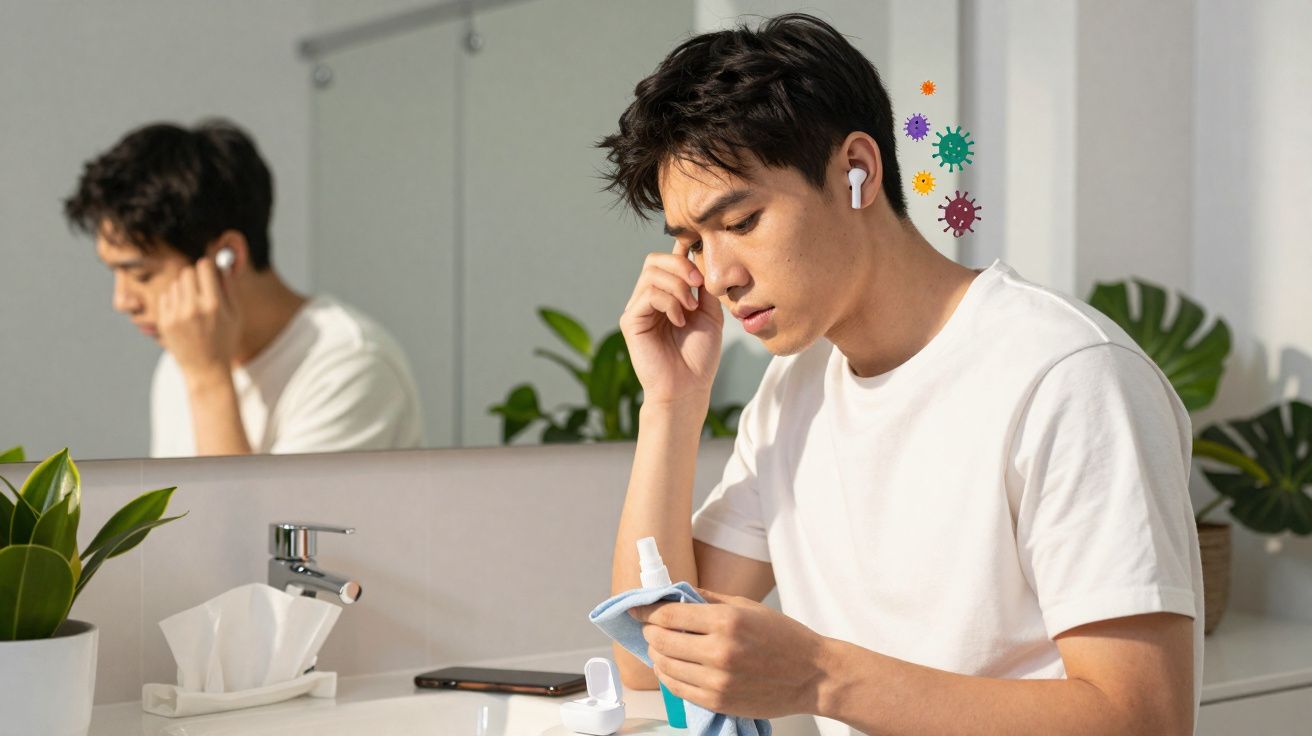
Whether you’re catching up on a podcast, streaming music or taking calls, plenty of us clock up hours each day with headphones on. A 2017 study of 4,185 Australians found people used headphones for an average of 47–88 hours a month.
Most public health guidance about headphones centres on volume and the potential impact on hearing. For instance, to reduce the risk of hearing loss, the World Health Organization recommends keeping the volume below 60% of your device’s maximum, and using tools that track sound exposure and cap volume.
Yet noise isn’t the only issue. Wearing headphones - especially in-ear options such as earbuds - can block the ear canal and press the skin against any dirt or bacteria the device is carrying.
Here’s what to know to keep your ears clean and safe.
First, let’s take a look at your ear
Over-ear headphones sit over the entire outer ear - elastic cartilage covered in skin, shaped to help capture soundwaves. In-ear headphones (and hearing aids) are designed to sit in and cover the opening to the external ear canal, known as the concha.
Sound vibrations travel down the ear canal - S-shaped and a few centimetres long - until they reach the eardrum.
The deeper sections of the canal produce earwax and oils. Together, these support healthy skin by keeping it hydrated and less prone to infection.
Small hairs within the ear canal also help control temperature and stop foreign material getting in. Along with earwax, they trap and gradually move tiny particles, shed skin and bacteria out of the canal.
Earwax is essentially the ear’s own "self-cleaning" system, and most of the time we only pay attention to it when there’s an excess.
Too much buildup can muffle hearing and can even block the fine mesh on your earpods. However, don’t try to dig earwax out yourself. If you’re worried, ask a pharmacist or GP for advice.
How headphones can affect the ear’s bacteria and ear health
A healthy ear canal contains a variety of harmless microbes - mainly bacteria, but also fungi and viruses. Because these organisms compete for space and nutrients, having a diverse mix can make it harder for potential pathogens (disease-causing microorganisms) to gain a foothold.
But headphones - as well as other in-ear devices such as hearing aids and earplugs - can disrupt the balance between "good" and "bad" bacteria.
One 2024 study compared bacteria in the external ear canals of 50 hearing-aid users and 80 people who didn’t wear them. The researchers found that hearing-aid users - whose external ear canals are blocked for long periods - had fewer types of bacteria than those who didn’t use hearing aids.
A separate 2025 study examined how headphone use (including over-ear, in-ear and on-ear models) influenced fungi and bacteria in the ear canal. It reported an association between headphone use and a higher risk of ear infections, particularly when people shared headphones.
One reason may be that headphones - in particular in-ear devices - can make the external ear canal warmer and more humid. Moisture is especially likely to become trapped if you’re exercising and sweating while wearing headphones.
Greater humidity raises the likelihood of ear infection and discharge, including pus.
Using in-ear devices such as hearing aids or headphones for long stretches can also disrupt the ear’s natural "self-cleaning" process, which relies on earwax.
So, what should I do?
Many of us need - or simply enjoy - headphones as part of everyday life. For better ear health, though, it helps to build in breaks.
Let your ear canals "breathe" at different points during the day, so they’re not continually blocked and becoming hot and humid.
You might also consider bone conduction headphones. These leave the ear canal open because they send sound through the skull straight to the inner ear.
They can be costly, however. And although they allow your ears to breathe, strong vibrations (high volume) can still harm hearing - so, as with all headphones, you still need to be cautious.
Other tips
Clean your devices regularly
Advice varies from cleaning once a week, to daily, to after a workout.
For example, wipe your headphones with a cloth, or use a soft-bristled children’s toothbrush lightly dampened with mild soapy water. Pat them dry with paper towel, then leave them for a few hours to fully dry before recharging or using again.
It’s best to follow the manufacturer’s instructions. Remember to clean the case and the body of your earbuds too.
Don’t use headphones when you’re unwell
If you have an ear infection, avoid earphones, as they may increase heat and humidity in the ear and delay recovery.
Watch for symptoms
If your ears become itchy, red or start to produce discharge, stop using in-ear devices and seek medical advice.
Rina Wong (Fu), Research Fellow, Health Sciences, Curtin University
This article is republished from The Conversation under a Creative Commons licence. Read the original article.



Comments
No comments yet. Be the first to comment!
Leave a Comment