
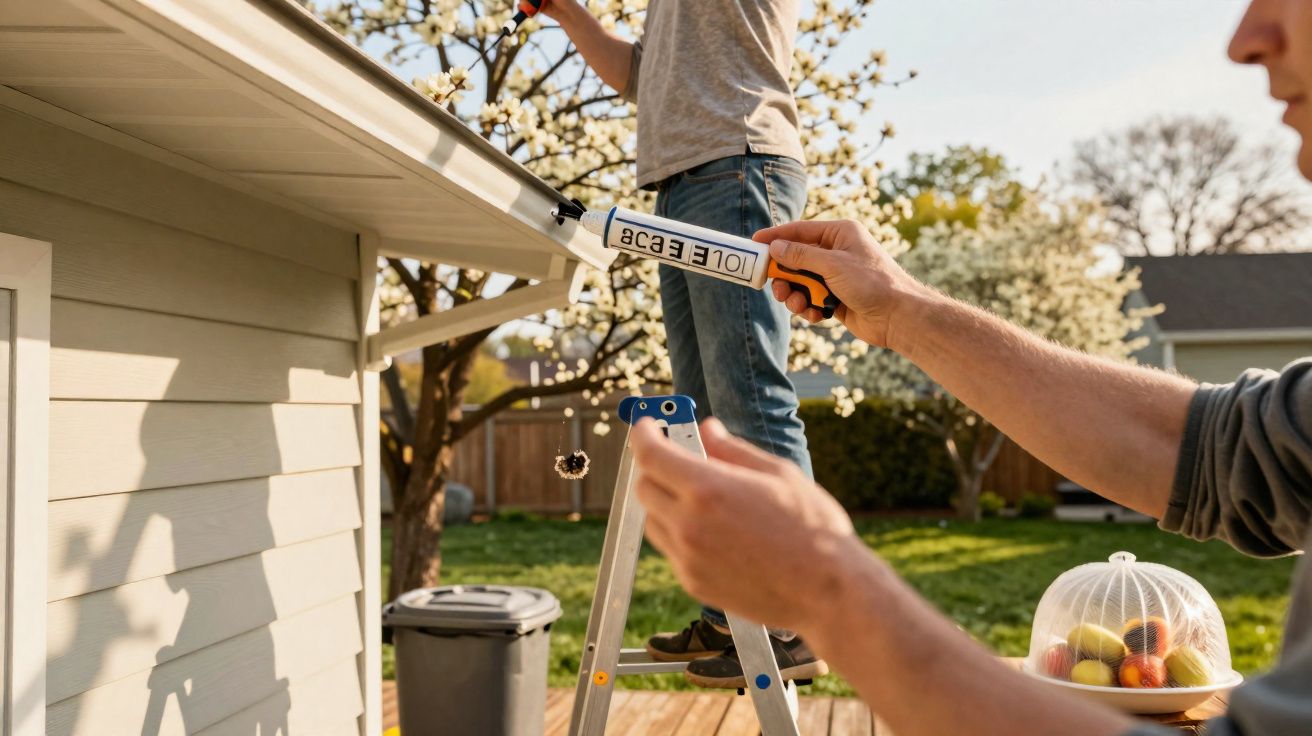
Many homeowners only realise there’s an issue once the patio has already been taken over by yellow-and-black squadrons. Yet the big wasp surge can often be reduced dramatically with one simple step done early: a quick walk around the outside of the house and sealing up hidden weak points. If you act early in the year, you disrupt nest-building before it even gets underway.
Wasps deliberately scout out your property
Wasps don’t just drift into your garden by chance. As soon as temperatures rise in late winter and spring, the queens become active. They specifically hunt for places that offer three key things:
- easy-to-reach food - sugary or protein-rich
- warm, quiet corners
- sheltered cavities suitable for a nest
That includes the usual trouble spots around homes and gardens:
- eaves and open gaps beneath the roof covering
- roller shutter boxes and cavities within external walls
- carports, sheds, timber cladding
- tall, dense hedges or climbing plants
- neglected letterboxes or old ventilation openings
If a wasp queen finds an “all-inclusive package” at your place - food nearby and a protected void - she often starts building within a few days. What begins as something no bigger than a small paper saucer can become, by mid-summer, a busy colony with hundreds of insects - right above the patio or beside a child’s bedroom window.
The overlooked defence against wasps: seal weak points early
The most important step to prevent a wasp invasion is a short, thorough inspection around the house between mid-February and early April - and the consistent sealing of every potential entry point.
This is exactly what many households skip. People clean the windows and bring the garden furniture up from the cellar, but hardly anyone checks the cracks, joints and cavities where a nest could later be attached.
How to carry out a spring inspection for wasps
Set aside around 10 to 15 minutes and work through the following areas methodically:
- the junction between the exterior wall and the eaves
- roller shutter boxes, especially older designs
- joints and cracks in brickwork or render
- holes in timber cladding, carports and sheds
- gaps around window sills and window frames
- open pipes, vents and unused openings
Treat anything larger than a match head as worth addressing. A queen needs only a tiny access point to establish a starter nest out of sight.
Suitable materials for sealing gaps
What you use depends on the surface and the size of the opening:
- sealant or silicone for narrow joints around windows and masonry
- expanding foam for larger cavities in dry areas
- fine metal mesh for vents that still need to function
- timber battens or sturdy boards for visibly open edges
The key is to act before the main building phase begins. Ideally, start from mid-February, and depending on where you live, continue up to early April. If you notice a suspicious spot later in the year, sealing it can still be worthwhile - acting late is better than spending months annoyed by a nest on the outside wall.
Reduce food sources so wasps aren’t attracted in the first place
Alongside structural prevention, the “buffet” factor matters a lot. A wasp queen is more likely to stay if food is readily available close to where she wants to nest.
Everyday attractants that draw wasps in
- uncovered juice glasses or sweet fizzy drinks on the balcony
- barbecue leftovers, greasy plates and bowls left without covers
- overflowing bins without a tight-fitting lid
- ripe windfall fruit beneath fruit trees
- pet food left sitting outside in bowls
If you keep these under control, you remove much of the motivation for a colony to establish itself right by the house from the outset.
A few simple habits to change
Small routines can greatly reduce how appealing your garden is:
- clear the table completely after every meal outdoors
- keep drinks covered outside or leave them in bottles
- use bins with lids and replace bin liners regularly
- quickly wash pet bowls after feeding dogs and cats
- pick up and dispose of rotting fruit from the ground
Every source you remove is one less reason for wasps to make your property their regular local.
Active deterrents: extra measures that can help
Even with good prevention, wasps may still appear. In that case, additional steps can help keep them at a distance.
Make it look like the territory is already taken
Artificial nests made from paper or fabric are widely used. Put them up early in the year under the eaves or in the carport. Many wasp species avoid places where they think there is already competition. It isn’t guaranteed, but combined with sealing and food control, it can make a noticeable difference.
Scents that wasps dislike
Some essential oils are considered unpleasant for wasps when used regularly and in moderate amounts, such as:
- clove
- lemongrass
- peppermint
- rose geranium
- lavender
A few drops mixed into water with alcohol or a neutral carrier oil, placed in small dishes or sprayed onto table legs and railings, can discourage them. If children, pets or allergy sufferers are around, use very small amounts and test on a limited area first.
Targeted traps - used sensibly
Where there’s no real alternative, such as busy garden seating or outdoor dining areas, traps may be an option. The important point is to set them up in a way that harms as few other insects as possible. Choose protein-based bait (for example, small pieces of meat) so bees and other nectar feeders are less likely to be attracted.
When it’s time to call in the experts
Despite every precaution, a nest can still develop - for example on an outside wall, inside a roller shutter box, or in the roof space. As soon as you see many insects flying in and out, keep your distance. DIY attempts involving sprays or fire are dangerous and can easily lead to stings or even a fire.
In these situations, it’s worth calling a pest controller or - depending on your area - the fire service or a local beekeeping association. Professionals can judge whether the nest needs removing or whether simply keeping away from it is sufficient. Near children’s bedrooms, patios or roof windows, professional intervention is usually the sensible option.
Why this simple step works so well
Sealing cracks and gaps may sound unremarkable, but it’s highly effective. You’re simply denying wasps access to the best building sites. Instead of nesting in a sheltered roller shutter box, they are more likely to move on to a more natural location, often further from the house.
Many people put a lot of effort into elaborate deterrents in high summer, while overlooking the quieter groundwork in late winter. If you change that, you stand a good chance of a much calmer summer - with barbecues where guests can eat rather than constantly getting up to dodge wasps.
Practical checklist for a wasp-safe start to the season
| Time period | Action |
|---|---|
| Mid-February – early April | Walk around the house, seal cracks and openings, protect vents with mesh |
| From March | Hang artificial nests, keep an eye on typical nesting spots |
| Spring to autumn | Avoid food sources, keep the patio clean, secure rubbish properly |
| If flight activity is heavy | Monitor the suspect area, contact a professional if you suspect a nest |
If you put these few tasks into your calendar, you and your family can enjoy noticeably quieter summer months. Wasps remain useful pest hunters in the garden, but they’re far less likely to hover around the coffee table or get uncomfortably close to the children’s paddling pool.





Comments
No comments yet. Be the first to comment!
Leave a Comment