
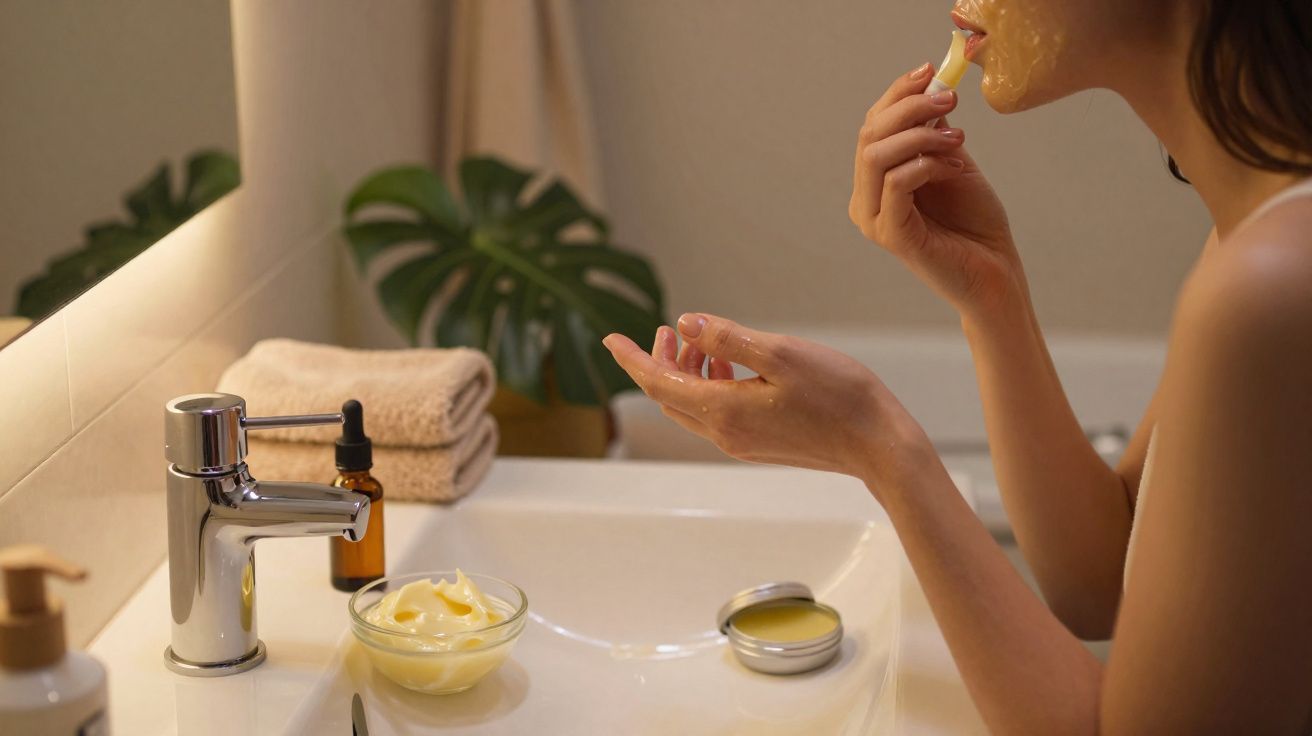
A simple DIY formula can suddenly change everything.
Many people know the pattern: you keep swiping on a chemist’s lip balm, it feels better for a moment, then not long after your lips feel even tighter and start to sting. Out of that exact frustration, more and more people are switching to a homemade alternative made from just a few natural ingredients - and one that can noticeably help lips recover overnight.
Why so many lip balms only disguise the problem
Anyone who regularly reaches for sticks from the chemist or pharmacy often ends up asking the same thing: why are my lips still dry - or even more sensitive? The answer is usually hidden in the INCI list, printed in tiny letters on the back.
A lot of products contain mineral oils such as Paraffinum Liquidum, Petrolatum, or Cera Microcristallina. They are inexpensive, odourless, and create an instant soft, smooth feel. At first glance that seems like ideal care. In reality, it often amounts to a coating on the skin - comparable to a thin plastic layer.
"Mineral oil-based sticks create a pleasant feeling - but provide hardly any nutrients for the skin."
This layer may hold in moisture briefly, but it brings neither vitamins nor essential fatty acids. The lips aren’t genuinely rebuilt; they’re simply “sealed”. If you keep reapplying, you keep the cycle going without addressing the real weak spot: a compromised, dehydrated mucous membrane that urgently needs restorative care.
The vicious circle of constant reapplication
A typical scene looks like this: the stick is always within reach - on the desk, in a jacket pocket, in the car. Every few minutes you apply more because the comfortable feeling disappears so quickly.
That’s exactly what makes things worse. The paraffin layer effectively tells the skin: “There’s enough protection, you don’t need to produce your own lipids.” The skin becomes sluggish and the natural barrier grows thinner. As soon as the film is worn off, licked away, or wiped away, the unprotected mucous membrane is left even more vulnerable than before.
There’s another factor: lips have no sebaceous glands of their own. By nature they are delicate and rely on external fats. If those fats are “dead” and inactive - as with many mineral oils - the rebuilding effect is missing. Cracks, burning, and fine flaking can then become the norm.
Three natural raw materials that can change that
The good news: an effective overnight treatment doesn’t need a chemistry set - just three minimally processed ingredients:
- 15 g raw, unrefined shea butter
- 10 ml plant oil (e.g. almond, olive, or jojoba)
- 5 g candelilla wax
This blend works in a completely different way from a classic chemist’s stick. Instead of a dense, plastic-like barrier, shea butter and plant oil provide real nutrients, sink into the upper layers of skin, and support the thin lip skin from within.
"Shea butter + plant oil + candelilla wax: a minimalist mix that actually rebuilds rather than merely camouflaging."
Candelilla wax ensures the balm stays stable and doesn’t run out of the jar. The key difference versus mineral oils: the protective film still lets the skin function, rather than “locking it in” completely.
Shea butter: the builder for cracked lips
In natural cosmetics, shea butter has long been treated as a secret weapon for stressed skin. It contains vitamins such as A and E, nourishing fatty acids, and natural accompanying compounds that can kick-start regeneration. Unlike many synthetic fats, it bonds well with the skin and penetrates a little deeper.
On dry lips, shea butter acts like a soft mortar: it fills tiny fissures, eases stinging, and helps the surface feel elastic again. If you choose an untreated, raw product, you benefit from the full range of these components - refined versions often lack precisely those effective accompanying substances.
Plant oils and candelilla wax: the protective duo
The second pillar of the recipe is a high-quality plant oil. Good options include:
- Almond oil: especially gentle, suitable even for sensitive skin
- Olive oil: rich in antioxidants, lightly occlusive
- Jojoba oil: technically a liquid wax, very stable and similar to skin
- Apricot kernel oil: fine and pleasantly light, popular for sensitive skin
These oils supply essential fatty acids that strengthen the natural barrier and reduce dryness from within. That means there’s less need to keep topping up constantly.
Candelilla wax - a plant wax from the leaves of a desert shrub - gives the mixture structure. It creates a delicate protective film without sealing the lips shut. At the same time, it helps stop the balm melting in a trouser pocket or spreading during the night.
DIY overnight lip balm: the ideal mixing ratio for a night balm
For a rich overnight treatment, a simple ratio has proven itself:
| Component | Percentage | Function |
|---|---|---|
| Shea butter | 50 % | Repair, regeneration, suppleness |
| Plant oil | 30 % | Elasticity, moisture balance |
| Candelilla wax | 20 % | Protective film, stability |
With this mix, the balm stays firm in the jar, yet melts immediately on contact with skin or fingertip. If you do use it in the daytime like a normal lip balm stick, it still spreads comfortably without feeling sticky.
How to make it successfully using a bain-marie
To make it, you only need kitchen scales, a heatproof beaker, and a small pan for a bain-marie. Start by melting the wax first, as it needs the highest temperature. Once it’s almost liquid, add the shea butter and the plant oil.
Stir until you have a uniform, clear mixture. The important point is to keep the heat gentle so vitamins and sensitive fatty acids aren’t destroyed unnecessarily. As soon as everything has melted, pour the liquid straight into a clean - ideally disinfected - jar.
"Gentle heat, brief warming, clean jars - that’s all this balm needs."
As it cools, the mixture sets. If you like an especially smooth finish, you can give the jar another quick stir after a few minutes to help prevent crystals forming.
Why night-time is the best time to apply it
While we sleep, many of the skin’s repair processes run at full speed. No drinks, no eating, no constant talking - the balm stays on the lips much longer and has more time to work. That’s why this window is ideal for an intensive treatment.
Rather than applying the balm thinly during the day like a stick, night-time use is what makes the difference. The lips can calmly absorb fats and vitamins. Many users report that one to two generous applications per week are enough to noticeably shorten cracked phases.
The right technique: apply thickly like a mask
For maximum effect, the balm needs a certain thickness. In the evening, take a generous amount with clean fingers and spread it over the entire lip area - ideally slightly beyond the edge, which is often cracked too.
The visible, glossy layer works like a care dressing. It shields against dry central-heating air and releases the fats little by little. By morning, there’s often only a thin residue left on the skin, which can be gently removed with a soft cloth. What’s left are smoother, softer lips that split less easily during the day as well.
What to consider if you have skin problems
If you’re prone to allergies, test new oils on a small area first, such as the inner elbow. If you have pronounced inflammation, open wounds, or frequent herpes outbreaks, diagnosis belongs with a dermatologist.
Natural substances can irritate too - for example, if you have a nut allergy and use almond oil. In those cases, more neutral oils such as jojoba are often the better choice. Fragrances or essential oils are generally unnecessary in a lip balm - they can irritate quickly and don’t offer any real care benefit.
Long-term effects: less “stick dependence”, more resilient lip skin
If you switch consistently for a few weeks to mineral oil-free, nutrient-rich care, most people notice two things: the gaps between applications get longer, and the lips feel more robust even in winter. The constant reach for the stick fades because the tight feeling no longer appears.
At the same time, it’s worth considering other everyday influences: drink enough, avoid cold draughts, and don’t constantly lick your lips - all of this helps the homemade night balm deliver its full effect. In that way, a simple three-ingredient recipe becomes a practical routine that makes chemist’s sticks step by step unnecessary.





Comments
No comments yet. Be the first to comment!
Leave a Comment