
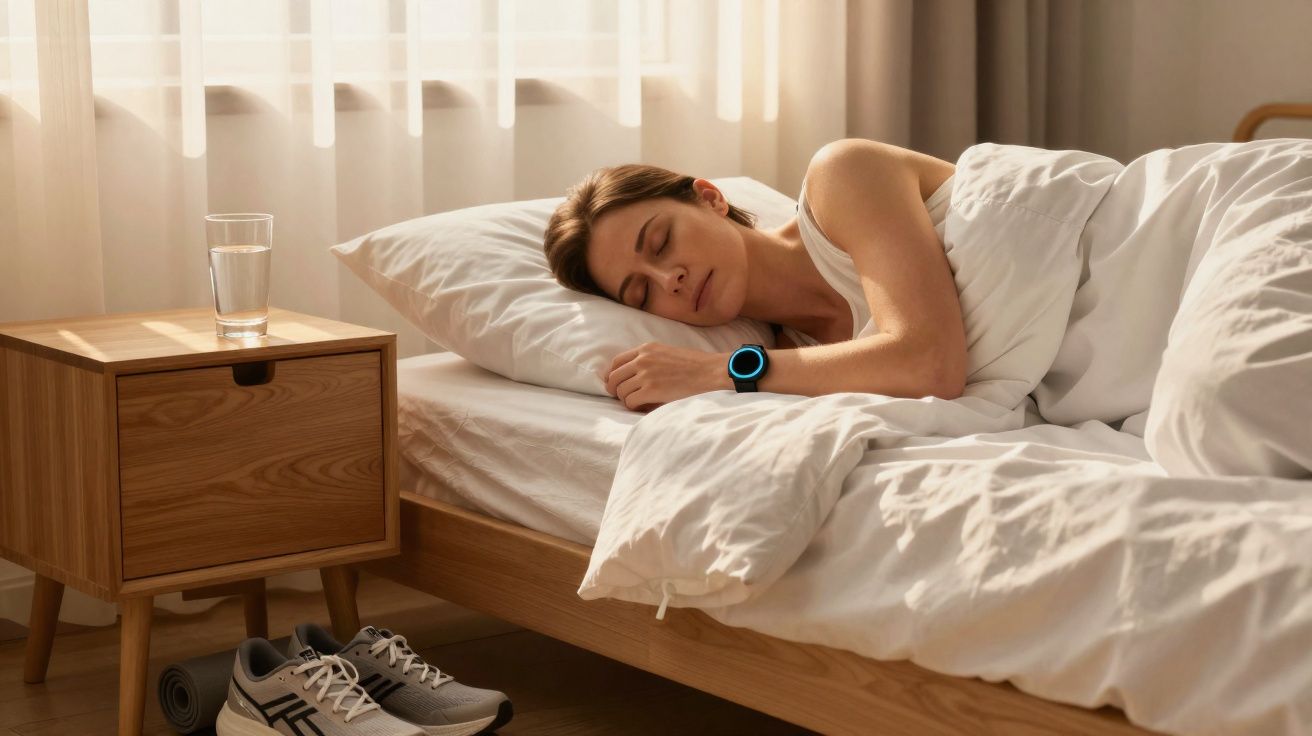
Most people end up giving up either their exercise routine or their sleep.
Fresh evidence indicates this common dilemma should not be left to chance. When the day is too short, researchers say that one option is far more likely to leave you healthier and more active the following day.
Sleep and movement: two pillars, but sleep comes first
On paper, wellbeing guidance is straightforward: get seven to nine hours’ sleep and be physically active on most days. In practice, it is rarely that neat. Late-night messages, early starts and endless responsibilities mean many adults compromise on both.
A major study led by Flinders University in Adelaide argues that one behaviour should take clear precedence: sleep. Their findings suggest a good night’s rest has a stronger influence on how much people move the next day than day-to-day activity has on how well they sleep later.
Sleep quality and duration shaped next‑day movement levels more strongly than exercise shaped that night’s sleep.
The research team, led by Josh Fitton, examined more than 28 million days of information from over 70,000 people across the globe. Participants used under-mattress sleep sensors and wrist-worn fitness trackers that captured nightly sleep patterns alongside daily step totals.
Almost nobody meets both targets
The results show how far everyday routines can drift from standard recommendations.
- Fewer than 13% regularly slept 7–9 hours and logged at least 8,000 steps a day.
- Almost 17% slept under 7 hours and walked fewer than 5,000 steps a day.
That second category sits in a risk-heavy zone. Short sleep combined with low movement is associated with greater risk of heart and circulatory disease, earlier death from all causes, low mood and weight gain. In addition, inadequate sleep on its own has been linked with poorer memory, increased risk of Alzheimer’s disease and worse mental health.
Fitton and colleagues note that many guidelines do not fully reflect how difficult it can be to balance competing demands. People are told to “move more” and “sleep enough”, then run into schedules that barely accommodate one of those goals, let alone both.
The study challenges whether standard health advice reflects how people actually live and what they can realistically manage day to day.
Flinders University on why better sleep drives more movement
The standout result, reported in Communications Medicine, is about which way the effect runs. Stronger sleep consistently forecast a more active next day. A very active day, however, did not consistently lead to improved sleep that night.
Those who slept for longer and with better quality tended to rack up more steps the following day. The researchers propose several explanations:
- A well-rested brain copes better with exertion, so exercise feels less intimidating.
- Higher energy makes everyday activity-walking, cycling or taking the stairs-more likely.
- Improved mood can push people towards moving rather than sinking into the sofa.
The opposite pathway-exercise influencing sleep-appears much less straightforward. Timing can play a part: hard training late in the evening may leave someone feeling too alert to drift off. Lighter activity earlier in the day may benefit some people, but it is not usually enough to correct ongoing sleep restriction. Overall, the analysis did not identify a reliable pattern where extra steps in a day routinely produced longer or deeper sleep that night.
High‑quality sleep acts less like a reward at the end of the day and more like the fuel that powers the next one.
What scientists advise when time is tight
Co-author Danny Eckert is direct about what to do when you are repeatedly choosing between a workout and an early night. If it is a regular trade-off, the evidence indicates you should prioritise sleep. That is not a claim that exercise is unimportant; rather, sleep often provides the base that makes being active feasible in the first place.
For adults balancing work, childcare and caring responsibilities, this shifts the framing. Instead of treating sleep as optional or easily stretched, the research positions it as the starting point for an active lifestyle-not the thing you fit in last.
A few practical adjustments may help make sleep non-negotiable:
- Keep sleep and wake times consistent, including at weekends.
- Reduce screen use and silence notifications at least 30–60 minutes before bed.
- Make the bedroom dark, quiet and slightly cool.
- Cut back on caffeine later in the day, particularly after mid-afternoon.
These steps are not instant fixes, but they can turn an unpredictable night into something closer to steady rest. Over days and weeks, that regularity can make it easier to move more during the day.
What counts as “enough” sleep and movement?
International and national organisations offer broad targets, even though individuals vary. As a general guide:
| Health goal | Common recommendation |
|---|---|
| Nightly sleep for most adults | 7–9 hours |
| Weekly moderate activity | At least 150 minutes |
| Weekly vigorous activity | At least 75 minutes |
| Daily step count | Around 8,000 steps on average |
The World Health Organization recommends at least 150 minutes a week of moderate exercise-such as brisk walking-or 75 minutes of vigorous activity-such as running. Research also commonly points to roughly 8,000 steps a day as a reasonable long-term target, rather than the frequently cited 10,000.
Sleep needs are more variable. Genetics, age, health conditions and shift work all influence how much rest a person can function well on. Some adults feel at their best with 7 hours; others only feel properly alert closer to 9.
Why the true situation may be even more concerning
The authors highlight a limitation that may make the findings more, not less, worrying. Much of the dataset came from people who use modern sleep and fitness trackers. This group often has higher incomes, more interest in health metrics and, in some cases, particular sleep or health concerns. Many people who struggle most with both activity and rest may not use tracking devices at all.
There is also a measurement issue: under-mattress sensors and wrist-worn trackers can slightly overestimate sleep. They may interpret lying still as sleep even when someone is awake. Taken together, those factors suggest the share of adults who truly hit both sleep and movement guidelines could be lower than the already modest 13% reported.
How to apply this research day to day
Choosing between the gym and your pillow
Late in the evening, many people face the same decision: fit in a 45‑minute workout or go to bed. This evidence suggests that if you are making that compromise often, protecting sleep may do more for your long-term health. With better rest, you are more likely to be active across the whole next day, rather than only during one hurried session.
That is not an argument for staying sedentary. Instead, it points to a more sustainable approach: stabilise sleep first, then build activity levels from a stronger foundation. Once nights are more consistent, you can use the extra energy to plan regular exercise earlier in the day.
Small steps that support both sleep and movement
Some routines can bolster sleep and movement at the same time. Gentle daytime walking can lower stress, increase exposure to natural light and help keep your body clock steady. A short lunchtime walk or a quick stretch before dinner usually takes less willpower than a full workout, yet it still lifts your step count and may make it easier to feel ready for bed at a regular time.
Another helpful approach is to aim for “minimums” rather than perfection. For instance, you might consistently protect 7 hours of sleep and target at least 4,000–5,000 steps on busy days, then work towards 8,000 or more when time allows. That flexible baseline can prevent a slide into total inactivity or ongoing sleep loss when life becomes hectic.
The findings also raise a wider issue: how many other health goals depend on sleep first? Metabolism, mental health and appetite regulation all shift when rest is cut short. Better sleep can make other changes-whether dietary tweaks or a structured exercise plan-feel more achievable rather than like yet another draining item on the list.





Comments
No comments yet. Be the first to comment!
Leave a Comment