
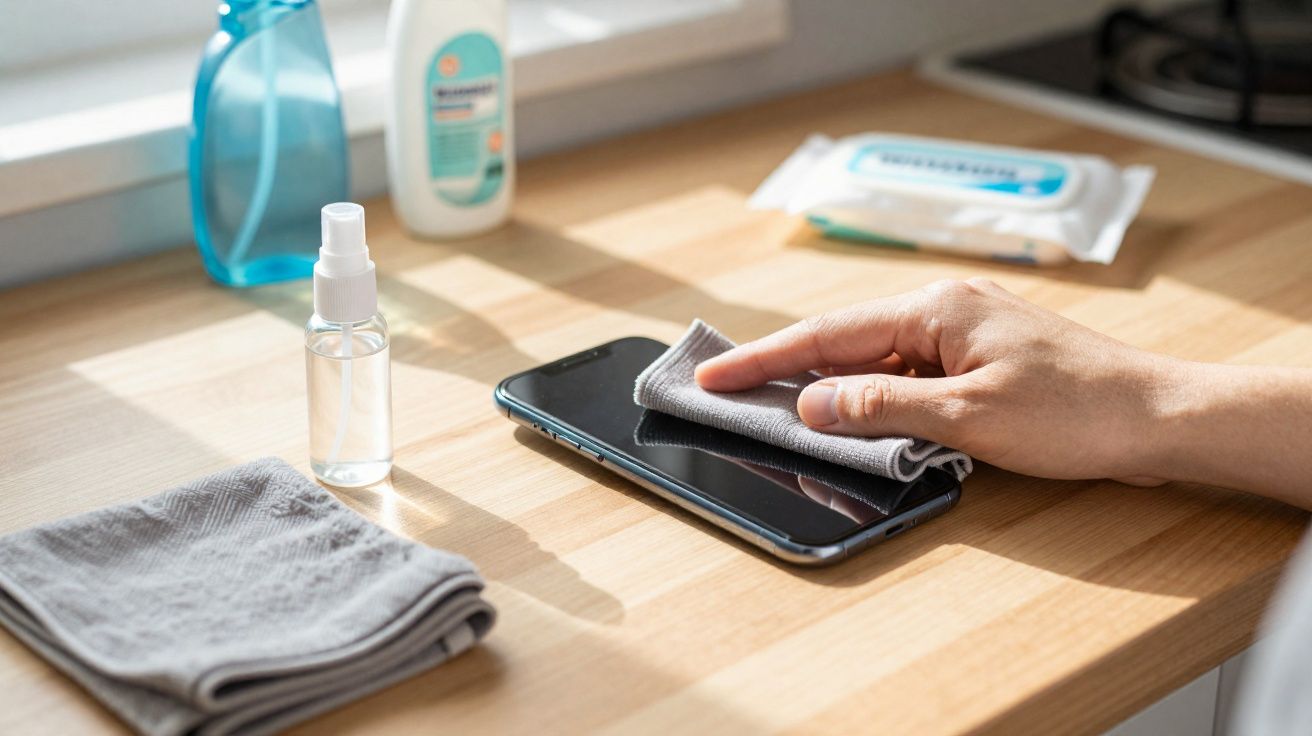
Every day, millions of people wipe down their smartphone with something that seems to leave it gleaming clean - while quietly ruining the display.
On the surface, everything looks fine: fingerprints disappear, the glass looks spotless, and the phone feels fresh again. Yet something else is happening in the background. The display’s invisible protective coating is being worn away. After a few months, the screen can look dull, feel more delicate, and become more prone to scratches - and hardly anyone links it back to the wrong cleaning routine.
Everyday cleaners that slowly damage your smartphone display
Smartphones are everyday tech, but their surfaces are far less forgiving than many people assume. A lot of us automatically reach for the same products we use in the bathroom or kitchen - and that’s a classic mistake.
"What makes window glass shine can permanently damage a phone display."
Antibacterial wipes: convenient, but risky for the display
Hygiene wipes have been popular for years. They live in the car, sit on the desk, and get thrown into handbags. Many people use them on their phone in a hurry - especially in winter when viruses are doing the rounds.
The issue is that plenty of these wipes contain harsh ingredients, particularly chlorine-based compounds or strong disinfectants. Over time, they attack the oleophobic (grease-repellent) coating that helps reduce fingerprints and allows your finger to glide smoothly across the screen.
What can happen gradually:
- the surface starts to look more matte
- greasy marks stick faster and are harder to wipe away
- swipe gestures feel rougher
- in the worst case, fine micro-scratches appear
Glass cleaner: great for windows, bad for your smartphone
Another common choice is glass cleaner. Many people assume the display is “just glass”. That’s only partly true. A phone display is built from multiple layers - including a very thin, sensitive coating.
Glass cleaners often contain:
- powerful solvents
- ammonia or similar chemicals
- surfactants that can leave residue behind
These ingredients can erode the display coating bit by bit. The result is a duller screen that looks less crisp than it did at the start - particularly in bright light or when viewed against reflections.
Household staples like vinegar cleaner are a bad idea
Lots of people swear by mild, “natural” household solutions. Vinegar cleaner is a typical example. It’s brilliant for kettles, taps, or tiles - but not for smartphone displays.
The acid can:
- attack delicate coatings
- react with adhesives around the edges
- lead to fine, cloudy patches over time
Precisely because vinegar cleaner has a reputation for being “gentle”, many people don’t realise it can be problematic on high-tech surfaces.
Why your smartphone display turns dull without you noticing the cause
The damage rarely appears overnight. It builds up slowly, which is what makes it so deceptive.
A typical pattern many users recognise:
- brand-new phone, brilliantly clear screen
- months of cleaning with household products or wipes
- a slightly dull, draggy feel when swiping - ignored at first
- more fingerprints, more smearing, and you end up rubbing harder
- later: a visibly duller display, possibly with more scratches
"The real catastrophe happens invisibly: the thin, barely noticeable protective layer comes off piece by piece."
Many people then blame it on “ageing” or assume the glass itself has degraded. In reality, it was often down to the wrong cleaning habit.
How to clean your smartphone properly
The good news: you can clean a display reliably without damaging it. You don’t need expensive specialist kits or aggressive chemicals.
The simple everyday option: a microfibre cloth
For day-to-day use, a clean microfibre cloth is often all you need. Used dry, it can remove:
- fingerprints
- dust
- light smears
What matters is that the cloth is soft and free from grit. If the cloth is dirty, it can cause scratches itself - for example, if grains of sand or other particles have become trapped in the fibres.
For a deeper clean: water and isopropyl alcohol
If you want something more hygienic, many manufacturers recommend a mix of distilled water and isopropyl alcohol.
"A proven ratio is 50 % distilled water and 50 % isopropyl alcohol at 70 volume per cent."
How to do it:
- switch the phone off and disconnect it from the charging cable
- pour the mixture into a small spray bottle (for the cloth only, not the device)
- lightly dampen a microfibre cloth - not soaking wet
- wipe the display using calm, straight strokes
- clean edges and cut-outs carefully, without rubbing into openings
- let the device dry briefly, and only then switch it back on
In this dilution, isopropyl alcohol cleans and disinfects without attacking the display’s protective layer as aggressively as many household chemicals do.
Cleaning habits you should stop
A lot of damage comes not only from the wrong cleaner, but also from how it’s used.
Never spray directly onto the device
Liquid sprayed straight onto a phone can run into the speaker grille, microphone holes, or the charging port. That’s a risk even with supposedly “harmless” liquids.
The safest rule is:
"Always spray onto the cloth first, then wipe the phone - never the other way round."
Don’t use rough materials
Kitchen roll, tissues, or old cotton rags can feel soft, but they often contain tougher fibres or lint that can scratch. Dry rubbing with too much pressure is also harmful.
Best options:
- smooth microfibre cloths designed for glasses or displays
- if needed: a very soft, lint-free cotton cloth
How to significantly extend the life of your display
Treating your phone display gently saves money and frustration in the long run. Small daily adjustments are enough.
Screen protector and case: more than just appearance
A high-quality screen protector (glass or plastic) absorbs much of the day-to-day wear. Even if you accidentally use the wrong cleaner, it hits that layer first - not the original display.
A sturdy case also reduces the risk of impact damage. Many cracks start at the edges after a knock, and a case cushions exactly those areas.
Cleaning with restraint and purpose
Cleaning more often doesn’t automatically mean cleaning better. If you wipe your phone several times a day with aggressive wipes, you’re more likely to harm it. A realistic routine for a normally used smartphone:
- a quick daily wipe with a dry microfibre cloth
- a thorough clean 1–2 times per week using the water/isopropyl mix
- extra disinfection only when genuinely necessary (e.g. after illness)
A closer look at hidden risks and sensible alternatives
One factor many people overlook: leftover cleaning residues can form a smear film that makes the image look less sharp and can affect colour reproduction. Mixing too many different products increases the chance of building up these layers.
Good alternatives are simple, clearly labelled screen cleaners that explicitly state they are suitable for smartphones, tablets, and laptops. They typically use mild formulas designed for modern coatings.
Anyone using multiple devices at work or at home - such as a laptop, tablet, and smartphone - should adopt one consistent, gentle cleaning routine. That reduces the risk of grabbing an unsuitable cleaner “because it’s within reach”.
Once you see how long a display stays bright with the right care, old habits quickly feel outdated. One unsuitable product from the cleaning cupboard can undo months of careful use in a short time - and a clean microfibre cloth plus a small spray of isopropyl alcohol costs far less than a screen replacement.





Comments
No comments yet. Be the first to comment!
Leave a Comment