
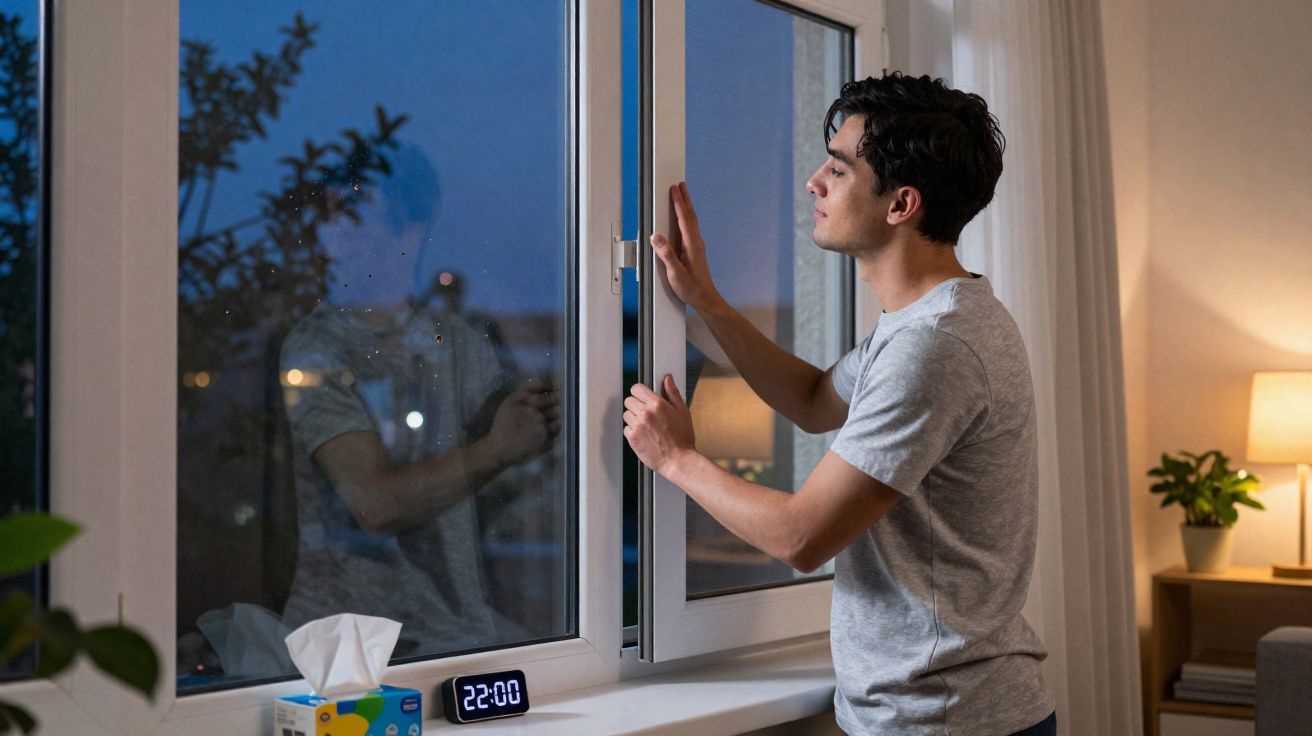
With temperatures rising, the urge to fling open the windows and let fresh air in gets stronger. In spring, though, that can be a delicate balancing act – especially for people with hay fever. Timing makes the difference between genuinely fresher indoor air and inviting in an extra dose of pollen, along with watery eyes, coughing and a blocked nose.
Why ventilation in April suddenly becomes a problem
In spring, nature bursts into life – and with it, the amount of pollen in the air shoots up. Trees, shrubs and grasses release tiny particles that the wind can carry for kilometres. For people without allergies it is usually a non-issue; for allergy sufferers it can be relentless.
"In April, pollen concentrations rise sharply – getting the airing time wrong is enough to noticeably worsen symptoms."
At the same time, experts still advise airing rooms regularly. Without air exchange, moisture builds up indoors, mould can form more quickly, CO₂ levels climb, and tiredness and headaches become more common. That is the dilemma: you do need fresh air, yet outside air often contains plenty of pollen.
The answer is not to stop airing your home, but to plan it smartly: at which times of day are the fewest pollen particles likely to enter the house or flat?
Morning: often the best window for fresh air
Your best odds are usually in the early morning. The air tends to be more humid then, and there is often dew on grass and plants. That moisture keeps pollen closer to the ground; many particles stick to surfaces and are less likely to swirl around.
In practical terms, airing early can improve indoor air quality without immediately dragging a full pollen load inside.
How long to air your home in the morning
- Open windows wide rather than leaving them on the latch
- Five to ten minutes of “shock ventilation” is enough in most homes
- Aim to ventilate before 9 am; on high-pollen days, earlier is even better
- Use cross-ventilation (open windows on opposite sides) to swap out air quickly
If you work from home or are in the house for longer in the morning, it pays to use this time window consistently. After that, outdoor air typically becomes more challenging.
Why you are better off keeping windows shut between 11 and 16
From late morning onwards, sunlight warms the ground, rooftops and vegetation. The result: trees and grasses release far more pollen, and rising warm air currents lift the particles into higher air layers. Up there, they can stay in circulation for hours.
For allergy sufferers, this is usually the toughest part of the day:
- Between roughly 11 and 16, pollen concentrations often reach their peak
- Open windows can act like a funnel for allergens
- Even a few minutes of airing can noticeably increase indoor exposure
If you ventilate at this time, you are effectively bringing the problem straight into the bedroom, living room or home office. It can be particularly risky for children, people with asthma and anyone whose airways are already irritated.
The evening trick: ventilate only after 22 for hay fever and pollen
Many people think, “I’ll air the place in the early evening when it’s cooled down a bit – that’ll be fine.” In April, that instinct often backfires.
As the sun sets and temperatures drop, something else happens in the air: pollen that was carried into higher layers during the day gradually sinks back down again. Experts often describe this vividly as a “pollen shower”.
"Between about 18 and 22, pollen practically rains back down towards the ground – open windows catch it like a net."
If you ventilate during this phase, you can pull in another substantial surge of pollen. That is exactly why allergy specialists recommend swapping the air later at night.
Why after 22 is usually the best time
From around 22 onwards, things often settle:
- Many plants reduce and then stop releasing pollen as the evening progresses
- A large share of particles drops to the ground or clings to surfaces
- The air becomes noticeably clearer, and exposure tends to be lower
If you wait until this time to open windows wide, you can air out more effectively without unnecessarily irritating your mucous membranes. In hot cities, this effect can shift later because concrete surfaces hold heat longer and cool down more slowly.
Weather and season: it is not only about the clock
The calendar alone does not tell the full story. Weather is another key factor. On days with strong winds or dry warmth, pollen counts can spike.
When ventilation is especially worthwhile
- Straight after rain: Rain effectively washes the air. For a short period after a shower, far fewer pollen particles are airborne.
- On cool, damp days: Pollen tends to move more sluggishly and stays closer to the ground.
- In densely built-up streets: Between rows of buildings, air currents may be weaker, so locally fewer particles may reach you – though the time-of-day rule still applies.
Bright blue skies, dry air and a fresh breeze might sound like ideal “airing weather”, but for allergy sufferers it is often the opposite. The outdoor air can look clean while still carrying large amounts of invisible particles.
How the pollen season is shifting
Milder winters mean the pollen season often starts earlier than it used to. Some trees begin flowering in late winter, while other species join in during April. That overlap can leave many people feeling as if they have symptoms “all the time”.
Typical order of peak exposure:
- Late winter: alder, hazel
- Spring: birch and other deciduous trees
- Late spring through summer: grasses
If you can roughly match your symptoms to the time of year, it becomes clearer why certain weeks feel especially draining – and why your ventilation strategy matters so much during those periods.
Practical tips to reduce pollen indoors
Choosing the right time of day is the biggest lever. A few simple extra steps can strengthen the effect:
- Ventilate briefly but intensely – avoid leaving windows on the latch for hours
- Prioritise the bedroom for early-morning airing and late-night airing after 22
- Do not dry bed linen outdoors while your personal pollen triggers are at their peak
- In the evening, do not leave clothes worn outside lying in the bedroom
- Vacuum regularly using a machine with a fine-particle filter
If your reactions are severe, you can also fit dedicated pollen filters to windows or use an air purifier with a HEPA filter in the bedroom. They are not a replacement for ventilation, but they can reduce exposure noticeably.
Why a fixed ventilation routine helps
Allergies have a habituation element: the more often mucous membranes come into contact with allergens, the more irritated they can become. A clear daily plan consistently cuts down those contact points.
A practical example for an April day in a city flat:
- In the morning, open windows wide for five to ten minutes straight after getting up
- During the day, keep windows mostly closed; only crack them open very briefly if needed
- Avoid ventilating between 18 and 22 where possible
- Late at night, after 22, do another short, strong burst of ventilation – especially in the bedroom
Many people notice a difference after just a few days: fewer sneezing fits indoors, calmer nights, and less throat irritation on waking.
What terms like “pollen shower” actually mean
The phrase refers to the moment when large quantities of pollen sink back down in the evening. As the air layers cool, thermal lift loses strength; particles can no longer stay aloft and instead drift downwards. Near ground level, concentrations rise again quite noticeably – bad news for anyone still sitting in the garden or keeping windows wide open.
A strong gust of wind can have a similar effect: it rips particles from blossoms and grasses or whips up pollen that has already settled, redistributing it. Ventilating during these phases can bring that wave straight indoors.
If you tweak your routines slightly in April – air early in the morning and late at night, use post-rain periods, and avoid the sensitive hours – you can get through hay fever season far more comfortably without having to give up fresh air.





Comments
No comments yet. Be the first to comment!
Leave a Comment