
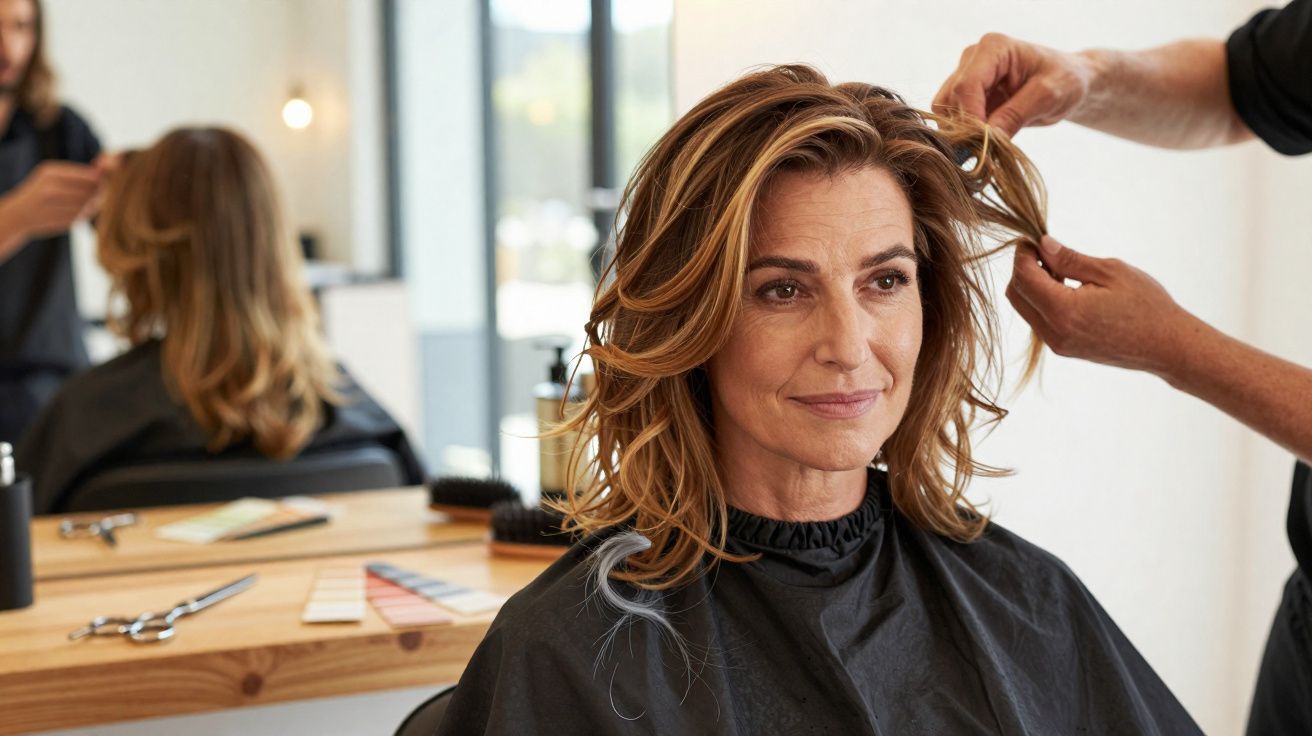
As we get older, it is not only our skin that changes - our hair does too. It often becomes finer and drier, and it can lose its fullness. That is exactly where hairstyle pitfalls appear: certain cuts can add years to your face rather than making you look fresher. An internationally experienced hairdresser explains which three haircuts can make women over 50 look older particularly quickly - and which alternatives genuinely create a more youthful effect.
Why hair behaves differently after 50
Around the menopause, oestrogen levels drop. Hair responds noticeably: it tends to grow more slowly, become thinner, lose elasticity, and look less shiny. Many women start to notice:
- less volume at the roots
- dry, brittle ends
- more cowlicks and flyaway lengths
- sections becoming lighter or turning grey
Styles that looked relaxed and glamorous at 30 can suddenly read as tired, harsh, or overly severe now. That is why professionals often recommend taking a hard look at three very common haircut classics.
Hairstyle 1: Ultra-long, pin-straight hair with no volume
The first problem contender is very long, very straight hair that has little to no movement. Even if Hollywood stars shine on the red carpet with this signature look, in everyday life - especially as hair becomes finer - the effect can quickly turn.
"Very long, flat hair visually drags facial features downwards and emphasises tiredness."
Hair specialists point to several knock-on effects:
- The weight through the lengths pulls the overall shape down.
- Attention shifts to the chin and neck - areas where skin often starts to lose firmness.
- Snapped-off or parched ends can make the whole look appear unkempt.
What works better than XXL lengths
If you adore your long hair, you do not have to chop it all off. The key is the shape:
- Soft layering: Subtle layers around the face add movement and take heaviness out of the lengths.
- Gentle waves: Soft waves created with a blow-dry brush or curling iron add life and make the face look more awake.
- Regular trims: Cutting every six to eight weeks helps prevent that wispy, frayed finish.
Many professionals stick to a simple rule of thumb: aim for a length between the collarbone and the upper chest, rather than letting it grow far down the back.
Hairstyle 2: A chin-length, razor-straight bob with a heavy fringe
The second classic may look sharp on social media, but it can be tricky in real life for women over 50: a precisely cut, chin-length bob paired with a thick, straight fringe.
"A chin-length, dead-straight bob with a heavy fringe can visually compress the face and make fine lines stand out more."
Here is why this combination can be so unforgiving:
- Chin length spotlights common concern areas: The blunt edge sits right where slight jowls or the start of a double chin can be most noticeable.
- A strict fringe directs the gaze: A heavy front section draws all attention to the eyes and forehead - and therefore to fine lines.
- The ‘helmet’ effect: When hair sits around the head without layers or lift, the result can look rigid and static.
How a bob can look younger on women over 50
A bob is still one of the strongest base shapes for mature faces - it simply needs a more modern approach:
- A longer bob: A length between the chin and the collarbone visually elongates and feels softer.
- Loosened edges: Light layers along the face reduce severity and make features look more balanced.
- A softer fringe: Rather than a straight “line”, choose an airy, slightly side-swept fringe or curtain bangs.
For styling, volumising mousse, a round brush, and a side part can make a real difference. The goal is movement - and an instantly more current finish.
Hairstyle 3: Overdone layering in an Eighties style
The third haircut is often chosen in the hope it will look younger, yet it frequently does the opposite: an aggressively layered cut with lots of short and long sections, reminiscent of the Eighties.
"Too many layers rob fine hair of density - instead of fullness, you get a wispy, dated look."
This is especially risky with fine hair:
- Lengths can look thin and shredded.
- The back of the head appears less dense.
- The face ends up framed by a restless outline that distracts from your best features.
A modern layered cut instead of a retro mistake
A touch of layering can be transformative; too much destroys the shape. Professional tips include:
- Large, soft layers: Just a few longer layers through the top create lift without thinning the ends.
- No micro-layers at the nape: This helps avoid the mullet effect.
- Texture with restraint: Point-cutting should be used selectively on the ends, not aggressively throughout the hair.
If you want a modern version of the popular shag look, it is worth choosing an experienced professional and reviewing photos in advance that suit your own hair type.
Which haircuts genuinely look more youthful?
Many stylists recommend that women over 50 choose a length between a classic bob and long hair - roughly around the collarbone. This so-called “midi length” offers several advantages:
- It looks current without trying too hard to be youthful.
- It can be worn down, half-up, or in a relaxed bun.
- It gives hair enough weight without dragging facial features downward.
"A healthy, well-maintained medium-length cut with movement can easily take five to ten years off visually."
Wavy Bob and Long Bob: two favourites
Two options are especially popular among celebrities in their forties and fifties:
- Long Bob (Lob): Usually falls to the collarbone, lightly layered, and looks elegant without feeling severe.
- Wavy Bob: A mid-length bob with soft waves that frames the face and takes hardness out of the outline.
Both styles work on straight hair and naturally wavy textures. If your hair is very straight, you can add shape with a curling iron or sea-salt spray. The trick is to go for slightly imperfect, relaxed waves rather than stiff, uniform curls.
Colour tricks that make the face look fresher
It is not just the cut - hair colour has a huge impact on overall radiance. Professionals often recommend:
- Soft highlights (a balayage effect): Lighter pieces around the face open up the features and make the complexion appear fresher.
- Warmer tones: Golden, caramel, or honey shades usually look more lively than cool, strongly ashy directions.
- Gentle transitions into grey: If you are greying, fine highlights can blend it in harmoniously instead of covering everything with a harsh, solid colour.
Very harsh black and blue-black shades can sit on the face like a shadow and make fine lines more obvious. A slightly lighter, warmer tone noticeably softens that effect.
Care and styling: small details, big impact
Even the best haircut only looks truly rejuvenating if the hair appears healthy and cared for. As hair changes with age, a tailored routine helps:
- Moisturising shampoo and mask for more shine and softness
- Heat protection when using a hairdryer, straighteners, or a curling iron
- Volumising products designed for fine hair that do not weigh it down
One more point: very tight, slicked-back buns or ponytails can look just as harsh as an overly blunt cut. Softer, slightly loosened versions work better, especially when a few fine pieces frame the face.
When it is worth going to a professional
If you have worn the same haircut for years and feel dissatisfied when you look in the mirror, a professional consultation usually helps. Good salons assess:
- face shape and proportions
- hair texture and density
- day-to-day life, styling habits, and time budget
From there, you can get a cut that softens fine lines, enhances your contours, and suits you without looking like a disguise. Especially after 50, a little bravery pays off - because the right ten centimetres and a new fringe can do more for a fresh appearance than any expensive cream.






Comments
No comments yet. Be the first to comment!
Leave a Comment