
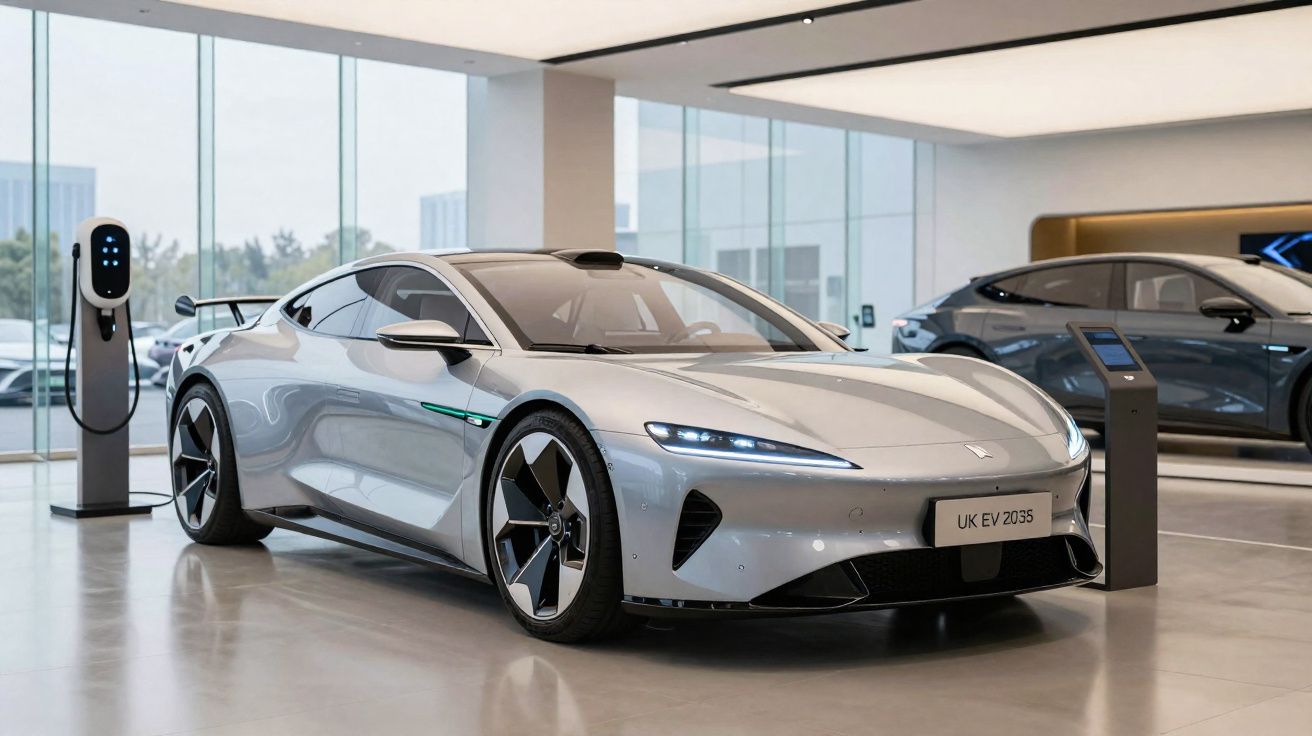
The UK Government will ease the electric-vehicle sales quotas imposed on car makers under the ZEV (zero-emission vehicles) mandate, Reuters has reported.
In 2024, electric-car sales in the United Kingdom fell short of the Government’s targets for that year - 19.6% versus 22% - but the change has been justified on the back of the new 25% tariffs imposed by Donald Trump, the US President, on all imported cars.
To make the shift towards electrified vehicles smoother, the Department for Transport has introduced several adjustments to the mandate; however, the central goal remains unchanged: to stop selling purely petrol- or diesel-powered cars from 2030.
What has changed in the UK Government’s ZEV (zero-emission vehicles) mandate?
While the ambition to end sales of internal-combustion cars by the end of the decade still stands, the Government has decided to allow the sale of hybrid and plug-in hybrid models to continue until 2035. The same approach will apply to commercial vehicles fitted with internal-combustion engines.
In addition, the “banking and borrowing” system - a mechanism that lets manufacturers carry over or bring forward credits to meet targets - has been extended from 2026 to 2030.
- Banking: allows credits to be saved from years in which targets are exceeded;
- Borrowing: allows credits to be “borrowed” when a target is missed.
Changes have also been made to how credits are counted: it is now possible to move credits between light vehicles and commercial vehicles. One electric car will be equivalent to 0.4 commercial vehicles with an internal-combustion engine, while an electric commercial vehicle will be worth two combustion-powered cars.
Until now, manufacturers that failed to comply were fined 15,000 pounds (about 18,150 euros) - 9000 pounds (about 10,890 euros) for commercial vehicles. The Government has said these amounts will be reviewed, although it has not yet disclosed the new figures.
Luxury cars excluded from the calculations
Finally, the British Government has chosen to create an exemption for certain luxury car brands such as Aston Martin, Bentley, and McLaren. These will be permitted to produce internal-combustion cars even after 2030.
The purpose of the measure is to safeguard British supercar marques, which are considered highly significant for the English economy. “We are absolutely aware of the fact that this government needs to do absolutely everything it can to shelter British businesses,” said Heidi Alexander, the UK’s Secretary of State for Transport.





Comments
No comments yet. Be the first to comment!
Leave a Comment