
With a handful of targeted steps, you can prevent it surprisingly well.
When winter rain, thawing conditions and heavy soil coincide, even the best-looking lawn can give up. Instead of lush green, you’re left with a brown, greasy-looking carpet. It’s no wonder many people start wondering-out of sheer frustration-whether they should give up on the dream of a tidy garden. You don’t have to: once you understand why the ground behaves like this, you can take the right countermeasures and protect the lawn for the long term.
Why the lawn turns into a mud track in winter
The cause is almost never “bad lawn” as such-it’s the soil underneath. Three factors, in particular, tend to combine:
- Lots of rainfall: winter downpours and milder spells bring more water than the soil can absorb.
- Compacted or clay-heavy ground: the pores in the soil are too small or blocked, so water can’t drain away.
- Constant foot traffic: children, dogs, a wheelbarrow-every pass compresses the soil further.
Clay and heavy loam respond especially badly. They hold water like a sponge and release it only slowly. If water sits on the surface, grass roots begin to die back, bare patches appear-and that’s the perfect base for moss and mud.
"The real enemy of the lawn in winter isn’t the rain, but soil that can no longer absorb water."
Improve drainage for a healthier lawn: making the ground absorbent again
Professional gardeners start with what’s beneath your feet. The aim is simple: help water move down into the ground rather than pooling on the surface.
Aerate the lawn regularly and reduce compaction
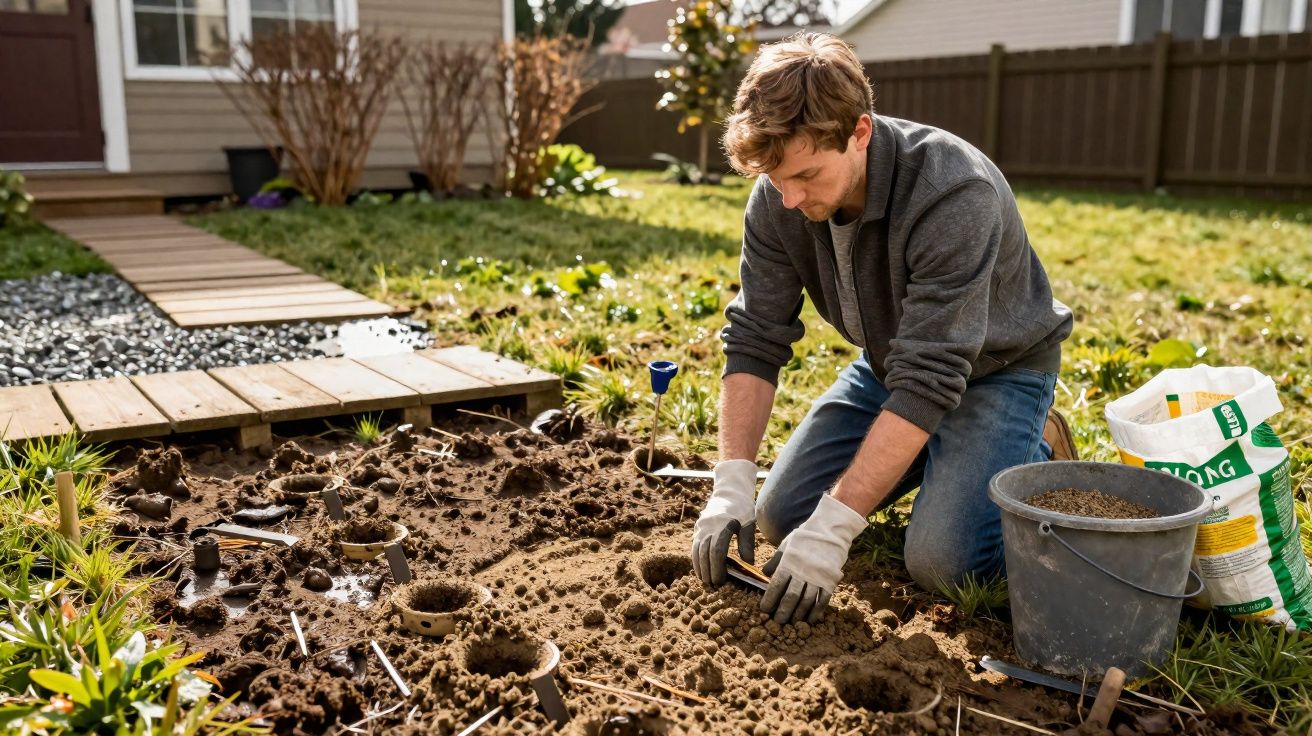
The most straightforward and effective action is aeration-getting air into the soil. You can do this with dedicated hand tools, spiked shoes, or the traditional option: a garden fork.
Do it like this:
- On a dry day, push the fork into the ground at roughly 15–20 cm intervals.
- Drive the tines at least 8–10 cm deep.
- Gently rock the fork back and forth to widen the holes slightly.
- Optionally, fill the holes with sand so water can drain down more easily.
Gardeners repeat this once or twice a year-ideally in autumn and, if needed, again in spring. Over time, the ground loosens, roots get more oxygen, and rainwater soaks away faster.
Work organic matter into heavy soil
Clay-heavy ground improves dramatically with compost or well-rotted farmyard manure. Both enhance soil structure, making it more crumbly and more permeable. Spreading 1–2 cm of fine compost in autumn and lightly raking it in is often enough to change the soil’s behaviour noticeably over the years.
"Soil rich in organic matter works like a natural sponge: it absorbs water, stores it-and then releases it gradually to plants."
Quick relief: temporarily drying out muddy patches
If the lawn is already waterlogged right now, you’ll need immediate measures alongside the long-term plan.
Sand, gravel and woodchip as emergency support
After heavy rain, professional gardeners will often spread materials over the worst areas to absorb moisture and stabilise the surface. These work particularly well:
- washed play sand
- fine gravel or grit
- woodchip or bark mulch
This layer soaks up water and stops shoes or paws sinking deeply into the ground. Just bear in mind: it doesn’t fix the underlying issue-it simply buys you time until your soil improvements take effect.
Create solid paths: stop mud where people walk most
Where the same desire lines appear again and again-out to the shed, to the wheelie bin, to the patio-there’s often only one real solution: build an actual path.
Ground stabilisation grids for heavily used areas
Plastic cellular grids (often used in equestrian paddocks and driveways) can work remarkably well in gardens too. They’re laid over a prepared base and filled with grit or soil. The big advantage is that weight is spread out, the ground underneath stays load-bearing, and mud is far less likely to form.
Stepping stones as a practical compromise
If you prefer a more natural look, individual slabs or natural stones set like “islands” in the lawn can be ideal. For a stable base, do the following:
- dig out about 10 cm of soil at each position, slightly larger than the stone
- add a layer of sand or grit and compact it
- set the slab, level it, and brush sand into the joints
You end up with a walkable route that stays visually discreet while taking pressure off the lawn.
Plants that love water and ease the problem
In particularly wet corners of the garden, aeration sometimes isn’t enough on its own. In those spots, gardeners often turn to shrubs and perennials that cope well with damp conditions and can use significant amounts of water.
Typical “water guzzlers” include:
- various willow species
- poplars
- alders
- birches
They form dense root systems, draw moisture from the ground, and help create a drier micro-environment over time. In smaller gardens, choose less vigorous varieties or ornamental forms so the space doesn’t feel overgrown.
Long-term strategies so the lawn doesn’t drown again
To stop the issue returning every winter, professionals look at the whole system: soil, usage patterns and how water moves across the site.
Improve soil structure step by step
Rather than digging everything up in one go, many gardeners make steady, incremental improvements:
- apply a thin compost dressing every year
- scarify regularly to remove thatch and moss
- after scarifying, work sand in-especially on heavy soils
This combination gradually transforms the top layer of soil. The lawn roots more deeply, stays more resilient under pressure, and reacts less dramatically to wet weather.
Install a drainage system if nothing else works
On plots where water sits persistently-such as in low spots or on former wet meadow ground-there may be no real alternative to a technical fix. This is where drainage pipes come in, laid in trenches and connected to a soakaway or drainage ditch. For design and any connection to public systems, using a specialist is often wise, so you avoid later disputes with neighbours or the local authority.
How to treat the lawn gently day to day
A lot of damage is simply down to using the lawn the wrong way when it’s wet. A few behaviour rules make a big difference:
- Don’t drive heavy equipment over the lawn when the ground is saturated.
- If everything is soft underfoot, keep dogs to paths where possible.
- Avoid football on very wet grass-otherwise the turf tears and large chunks can lift out.
Small wooden grilles or temporary stepping panels can help in pinch points at short notice, for example by the patio or in front of the garden gate.
Useful terms and practical examples for winter lawn care
Many hobby gardeners stumble over technical words that sound more complicated than they are. “Aeration” ultimately means nothing more than getting air into the soil. If you don’t want to buy specialist tools, a basic garden fork works perfectly well-do it section by section: one half of the lawn one weekend, the rest the next time.
A practical example: in a typical terraced house garden with heavy ground, it’s often enough to tackle the worst zones consistently-such as the route to the patio, the children’s play area, and the corner where the dog always sprints. If you aerate, add sand, and-where needed-install stepping stones, you’ll usually notice by the very next winter that far less mud develops.
If you’re willing to go one step further, you can also adapt the grass mix. Some blends cope better with moisture and wear, such as sports turf for heavily used areas. Combined with improved soil, you end up with a surface that handles rainy spells far more calmly.





Comments
No comments yet. Be the first to comment!
Leave a Comment