
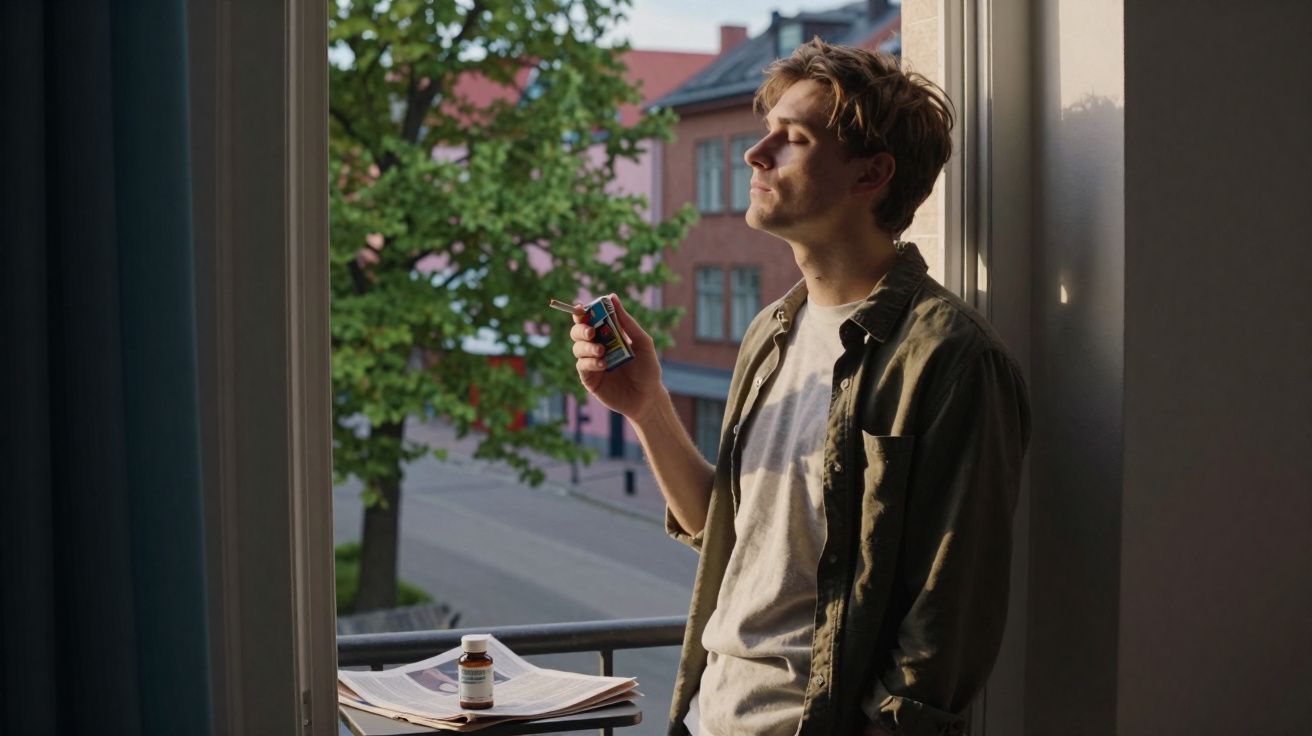
A Swedish long-term study is now calling this behaviour into question - decisively.
For decades, public-health messaging has hammered home a simple idea: direct sun is dangerous, shade is safe. A large analysis of Swedish data paints a more complicated picture. People who consistently avoid sunlight appear to face a mortality risk on a par with smokers. The findings sound provocative - and they push clinicians to rethink how we talk about UV exposure.
What the Swedish study actually found (Karolinska Institute Swedish long-term study)
Researchers at Sweden’s Karolinska Institute followed 29,518 women aged 25 to 64 for roughly 20 years. Participants reported how they typically approached the sun, and the team broadly grouped them into three categories:
- women who actively avoided the sun
- women with more moderate sun exposure
- women with frequent sun exposure
The researchers then recorded and analysed all deaths across these groups. The statistical headline was striking: women who deliberately avoided direct sun had a clearly higher risk of dying during the follow-up period - regardless of the cause.
"Those who systematically stayed in the shade had, in this analysis, roughly double the mortality risk compared with women who went into the sun regularly but not excessively."
The comparison with smoking was particularly eye-catching: non-smokers who avoided the sun had, on average, a similarly low life expectancy to heavy smokers who spent plenty of time outdoors. Put into numbers, the least sun-exposed women lost around 0.6 to 2.1 years of life compared with women who had regular sun exposure.
Why might too little light be so harmful?
The study itself cannot prove a single, definitive cause, but it offers several plausible reasons why strict sun avoidance could be problematic.
Vitamins, blood pressure, body clock: what sunlight triggers in the body
- Vitamin D: Under UVB radiation, the skin produces vitamin D. This hormone affects, among other things, bones, the immune system, muscles, and the cardiovascular system. If vitamin D is persistently low, evidence accumulates for a higher risk of heart attacks, high blood pressure, infections, and possibly certain cancers.
- Nitric oxide (NO): Sunlight appears to prompt the skin to release small amounts of this compound. NO widens blood vessels and can lower blood pressure. Less sun could therefore, over the long term, contribute to higher readings and more cardiovascular disease.
- Body clock: Bright daylight helps regulate our sleep–wake rhythm. People who are hardly ever outside more often struggle with sleep, low mood, weight gain, and metabolic disruption - all factors that can increase heart-disease risk.
"The body is programmed for a dose of light - not for permanent shade and permanent artificial indoor lighting."
Northern latitudes as a special case: why Sweden is an extreme example
The dataset comes from a country where winter days often turn light late and dark again early. Across large parts of Sweden, there are many months with few hours of sunshine. If someone there also avoids any direct sun, the shortfall in natural light becomes much more pronounced.
For higher latitudes, that can mean:
- vitamin D deficiency is widespread
- in winter, the body clock slips out of sync even more easily
- small differences in time spent outdoors are more noticeable than in more southerly countries
For that reason, the researchers stress that the precise figures cannot simply be transferred one-to-one to southern or central Europe. However, the underlying link between complete sun avoidance and higher mortality is likely to matter well beyond Sweden.
Heart risk rather than skin risk: where the biggest danger seemed to sit
One disease category stood out most clearly in the study: cardiovascular disease. Women who consistently avoided the sun experienced fatal events - such as heart attack, stroke, or severe heart failure - at about twice the rate. That aligns with the idea that vitamin D, NO release, and a stable day–night rhythm help protect blood vessels.
For skin cancer, the familiar pattern emerged: as sun exposure increased, so did the risk of skin cancer, including melanoma. Even so, fewer women died overall in the higher-sun group, because the reduction in fatal cardiovascular disease more than offset the increase in skin-cancer cases.
"More sun means more cases of skin cancer - but at the same time fewer deaths from cardiovascular disease. Overall, the women with moderate sun exposure lived longer."
The researchers highlight two additional points: first, melanoma is relatively uncommon in Sweden; second, early diagnosis substantially improves prognosis. Cardiovascular disease, by contrast, can strike suddenly and prove fatal.
So does this mean you should head straight into full sun?
Clearly not. The study is not a licence to roast for hours without protection. Instead, it corrects an imbalance: messaging over recent decades has focused heavily on skin cancer, while other health effects have received much less attention.
What a healthy sun strategy can look like
A sensible approach to sunlight has several components:
- Get outside regularly: A little daylight every day - ideally outdoors rather than only through a window - works like basic provision for heart health, metabolism and mental wellbeing.
- Limit midday sun: In strong midday sun, 10–20 minutes is often enough, depending on skin type. After that, move into shade or cover up.
- Don’t risk sunburn: Sunburn is a clear risk factor for skin cancer. If your skin starts to feel tight or turns red, you’ve already overdone it.
- Use sun protection strategically: In intense sun, clothing, a hat, sunglasses and sunscreen are sensible - especially for longer periods outside.
- Keep winter in mind: In northern latitudes, vitamin D supplements may help fill the gap (after medical advice) when little sun is available.
What the study cannot prove - and why it still matters
This was an observational study, not a randomised trial. That means the researchers did not assign women at random to “sun” or “shade” groups; they documented behaviour. People who spend more time outdoors may also differ in other ways: they may be more physically active, live more energetically, and perhaps handle stress more healthily.
The analysis tried to account for such confounders: education level, body weight, sport, alcohol intake and other factors were included in the calculations. Even so, some unknown influences can always remain. The fact that the association between sun avoidance and higher mortality persisted after these adjustments makes the signal difficult to dismiss.
What this means for everyday life in the UK (and similarly in Germany, Austria and Switzerland)
In the UK, as in Germany, Austria and Switzerland, many people spend most of the day indoors: offices, trains, cars, shopping centres, then streaming in the evening. At the same time, rates of high blood pressure, overweight, diabetes and depression continue to rise. A lack of light is not the only driver - but it appears to be one building block many people underestimate.
Practical, everyday examples:
- A short walk during a lunch break may do more for blood pressure and your body clock than a third coffee.
- If you work from home, it can help to move your laptop setup and phone calls closer to a window - and to schedule genuine breaks outside.
- Families can try to plan leisure time - playground trips, cycling or gardening - deliberately in daylight rather than retreating into enclosed indoor spaces.
Another point is mental health: sunlight influences mood. Many people are familiar with a winter slump during darker months. More daylight stabilises mood and may indirectly encourage people to move more, sleep better and generally live more healthily - all factors that can show up in mortality statistics.
Taken together, the Swedish long-term study sends a clear message: panicking about every minute of sun is likely to do more harm than good. The skill lies in the middle ground - enough light for heart, vessels, bones and mind, while still using enough protection to avoid burning the skin.






Comments
No comments yet. Be the first to comment!
Leave a Comment