

A Europe-wide analysis of 148 tins of tuna has revealed an uncomfortable truth: every single tin tested contained mercury, and in some cases far more than shoppers would reasonably expect. Even so, a nutritionist does not advise cutting it out entirely - instead, they recommend choosing very deliberately at the shelf, using one simple but crucial detail on the label.
Why tinned tuna can accumulate so much mercury
Mercury reaches rivers and seas through industry, combustion and wider environmental pollution. In the water, micro-organisms convert the metal into methylmercury - a form that builds up in fish fat and muscle tissue.
As mercury moves up the food chain, concentrations rise at each step. Smaller fish take in lower amounts. When they are eaten by larger predators, the mercury accumulates in those predators’ bodies. The older and larger a predatory fish becomes, the higher its levels tend to be.
"Tuna sits high up in the marine food chain - which is exactly why it contains, on average, more mercury than many other fish we eat."
Tuna also has a special regulatory status. For most fish species, the EU limit for mercury is 0.3 milligrams per kilogram. For tuna, 1 milligram per kilogram is permitted - more than three times as much.
The tins assessed by an environmental organisation show how wide the range can be:
- every tin: detectable mercury
- 57% of the tins tested: above 0.3 mg/kg
- roughly one in ten tins: even above the 1 mg/kg limit
- highest reading: 3.9 mg/kg - far beyond what consumers would expect
Salt matters too. Around 1.5 grams of salt per 100 grams of tuna is common. So if you eat it often, you are increasing not only your heavy metal intake, but also your salt intake.
Which tuna species is in the tin - and why that matters for mercury in tinned tuna
“Tuna” is not a single fish. Several different species end up in the canned aisle, and they differ substantially. Size, lifespan and hunting behaviour all affect how much mercury builds up in the body.
The “smaller” option: Skipjack/Bonito (often sold as standard tuna)
Some products use a comparatively small tuna species, usually called “skipjack” internationally and often known as bonito. These fish grow quickly, live for less time and sit a little lower in the food chain.
Measurements indicate that skipjack tuna averages about 0.2 mg/kg of mercury - clearly lower than many other tuna species. In some countries, this species may be labelled simply as “tuna”, while “light tuna” more often refers to larger species.
The “big hitters”: Yellowfin and albacore (white tuna)
Larger species tell a different story - for example yellowfin tuna or albacore (“white tuna”). These fish live longer, eat more prey fish and therefore sit especially high in the food chain. The result is noticeably higher heavy metal levels.
In reviews, these varieties were not uncommonly at two to three times the skipjack levels. If you only eat tuna occasionally, you are unlikely to reach concerning levels from that alone. People who open a tin two or three times a week, however, can build up a meaningful intake over time.
"The tuna species listed on the label plays a major role in how much mercury builds up in the body over the long term."
The simple supermarket rule: read the label carefully
The nutritionist quoted in the media does not recommend a blanket ban on tuna. Instead, they advise choosing consciously - and the trick is surprisingly straightforward: pay attention to the exact wording on the tin.
Tins often carry more information than you notice at first glance. Alongside statements such as “in oil” or “in spring water”, the species used (or the commercial name) must also be given. That is precisely where the advice starts:
- deliberately choose the smaller tuna species (Skipjack/Bonito, often marketed as “tuna” without extra wording)
- pick products labelled in a way that suggests large, fattier tuna (for example “white tuna”) less often
- rotate between different fish species rather than buying the same tin repeatedly
If you rely on tinned tuna regularly, this approach can noticeably lower average mercury intake without giving up the convenience of the product altogether.
How often should fish be on the menu in general?
The French food safety authority recommends eating fish about twice a week. One serving can be an oilier fish rich in omega-3 fatty acids, such as:
- salmon
- sardines
- mackerel
- herring
The second fish meal should be leaner, for example:
- cod
- coley or pollock
- haddock
- sole or other white fish
There is also a broader principle: change species and origin as often as possible. If you alternate between wild-caught and farmed fish and avoid repeatedly buying the same predatory species, you spread your risk across different sources.
Special warning for pregnant women and young children
Methylmercury primarily affects the nervous system. The developing brain is particularly sensitive - meaning the foetus during pregnancy and young children in their first years of life.
"For pregnant women, breastfeeding mothers and children under three, the rule is: the fewer large predatory fish, the better."
Health authorities advise these groups to strongly limit - or avoid entirely - certain species:
- eat less often: tuna, large bonitos, sea bream, wolf fish, ray, halibut, pike
- avoid: shark species, swordfish, marlin, deep-living predatory fish with very high contamination
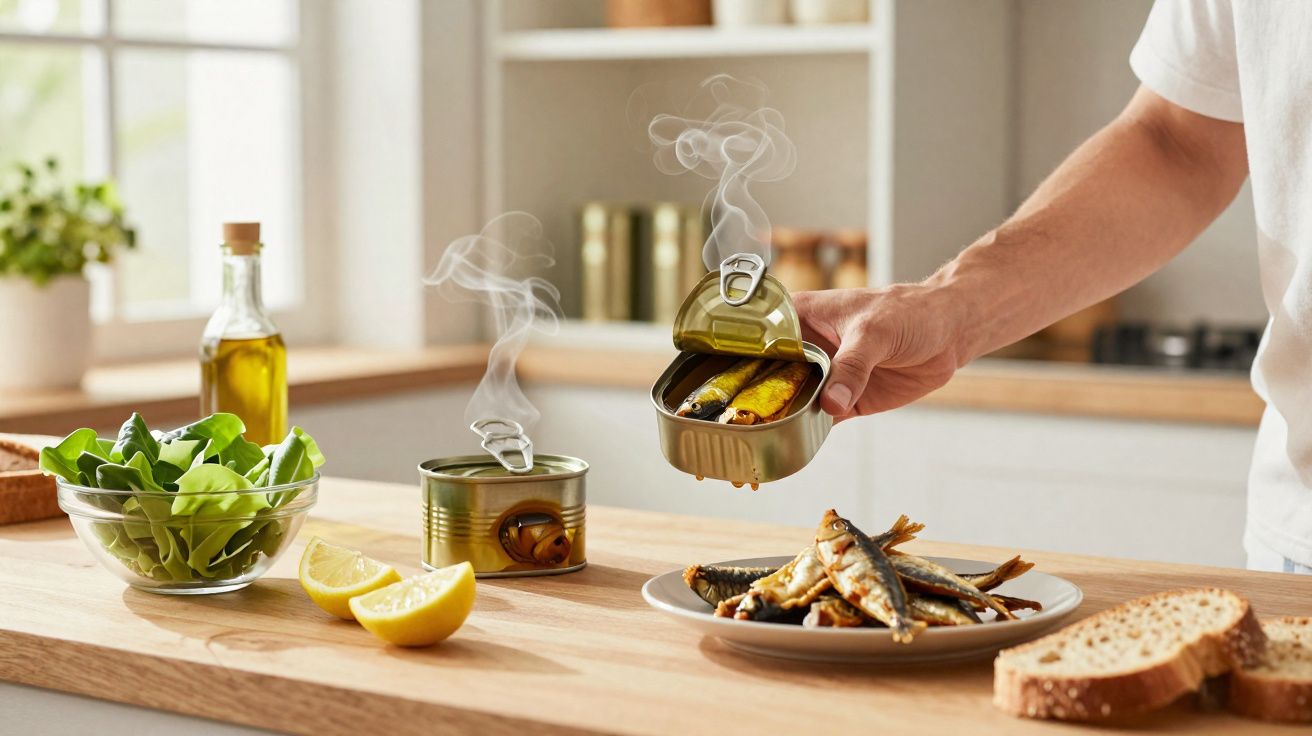
As a lower-risk alternative, small oily fish are often suitable. Sardines, herring or smaller mackerel provide plenty of omega-3 fatty acids while typically remaining comparatively low in heavy metals.
What mercury can do in the body
In the body, methylmercury binds to proteins and can reach the brain easily. For healthy adults who eat a tin of tuna now and then, the benefits of fish - improved blood fats, valuable fatty acids, minerals - usually outweigh the risks. It becomes more concerning when:
- large predatory fish are eaten very frequently
- other exposure sources are added at the same time
- sensitive groups are affected, such as unborn babies and young children
Possible consequences of chronically elevated intake range from concentration problems and impaired fine sensory function to disruptions in child development. These effects do not appear after a single tin, but after years of consistently high exposure.
Practical everyday strategies for fish lovers
If you enjoy tuna, there is no need to throw away every tin. A few straightforward habits are often enough to reduce personal risk substantially:
- limit tuna to once - at most twice - per week, and keep portions small
- in the supermarket, choose the smaller tuna species on purpose and quickly check the label
- switch more often to sardines, herring and mackerel when you want omega-3
- avoid using tuna as an everyday sandwich staple; keep it for occasional meals instead
- for children and during pregnancy, prioritise smaller, less contaminated species
If you are already shifting your diet towards plant-based foods and pulses, you do not need fish as a daily protein source. In that case, planning one or two carefully chosen portions per week is enough - paying attention to species, origin and fishing method.
For many people, mercury can feel like an abstract issue. It becomes more concrete once you remember that the human body breaks down methylmercury only slowly. Each portion adds a little more. That is why the small effort of checking the species on the label is worthwhile - especially for products that appear on the table frequently.





Comments
No comments yet. Be the first to comment!
Leave a Comment