
Empty supermarket shelves, warnings about shortages, rising prices: in many households the instinct is growing to turn the kitchen into an emergency bunker. But rather than panic-buying oil, pasta and tins, it pays to take a clear-headed look at the basics. Which long-life foods actually provide sustained energy, nutrients and reassurance in a genuine emergency-without wasting space or money?
Why a thought-out emergency stockpile matters more than a packed cellar
Whether it’s a strike in the transport sector, a severe storm, a cyber-attack on supply systems or a localised conflict, just a few days of disruption can be enough for normal shopping habits to collapse. If you can’t get out-or can’t find what you need-you’ll be glad of a few well-chosen reserves in the cupboard.
Civil protection and disaster-preparedness organisations commonly advise that a household should be able to look after itself for at least 72 hours, and ideally longer. The goal isn’t to stack as much as possible, but to focus on foods that meet four key criteria:
- extremely long shelf life without refrigeration
- high energy density and solid nutritional value
- easy to store in a small space
- affordable cost per kilogram
Stocking strategically instead of hoarding blindly saves money-and helps you keep your head in a crisis.
If you apply those criteria properly, surprisingly few of the supposed “classic store-cupboard staples” remain. Plenty of items go off sooner than you expect, don’t deliver enough calories, or take up far too much room. In the end, a very small group of foods stands out.
The 5 foods that genuinely matter in an emergency
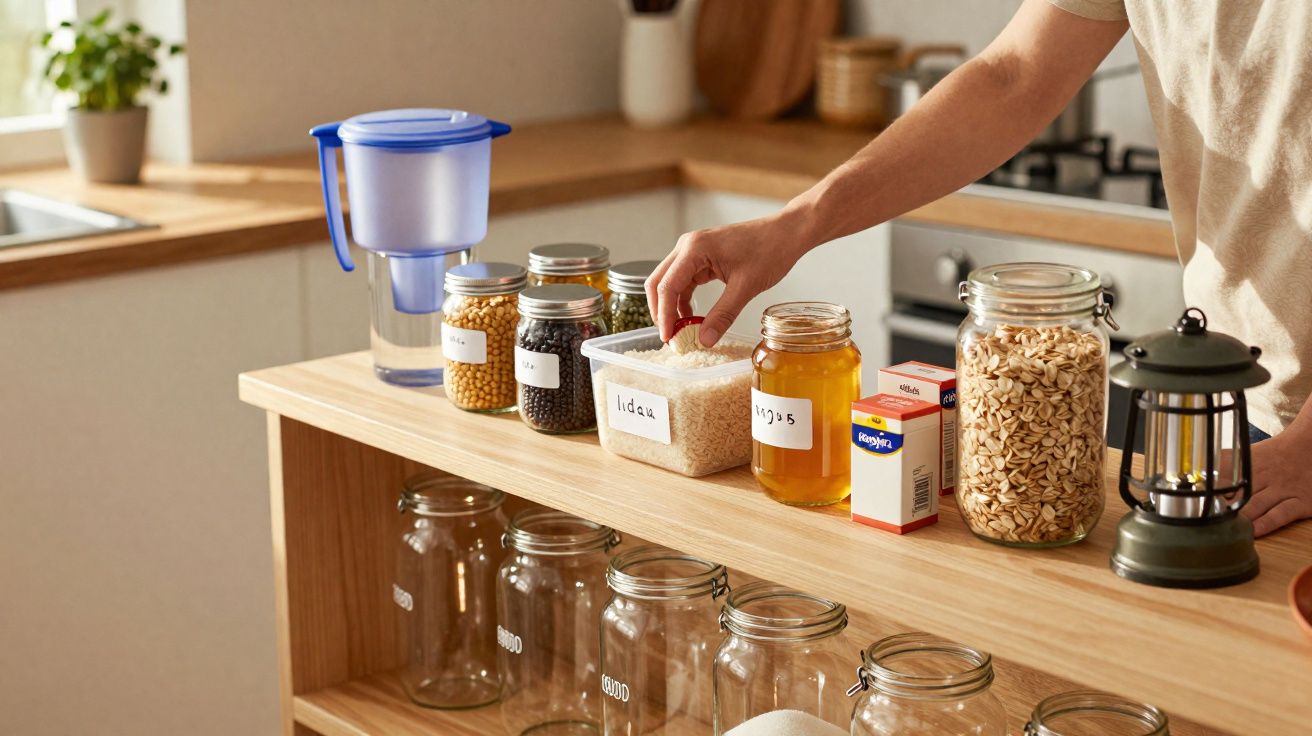
The good news is you don’t need exotic specialist rations. Five everyday basics are enough to keep you full for days and give your body a reasonably sound level of nourishment:
- white rice
- dried pulses (e.g. lentils, chickpeas, beans)
- pure honey
- iodised table salt
- oats
Admittedly, it doesn’t sound exciting. But together, this selection makes surprisingly adaptable meals-from a sweet breakfast to hearty stews and simple sides. And it covers the essentials: calories, protein, minerals and long shelf life.
White rice: compact, reliable energy
White rice is a typical crisis staple-and for good reason. Stored correctly, it lasts an exceptionally long time.
- Shelf life: up to 30 years when kept airtight below 20 °C
- Advantage: high carbohydrate content, neutral flavour, easy to pair with other foods
- Downside: needs water and ideally heat to cook
Unlike brown rice, white rice has had the fatty outer layers removed. That means it’s far less likely to turn rancid, which is a major benefit for long-term storage. In difficult situations it’s filling, warming, and easy to vary with just a few extra ingredients.
Pulses: protein for muscles and the immune system
Dried lentils, chickpeas and beans form the protein backbone of your emergency stockpile. Per 100 grams, they provide roughly 20 to 25 grams of protein-similar to many meats, but much cheaper and far easier to store for the long term.
- Shelf life: around 10 to 30 years when stored cool and dry
- Nutrients: protein, fibre, iron, B vitamins
- Preparation: plan for soaking and cooking time depending on the variety
Paired with rice, pulses create complete meals that supply all essential amino acids. If you need to conserve fuel, lentils are often the smarter choice because they cook faster than large beans or chickpeas.
Honey: natural sweetness with a "built-in" shelf life
Pure, unadulterated honey is one of the few foods that remains edible for virtually unlimited periods. Archaeologists have even found honey in ancient tombs that was still fit to eat.
- Shelf life: effectively unlimited
- Characteristics: antibacterial effect thanks to low pH and very low water content
- Uses: sweetener, quick energy, popular in home first-aid cupboards
Because honey contains so little water and so much sugar, bacteria can’t thrive. If it crystallises over time, that isn’t a problem-gently liquefy it again in a warm water bath.
Iodised salt: small pack, big impact
Salt may look unremarkable in an emergency, but it matters in two ways. It gives even the plainest rice-and-pulses meals some flavour, and it also supports your mineral balance.
- Shelf life: practically unlimited if kept dry
- Function: seasoning, mineral source, foundation for preserving foods
- Tip: choose iodised salt to help maintain iodine intake
Salt also allows you to ferment or pickle foods-useful if fresh produce becomes available in an emergency and would otherwise spoil.
Oats: a warm start to the day
Oats are a compact nutrient bundle: complex carbohydrates, plant protein, fibre and minerals. Especially handy: you can eat them cold if cooking isn’t possible.
- Shelf life: from about 2 years in a standard cardboard carton up to 30 years with oxygen removed in specialist packaging
- Uses: porridge, muesli base, thickener for patties or soups
- Plus point: quick to prepare and generally child-friendly
With water plus a little honey and salt, oats make a simple but filling porridge that can keep you going for several hours.
How to store these supplies properly
The foods alone aren’t enough-storage is the deciding factor. Get it wrong and you can lose years of shelf life and invite pests.
Dark, cool, dry and airtight: these four rules massively extend shelf life.
The essential ground rules for an emergency stockpile
- Choose containers: glass jars with tight-fitting lids, or food-grade buckets and tins
- Reduce air: ideally use low-oxygen packaging, for example with oxygen absorbers
- Temperature: keep as stable as possible between 15 and 20 degrees
- Moisture: keep it low; don’t store directly above a dishwasher or cooker
If you’re willing to spend a little more, use so-called Mylar bags together with oxygen absorbers. For rice, pulses and oats in particular, this can significantly extend shelf life. Open paper bags, by contrast, are an open invitation to pantry moths.
Common mistakes that ruin your stockpile
- Storing brown rice instead of white rice-the fats in it go rancid faster
- Leaving flour in the original paper sack-ideal for moth larvae
- Choosing a warm, bright kitchen cupboard directly above the cooker
- Buying foods you never eat day to day-eventually they end up in the bin
A practical habit is the "first in, first out" rule: what you bought earliest gets used first. That keeps the stock rotating and stops out-of-date items piling up.
Don’t forget water - without drinking, even the best stockpile is pointless
Any stock plan falls apart if you ignore water. Experts recommend around three litres per person per day-for drinking, cooking and minimal hygiene. For a three-day supply for a family of four, that already amounts to roughly 36 litres.
You can store water in standard bottles or in dedicated containers. If you intend to rely on well water or rainwater, think about filters and, if needed, disinfectants. Without clean water, you can neither cook rice and pulses safely nor eat them with confidence.
How to fit an emergency stockpile into everyday life
A sensible stockpile doesn’t sit untouched for years in a dark cellar. It rotates. That reduces costs and prevents waste.
- Use rice regularly as a side dish or in one-pan meals
- Put lentil stews, hummus or bean chilli into your routine
- Eat oats daily or several times a week for breakfast
- Use honey as a spread or in tea
- Use salt normally and replace it before supplies run low
This way the stock stays fresh. What you routinely top up also replenishes your emergency supply automatically-without extra stress.
More security with minimal effort
Thinking about emergencies is uncomfortable, doesn’t fit neatly into daily life, and is easy to push aside. A clear plan built around five simple foods takes some of that uncertainty away. The point isn’t to talk yourself into worst-case scenarios, but to be able to manage for a few days if needed-without immediately relying on external help.
If you start with small quantities now and gradually store them in tightly sealed containers, you can build a solid base on a manageable budget. Add water, a few tinned vegetables, coffee or tea, and personal favourites, and you’ll have a reserve that’s useful not only in crises but also during illness, a power cut, or simply when everyday life leaves you short on time.




Comments
No comments yet. Be the first to comment!
Leave a Comment