
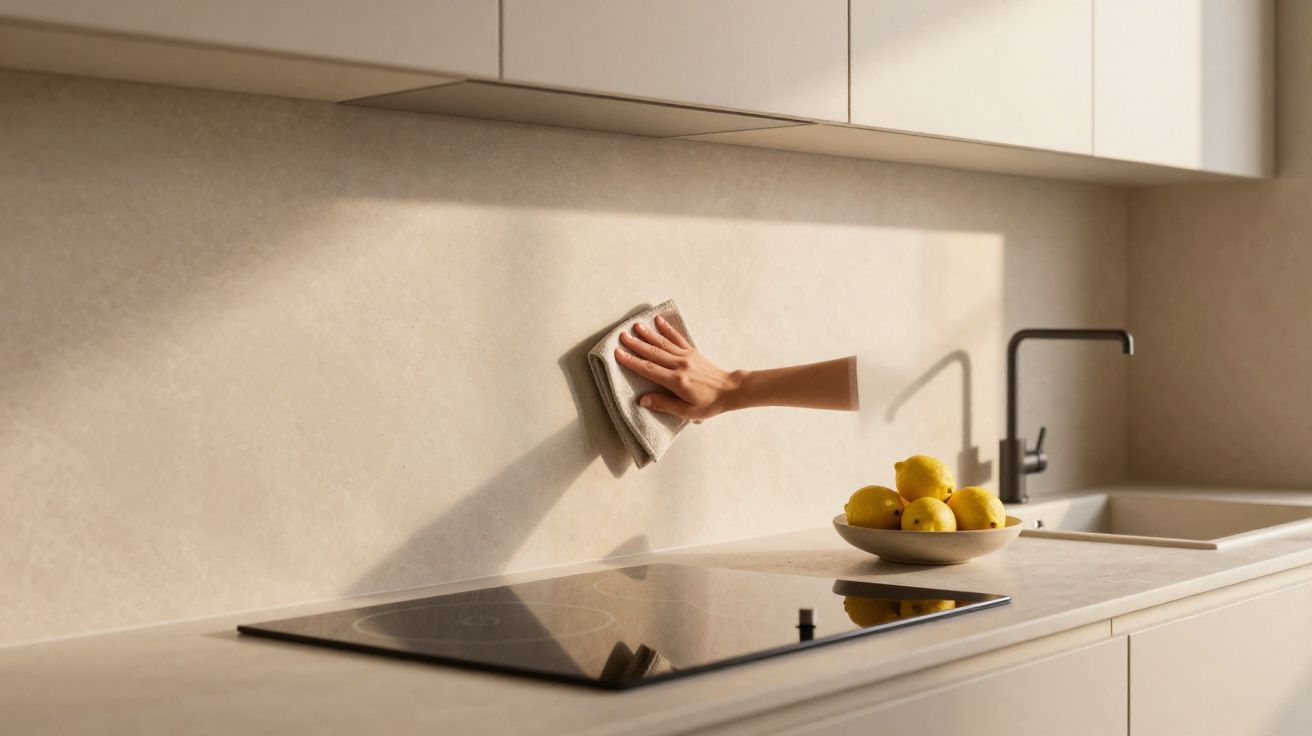
Thinking about a new kitchen at the moment? One term keeps cropping up everywhere: the seamless splashback. Instead of small tiles with grout lines that need constant scrubbing, the focus has shifted to large, continuous panels that look like one uninterrupted surface. The style comes from high-end interior design and is now finding its way into ordinary family kitchens-bringing noticeable changes to appearance, cleaning, and budget.
Why kitchen tiles are losing their top spot
Grout is a nuisance-day to day and visually
For decades, tiled splashbacks were the default: hard-wearing, familiar, seemingly without a real alternative. But many homes are now seeing the drawbacks. Grout discolours, grease settles in, and the whole area can start to look busy and bitty. This is exactly where the new generation of wall cladding comes in.
"A continuous wall finish takes away the visual fuss in a kitchen-and the cleaning cloth is just as pleased."
Instead of individual tiles, kitchens are increasingly using large-format panels or continuous materials that run from the work zone up to the wall units. Fewer breaks mean a calmer look-and far fewer places for dirt to cling to.
The “monolith look”: the worktop continues straight up the wall
One of the most sought-after approaches is using the same material for the worktop and the splashback. The worktop simply carries on vertically-no interruption, no obvious transitions. Designers often call this the monolithic effect.
This look has several knock-on effects:
- The room feels larger because nothing interrupts the eye line.
- The kitchen takes on a calmer, almost furniture-like character.
- Colours and veining stand out far more strongly.
- Light reflects more evenly, making the surface feel more premium.
In small city flats or open-plan kitchen–living spaces, this is a compelling argument: the kitchen blends visually into the living area instead of reading like a classic “work room”.
The materials driving the trend
From natural stone to high-tech composites: the key options for a seamless kitchen splashback
For a seamless wall to perform properly, it needs stable, resilient materials. In showrooms right now, these choices are especially common:
- Quartz and composite materials: very uniform appearance, wide colour range, strong resistance to stains and acids. Ideal when you want a modern, calm look.
- Ultra-compact slabs (e.g. Dekton): extremely hard, heat-resistant, scratch-resistant. A great fit for keen cooks who might occasionally put down hot pans.
- Natural stone such as marble, quartzite, or granite: every slab is unique, and veining can look dramatic across a large surface. It does, however, need good sealing and a bit of care awareness.
- Resin surfaces (e.g. Corian, Hi-Macs): completely smooth, warm to the touch, and can be formed without joints. Excellent for flowing upstands, integrated sinks, and special shapes.
- Newer composite materials made from ceramic and stone components: combine the hardness of ceramic with a more natural feel.
Many of these materials pair beautifully with today’s popular nature-inspired tones: warm beige, sand, light wood effects, and soft stone decors. On a large, uninterrupted wall, these colours show their full impact.
Finishes, colours, textures: turning the wall into a focal point
Seamless doesn’t mean bland. Because there are no interruptions, the finish and colour carry the entire visual statement. Common directions in current kitchens include:
- Finely textured finishes that diffuse light and make the surface feel more lively.
- Matt or satin-matt finishes that hide fingerprints better than high gloss.
- Earthy and mineral shades such as terracotta, greige, sand, slate grey, or olive green.
- Bold veining in marble and quartzite looks, creating a wall that reads like a piece of art.
"The kitchen wall becomes a stage-not with patterned wallpaper, but with surface, texture, and light."
Manufacturers now even offer coordinated ranges where the worktop, end panels, splashback, and sometimes even fronts are made from the same material. The result is a very calm, high-end overall effect.
Cleaning a seamless splashback: practical everyday benefits
Hygiene and maintenance: one wipe instead of a grout brush
The most appealing side effect shows up when it’s time to clean. Where grease used to creep into grout lines, a damp microfibre cloth with a mild cleaner is now often enough. Nothing crumbles, nothing flakes, and there are hardly any edges.
Typical everyday advantages:
- No extra pass with a grout brush.
- Less opportunity for mould and discolouration.
- Smooth surfaces that are easy to clean even behind the hob and sink.
- A longer-lasting “new” look because nothing appears worn out in patches.
Family kitchens-where cooking, baking, and splashes are daily life-benefit especially from this durability. Many slabs cope with sharp temperature changes, acidic splashes, and mechanical wear far better than classic porcelain tiles with cement grout.
What designers pay attention to in the overall look
To stop a seamless wall looking like a sterile lab surface, kitchen designers pay close attention to balance and proportions. Typical tactics include:
- Keeping the worktop and wall identical, while making the fronts deliberately contrasting.
- Adding warmth through wood, textiles, and lighting so the room still feels homely.
- Using indirect lighting under wall units to emphasise the surface.
- Choosing accessories carefully against a calm backdrop: ceramics, glass, solid wood.
This creates a space that feels clean and clear-without becoming cold or unwelcoming.
What to sort out before you decide
Planning and installation: steps that prevent headaches
If you’re switching your kitchen over to seamless walls, it pays to follow a structured process. Key points at a glance:
- Material choice: How much cooking happens? How stain-sensitive can the surface be? Do you often use lemons, red wine, or curry? Those habits help decide whether natural stone, quartz, or an ultra-compact slab makes more sense.
- Precise measuring: sockets, window reveals, extractor units, recesses-everything must be planned to the millimetre so the panel later fits “like it was made for it”.
- Confirm technical details early: position of services, extractor duct routing, and any niche profiles should be agreed in good time.
- Use a specialist installer: especially with natural stone and very hard composite slabs, professional tools and experience are essential to avoid breakage.
For tighter budgets, easier-to-machine resins or thinner composite panels can be a sensible alternative. These can often be fitted retrospectively without dismantling the entire kitchen.
Costs, common mistakes, and compromises
This look isn’t a bargain option. Depending on the material, thickness, and cut-outs, costs can quickly reach several hundred euros per linear metre. If you’re planning a large wall area, set a realistic budget early.
Common pitfalls include:
- Choosing a panel that’s too thin and not securely supported long-term.
- Poorly cut socket openings that look messy once installed.
- Pairing the wall with a very basic laminate worktop, which noticeably drags down the overall impression.
- Underestimating lead times-especially for special colours and natural stones.
"If you invest in a seamless wall, ideally you’re planning for ten to fifteen years-not a quick kitchen swap."
How architects are thinking about kitchens in 2026
Less decoration, more surface
A clear pattern in many designs: instead of colourful tile patterns, hanging shelves, and decorative clutter, planning leans far more towards honest materials. Stone should look like stone, metal like metal, wood like wood. A seamless kitchen wall fits neatly into that approach.
Architects use it, for example:
- as a calm backdrop in open-plan kitchen–living spaces,
- as a continuous surface that runs through towards the dining area,
- or as a counterpoint to very natural timber floors and fronts.
The result is a space that feels clear and pared back, yet highly functional. The kitchen becomes a work zone that doesn’t shout for attention-yet on closer look feels extremely high quality.
Risks, care tips, and combinations that make sense
The new solution isn’t risk-free. With natural stone, strongly pigmented foods can leave marks if the sealant wears off. Glossy, very dark surfaces show fingerprints and water marks more quickly. And if you cook with lots of steam, proper ventilation matters so condensation doesn’t build up behind the panel.
A few straightforward ground rules reduce the risk significantly:
- Wipe spills promptly rather than letting them dry in.
- Follow regular care routines in line with the manufacturer’s guidance-especially for stone.
- Above the hob, make sure the extractor has sufficient performance.
- Don’t panic about every small scratch: many materials can be refinished or polished.
Combinations can be particularly attractive with open shelves in solid wood, industrial-style metal profiles, or warmer textiles-such as curtains and rugs in the adjacent living area. That way, even with a minimalist wall, the overall atmosphere stays friendly and inviting.
Anyone planning to modernise their kitchen in the next few years will struggle to ignore the seamless wall topic. The look feels current, cleaning effort drops, and the room gains a calmer feel. The key is choosing materials wisely-then a trend quickly becomes a durable day-to-day upgrade.





Comments
No comments yet. Be the first to comment!
Leave a Comment