
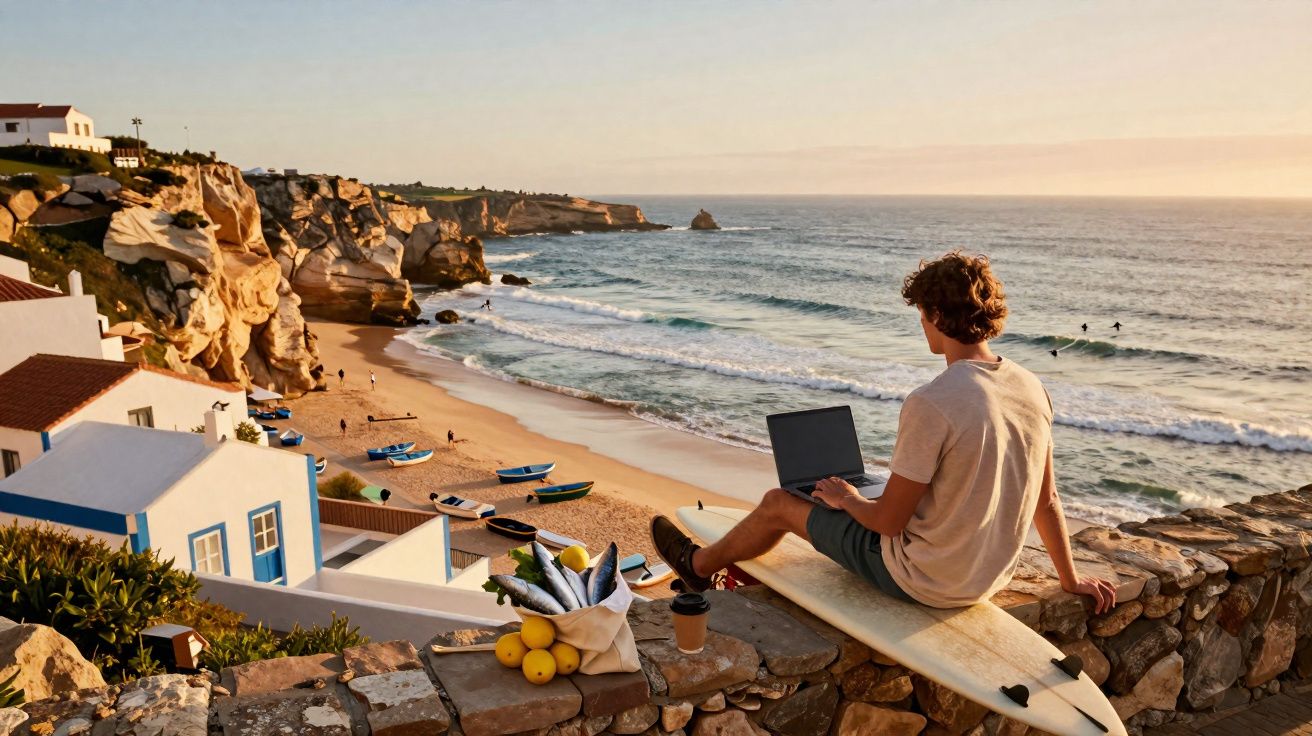
North of Lisbon, where cliffs tumble into Atlantic rollers, a low-key village juggles fishing boats, surfboards and sensible prices.
While France’s Île de Ré has for years pulled in visitors chasing sea air and smart marinas, a more understated Portuguese contender is quietly taking the spotlight. Along a raw, dramatic coastline under an hour from Lisbon, Ericeira delivers Atlantic theatre, just-caught seafood and a lively surf scene-without the wallet-shocking bills or shoulder-to-shoulder promenades.
Ericeira: the Atlantic village that has stayed true to its roots
Around 45 kilometres north-west of Lisbon, Ericeira perches on cliffs that plunge straight into the Atlantic. It started as a working fishing port, and that heritage still sets the tempo. You notice it at dawn as small boats glide back into the harbour, and again at lunchtime when smoke from grills wafts out of family-run eateries.
Ericeira’s historic centre is small and easy to explore on foot. Cobblestoned lanes wind past whitewashed houses trimmed in blue or yellow, many finished with classic azulejo tiles. Rather than sprawling resort complexes, places to stay are mostly modest: guesthouses, surf lodges, straightforward pensions and a handful of understated boutique hotels. Prices are creeping up, but they remain kinder than in France’s trendiest Atlantic addresses.
"Ericeira has managed a rare combination: a functioning fishing town that also feels like a laid-back coastal getaway."
Praia dos Pescadores-the traditional fishermen’s beach-still anchors the town. Brightly painted boats sit on the sand or drift just offshore as waves detonate on the reef further out. Climb a few streets and you are immediately back among cafés, bakeries and tiled frontages, with washing fluttering above the narrow lanes.
A quieter alternative to Europe’s crowded coastal favourites
For French and British travellers devoted to Île de Ré or the Basque coast, Ericeira offers a different sort of break. There is no long bridge approach, no parade of luxury boutiques, and far fewer polished beach clubs. Its draw is scale and rhythm: you can walk across town in ten minutes, yet it rarely feels like there is nothing to do.
Its closeness to Lisbon means many people add Ericeira to a city break. You might expect that to translate into constant crowds, but outside peak August the mood is generally unhurried. Weekends bring Lisbon residents for seafood lunches and surf sessions, but midweek often feels like a proper small town with a sea view, not a resort engineered for tourists.
Getting to Ericeira on a sensible budget
From Lisbon, coaches reach Ericeira in roughly an hour from Campo Grande, typically costing less than a London Underground day ticket. Hiring a car gives you freedom to explore quieter beaches and the surrounding countryside, but you can manage perfectly well without one if you intend to stay near the town and the main surf breaks.
- Distance from Lisbon: ~45 km north-west
- Travel time by bus: around 60–70 minutes
- Best seasons: spring and autumn for better value and lighter crowds
- Good value for: surf beginners, couples, small groups, remote workers
World Surfing Reserve: protected waves on the Ericeira coastline
Ericeira’s shoreline holds an unusual distinction. In 2011 it became Europe’s first World Surfing Reserve, a title that recognises both the quality of the waves and efforts to protect the coast. The designation is not merely symbolic: it strengthens the case against overdevelopment and keeps focus on issues such as water quality and coastal erosion.
"Along just a few kilometres of shoreline, Ericeira concentrates a dense series of point breaks and reefs that rank among Europe’s most consistent waves."
A number of breaks are near-mythical among surfers:
- Ribeira d’Ilhas – a long right-hander that hosts international competitions and can peel for striking distances when conditions line up.
- Coxos – fast, powerful and often punishing, best left to experienced surfers comfortable in heavy Atlantic swell.
- Foz do Lizandro – a beach break by the mouth of a small river, generally more forgiving and well-suited to lessons and progression.
That reserve status also supports a local economy shaped by surf schools, board-hire shops and cafés with views of the line-up. Group lesson prices often come in below equivalents in France or California, pulling in beginners from across Europe who want Atlantic surf without premium pricing.
Ericeira for beginners and swimmers, not just experts
Despite its reputation for serious surf, Ericeira is not an exclusive playground for professionals. Several beaches-especially more sheltered spots around Praia dos Pescadores and parts of Foz do Lizandro-offer calmer water for swimming and first lessons when the swell eases.
Even so, the Atlantic here seldom feels truly gentle. Sea temperatures usually sit between 14°C and 20°C through the year, so most people rely on a wetsuit outside the warmest months. That cool water pairs with long, dry summers on land, making a late-afternoon surf followed by a warm pastel de nata and coffee a pleasing routine.
| Season | Average water temperature | Typical crowd level |
|---|---|---|
| April–May | 15–17°C | Quiet to moderate |
| June–August | 18–20°C | Busy weekends, lively evenings |
| September–October | 18–19°C | Surfer-heavy, manageable overall |
Life between the market hall and the sunset cliffs
The ocean sustains more than the surf culture. At the market, morning counters are piled high with sardines, dourada, octopus and mackerel landed by small boats. Many restaurants source directly from these stalls, helping keep dishes fresh and pricing within reach.
Grilled fish takes centre stage. Sardines are typically dusted with coarse salt, cooked over charcoal, then served with plain boiled potatoes and salad. On cooler nights, caldeirada-a slow-simmered fish stew with potatoes and peppers-often appears. Portions are usually hearty, and a carafe of house vinho verde rarely costs a fortune.
"For travellers used to northern European prices, a full seafood dinner in Ericeira can feel surprisingly affordable."
Away from the table, the cliffs act like a built-in viewing platform. A paved walkway follows much of the town’s edge, opening up clear sightlines over the surf zones and the layered rock formations beneath. As the sun drops, locals settle on benches with ice creams or beers, while visiting surfers watch the light shift across the waves they rode earlier.
Beyond the sand: what to do if you do not surf
Ericeira suits travellers who never set foot on a board. Walkers can take coastal paths north towards wilder headlands, or head south to stretches with more sand. Families with small children often choose gentler coves and the river mouth at Foz do Lizandro, where the water can feel a touch warmer and shallower.
In town, small churches and chapels-some centuries old-dot the white streets. Summer festivals blend religious processions with fireworks and late-night music in the squares. This side of Ericeira keeps it firmly rooted in Portugal, even as surf hostels and smoothie bars multiply.
Costs, crowds and a few honest compromises
Describing Ericeira as a “secret” is no longer quite accurate. Social media and low-cost flights have pushed it onto international itineraries. Accommodation becomes more expensive in July and August, and certain places feel busy when swell and sunshine coincide. If affordability is the priority, choosing the right time is crucial.
Travellers watching their spending usually target the shoulder seasons: April, May, late September and October. During these periods, guesthouses often lower prices, restaurant waits are shorter, and waves remain dependable. The trade-off is variable weather and cooler evenings, so packing a light jacket alongside your wetsuit is sensible.
Environmental pressures also exist. The World Surfing Reserve designation helps, but coastal towns coping with tourism face familiar strains: higher housing costs for residents, pressure on water supplies and waste systems. Visitors can lessen their footprint by choosing small, locally owned accommodation, following beach rules and spending money with businesses that stay open year-round.
Practical planning: combining Lisbon, remote work and surf lessons in Ericeira
A growing number of travellers split their stay between Lisbon and Ericeira-using the capital for museums, nightlife and food, then moving to the coast for a slower final chapter. A three-day city, four-day sea rhythm adds variety without extra flights or long rail journeys.
Remote workers are also beginning to use Ericeira as a short-term base. Reliable internet, cafés with plug sockets and several co-working spaces appeal to those who want mornings on a laptop and afternoons in the water. The obvious hazard is temptation: when the swell looks perfect from the window, concentrating on spreadsheets can be difficult.
If you are visiting for the first time and unsure whether you are more beach-towel or surfboard, a straightforward plan works: book a weekend, line up one group lesson, take one coastal walk, and settle in for one leisurely harbour lunch. If you catch yourself browsing long-stay rentals afterwards, you will see why some regulars are quietly swapping Île de Ré for this Portuguese fishing town.






Comments
No comments yet. Be the first to comment!
Leave a Comment