
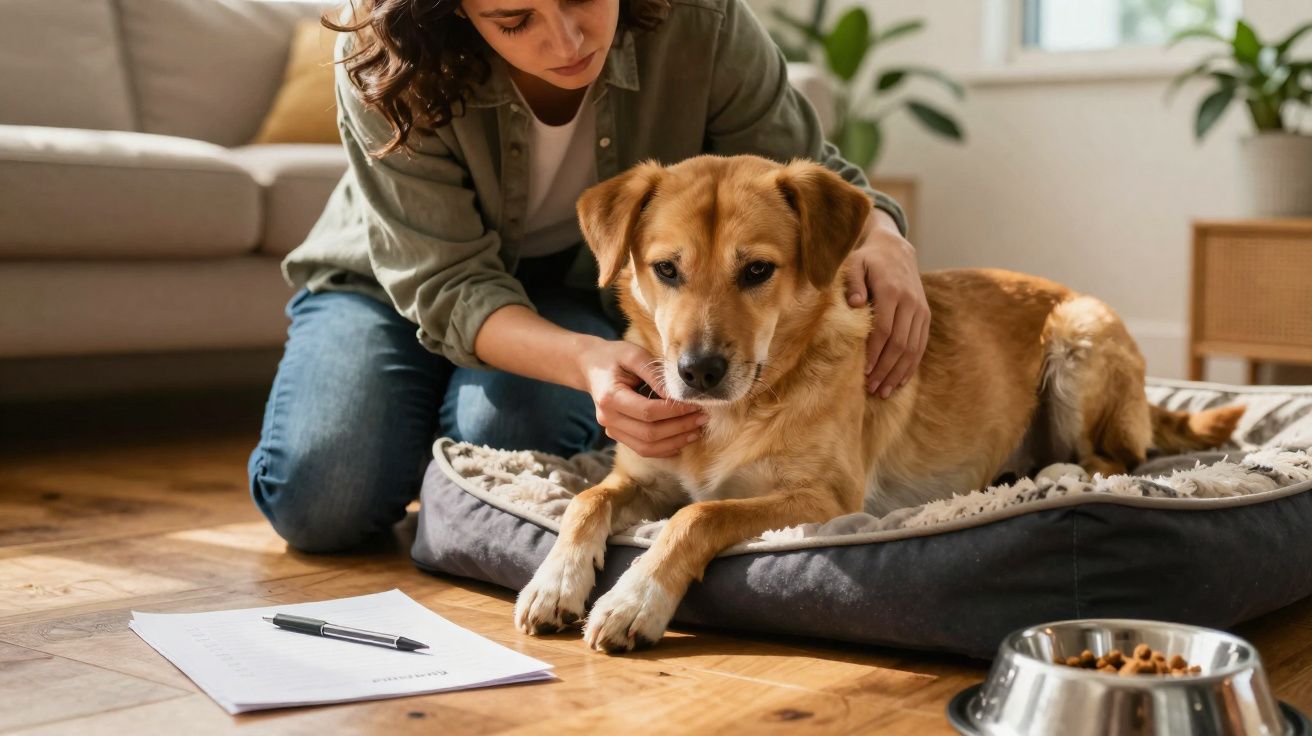
Knowing the quiet warning signs can prevent a great deal of suffering.
Many owners assume their dog would yelp or whimper if something were wrong. In reality, that often doesn’t happen at all. Dogs are exceptionally skilled at hiding pain. This quiet approach is driven by ancient instincts - and only those who understand them can recognise when their four-legged companion truly needs help.
Why dogs hide pain like a wild animal
The wolf’s shadow: injured animals are at risk
Even if your dog sleeps on the sofa and eats from a bowl, there is still a little wolf in there. In the wild, showing weakness can be life-threatening. An injured animal is easier prey, disrupts the hunt, and may put the group at risk. Any visible sign of suffering can lead to being pushed out - or worse.
That rule has been etched in over thousands of years: showing pain is dangerous. So they endure it in silence. The body may be sounding the alarm, but outward behaviour stays as “normal” as possible. What once kept wolves alive now means problems can go unnoticed for a long time in the living room.
Old genes, modern life: why complaining isn’t their style
Even if the biggest “crisis” in your dog’s day is a moved food bowl, the instinct remains switched on. Dogs suppress obvious signs of weakness - not because they want to be “tough”, but because their bodies are wired that way.
"If you wait for whining, you often wait too long - pain in dogs usually shows itself quietly and indirectly."
Instead of dramatic complaints, dogs communicate in subtler ways: altered movement, unusual stillness, odd breathing. On their own these hints can seem harmless, but together they paint a clear picture. Learning to read them protects your dog better than any new toy ever could.
The seven silent body signals of dog pain
1) Unusual panting at rest and subtle trembling
Panting after a sprint is normal. Panting on the sofa with no heat or stress isn’t. If your dog breathes faster and for longer while resting than the situation warrants, it is often more than “a bit of excitement”.
You may also notice tiny muscle twitches - for example along the flanks or in the hind legs. That can point to internal tension, spinal pain, or joint issues. Older dogs in particular may pant more with chronic osteoarthritis, and many owners mistakenly write it off as “just age”.
2) Constant licking of one spot and difficulty lying down
Licking is part of normal grooming. When it becomes intense, repetitive, and keeps returning to the same area, your dog may be trying to soothe something painful there: an inflamed paw, a sore hip, or an irritated patch of skin.
It becomes especially noticeable when this is paired with new uncertainty when lying down. The dog circles, hesitates, half-sits, stands up again, then tries once more. They can look as if they’re searching for the one position that hurts least - a common clue with back or abdominal pain.
3) Changed sleeping positions as a coping strategy
Most dogs have favourite sleeping postures. If a dog suddenly changes their pattern and sticks with it, it’s worth paying attention. For example:
- A former “curled-up sleeper” starts lying stretched out to ease the abdomen or spine.
- A dog that usually sleeps on their side begins sleeping hunched, with the tummy pulled in.
- The dog switches positions unusually often and never seems properly relaxed.
These changes can look minor, but they’re often the body’s first response to persistent pain.
4) Distance instead of closeness: when a cuddly dog seeks space
Many dogs actively seek out their people. If a normally affectionate dog suddenly prefers to lie alone in the hallway or bedroom, it’s rarely just a mood. Animals withdraw when touch becomes uncomfortable, or when they simply need peace to cope with feeling unwell.
"Social withdrawal in dogs is often not a personality change, but a quiet cry for help."
It’s also concerning if your dog ends petting sessions, shifts away, or flinches when certain areas are touched - such as the lower back, neck, or hind legs.
5) Sudden refusal of hard food
If a dog stops eating their usual dry food but still takes soft treats without trouble, pain in the mouth or throat is a likely explanation. Possible causes include:
- inflamed gums or loose teeth
- a broken tooth, often a carnassial tooth
- pain in the jaw joint or in the cervical spine
Many dogs will then chew only on one side, drop pieces of food, or turn their head away as soon as crunching is required. Toothache, especially in older dogs, can go unnoticed for months.
6) Small everyday changes - big significance
Pain often shows up in everyday moments that are easy to label as “ageing” or “laziness”:
| Behaviour | Possible meaning |
|---|---|
| Avoids stairs | Joint or hip problems |
| Stops jumping into the car | Back pain, knee issues, or shoulder pain |
| Wants shorter walks | general pain, cardiovascular problems |
| Growls when the harness is put on | Sensitive neck or chest area |
One sign on its own doesn’t automatically mean a serious illness. When several changes appear together, a physical cause becomes much more likely.
7) The overall pattern: several “minor” signals forming one message
A single quirk can be misleading, but clusters of subtle signs usually aren’t. Panting at rest plus position changes, or licking plus reluctance to lie down, often points to the same underlying issue. The key is to look at your dog as a whole - behaviour, movement, and routines - rather than chasing one isolated symptom.
How vets assess pain - and how owners can help
The chronic pain “checklist” for dogs
Vets use standardised scoring sheets to assess pain in dogs more reliably. What’s striking is how many of these points you can already observe at home. Typical questions include:
- Does the dog breathe or pant faster without a clear cause?
- Are there subtle tremors or muscle twitches?
- Do they groom one area excessively?
- Do they struggle to lie down or get up?
- Has their preferred resting position changed?
- Do they avoid contact or withdraw?
- Do they refuse hard or chewy food?
If you answer these questions before an appointment, you bring genuinely useful information. The more precise your observations, the quicker the practice can narrow down the cause. Photos or short phone videos of an altered gait or hesitation when lying down can be extremely helpful.
Watching is loving: a different way of being there for your dog
Love isn’t only long walks or plush beds. Noticing small changes often protects your dog more than any expensive equipment. If you truly look at your dog every day, posture alone can reveal when something isn’t right.
"If you hear the body’s quiet whisper, you don’t have to wait for the scream."
A dog that pushes your hand away when you touch a specific spot is communicating clearly. Those small “no’s” are worth taking seriously rather than dismissing them with “they just don’t like that”.
Practical tips: how to check your dog day to day
A quick “health check” in just a few minutes
Once a week, you can do a playful mini check at home. It’s easiest if it feels like gentle fussing rather than an examination:
- Slowly stroke along the spine and watch for any reaction.
- Gently move each paw as if you were lightly tapping it - but without applying pressure.
- Carefully lift the lips and look for red gums or build-up.
- During touch, watch for flinching, turning away, lip-licking, or sudden yawning - these can be stress signals.
If you notice a particular area is unusually sensitive, avoid trying to “treat it yourself” and book an appointment with the practice.
Pain or “just” behaviour? How to tell the difference
Some behaviour changes can look like a training issue at first: the dog won’t get into the car, avoids the food bowl, becomes snappy on the lead. Often, the trigger is simply physical discomfort.
A simple test is this: if the behaviour changes mainly in specific situations or around particular movements (jumping, chewing, bending), pain is very likely involved. Issues that are purely “personality” tend to be broader and less tied to one movement.
Time of day can be another clue. Many dogs with osteoarthritis are stiff in the morning, loosen up after a little movement, and worsen again in the evening. Spotting these patterns early can spare your dog significant suffering once treatment begins.
Why early recognition makes such a difference
Chronic pain doesn’t only alter gait - it can change a dog’s state of mind as well. A friendly companion may gradually become irritable or anxious, not because they’ve “suddenly become difficult”, but because every step costs effort.
Timely treatment reduces suffering and can prevent knock-on problems: compensatory posture, muscle tension, overloading other joints. Vets now have many options, from modern pain management and physiotherapy to tailored exercise.
Owners who truly know their dog often notice these subtle breaks in routine before anyone else. A brief moment of conscious observation after a walk, when settling down in the evening, or while chewing a bone is often enough to catch the first warning signs - long before a dog complains loudly.





Comments
No comments yet. Be the first to comment!
Leave a Comment