
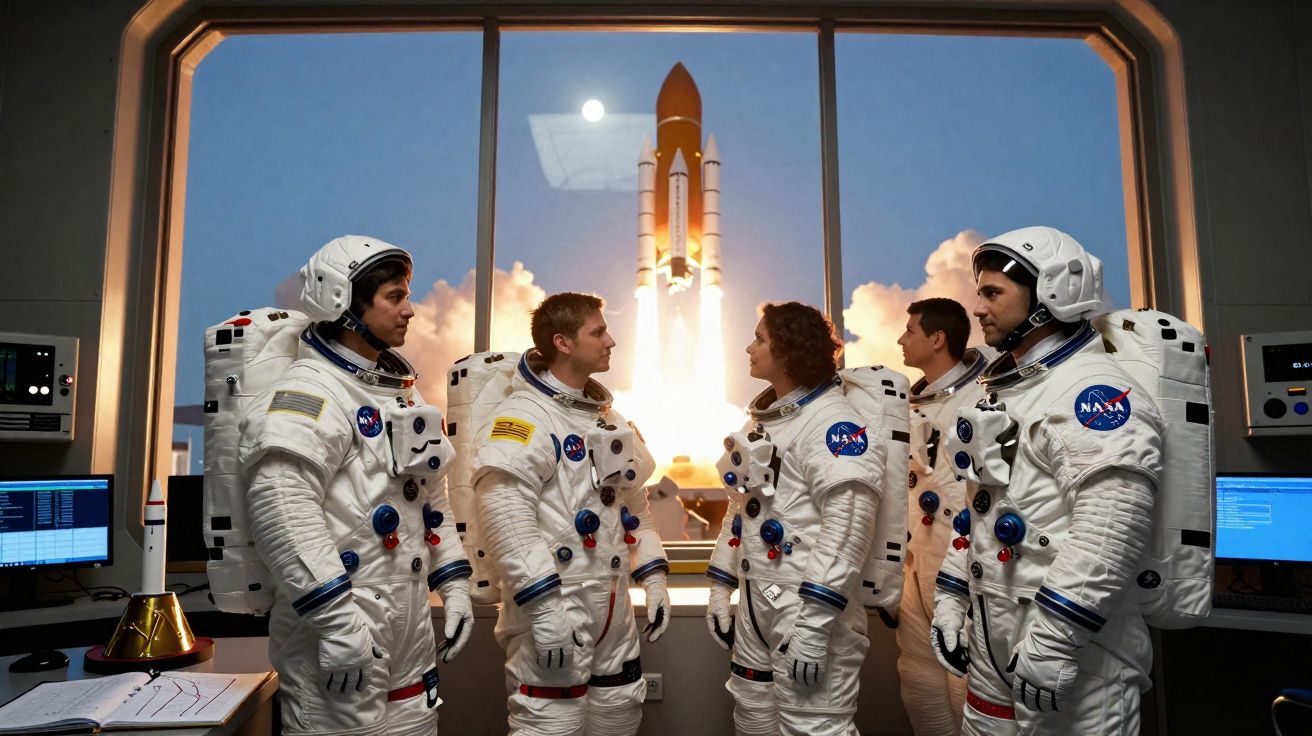
A successful Artemis 2 lunar flyby is only the opening step in the United States’ wider Moon programme
NASA Administrator Jared Isaacman said that Artemis 2 should be seen as the first phase of a much larger lunar programme-one intended to take the United States and its international partners towards a lunar base, and, in the longer term, on to a mission to Mars. In his view, the crewed flight-completed with a safe landing-served as the starting signal for a “lunar relay”, not the programme’s end point.
“This was the beginning of America’s return to the Moon, and it was a success,” Jared Isaacman said while speaking at the Space Symposium 2026 in Colorado. He added that the mission “will be remembered as the moment when people started believing again, believing that America can still take on the almost… impossible and achieve extraordinary results”.
NASA aims to pick up the pace for Artemis 3 and Artemis 4
Isaacman stressed that NASA intends to accelerate the overall tempo of Artemis. Under the updated plan, Artemis 3 is expected to serve as a test of the Moon landing system in 2027, while Artemis 4 could deliver the first astronaut landing in 2028. At the same time, the agency is backing a step-by-step build-up towards a base on the Moon-beginning with robotic missions which are expected to be able to deliver cargo to the region of the Moon’s south pole as early as 2027.
Gateway paused as NASA rethinks post-ISS orbital plans
NASA is also revisiting how it approaches other major initiatives. The agency has put the Gateway programme on hold and is considering a new framework for a future orbital station after the ISS, placing greater emphasis on private modules and closer collaboration with industry. Isaacman said NASA cannot “create” a lunar or orbital economy by force, but it can help it get moving through crewed commercial missions, research, and partnerships.
The Moon programme linked to Mars-and to international competition
Separately, the NASA Administrator connected the lunar effort directly to a future flight to Mars, arguing that deep-space missions will require nuclear power and, most likely, nuclear propulsion technologies. He also made it clear that the United States views the renewed Moon race in the context of international competition-above all with China.





Comments
No comments yet. Be the first to comment!
Leave a Comment