
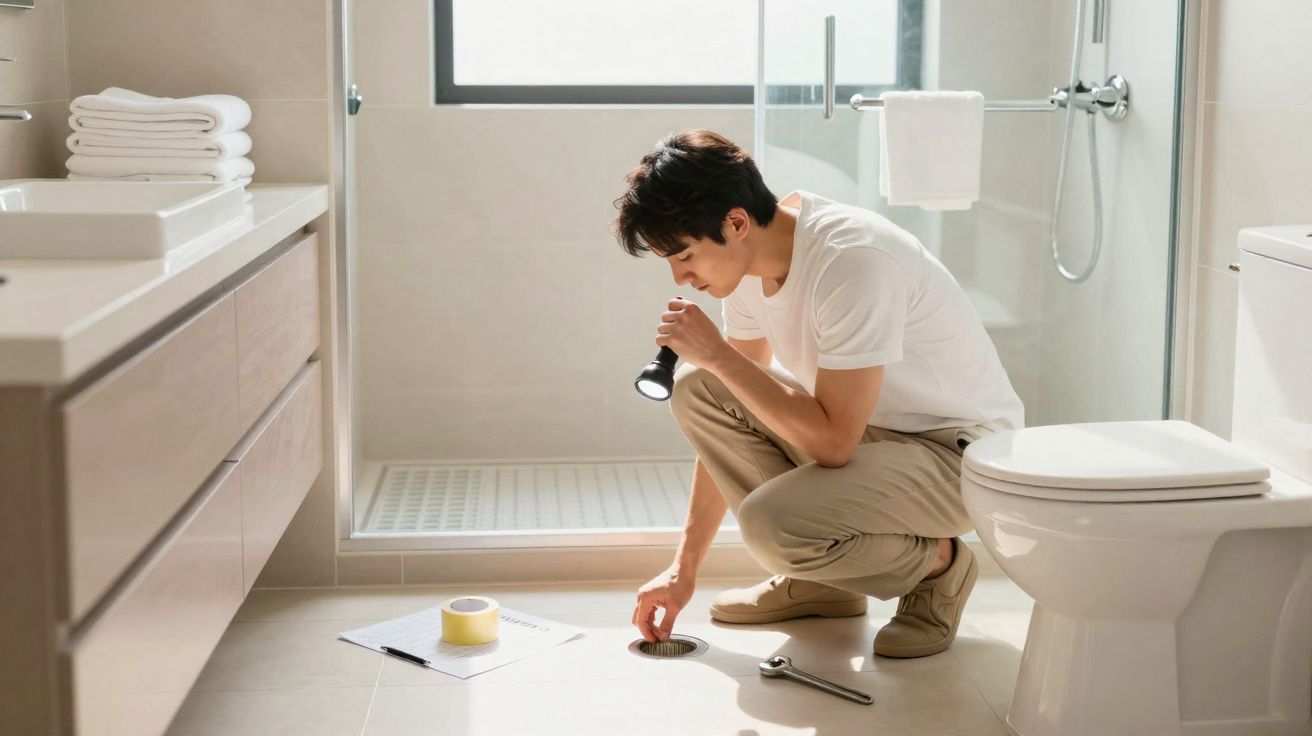
You walk into the bathroom, switch on the light, glance quickly at the mirror and… that waft of sewer gas hits you, as if it’s creeping up through the floor.
The basin is spotless, the toilet is gleaming, and there’s no hair trapped in the drain. Yet the smell is still there-stubborn, like an unwelcome guest who refuses to leave. You open the window, pour in a fragrant disinfectant, spray an air freshener. It works for a few minutes. Then everything comes back. And underneath it all sits the question many people try to dodge: is this just dirt, or is something wrong with the plumbing? When a sewage smell shows up, it’s usually a quiet symptom. And almost always, the real cause is hidden where you can’t see it.
The sewage smell that gives away a hidden bathroom problem
A sewage smell in a clean bathroom creates a very particular kind of frustration. It’s not merely unpleasant-it feels unfair. You scrub, you mop, you wash the bath mat, you spend money on scented products. But your nose doesn’t lie. Everything can look perfectly in order, yet your sense of smell is warning you: somewhere, a connection to the foul water system is letting gas back into the room. It sounds like something out of a plumbing horror film, but it isn’t. It’s common in older flats, in houses where renovations were poorly done, and even in brand-new builds finished in a rush.
The mechanism behind the odour is usually the same: sewer gases finding a clear route into the bathroom. In a properly installed system, that route is blocked by water-filled traps (siphons), rubber seals, and purpose-made gaskets. When one of these fails, the bathroom effectively becomes a chimney. The smell might emerge from the shower drain, the basin, a utility area connected to the same branch, or even around the base of the toilet. And this is the point many people miss: using perfume-heavy products only covers it up. Solving it means working out exactly where the seal has failed. Without that, you’re fighting a losing battle.
A building manager in the east of São Paulo once said that in a particular month, over half the residents’ complaints were about sewage smells coming from bathrooms. There was no visible leak, no lifted flooring, no damp patches. In one case, the resident had already replaced the toilet twice. The culprit? A simple sealing ring installed incorrectly. In another flat, the shower drain looked perfect, but the internal trap had dried out because it wasn’t used, allowing gas to rise straight from the pipework. Small, almost invisible issues-yet they can turn any shower into a test of patience.
How to track down the true source of a sewage smell in the bathroom, step by step
The first move isn’t glamorous: slowly bring your nose close to each likely point. Shower drain, floor drain, washing-machine drain, the toilet base, the basin trap. Check them one at a time, with the door shut and the window as closed as possible. In many bathrooms the strongest smell comes from a single spot, but spreads quickly. If you can, temporarily cover some drains with a plastic bag and weigh it down with water. Leave it for a few minutes. If the odour drops, you’ve found your culprit. This simple test already helps you separate a toilet issue from a drain issue-or from something deeper in the pipework.
Next, pay attention to timing. Does it get worse at certain hours? In the morning, when lots of neighbours use their bathrooms at once, the flow in the waste pipes increases and gases tend to hunt for any weak point. During dry spells, or when a bathroom or utility area is hardly used, the water in some traps can evaporate and the water barrier disappears. We’ve all been there: you can’t be bothered to use the utility-room loo for days, and when you finally go in, the smell is unbearable. Sometimes it isn’t a structural drama at all-it’s simply a dry trap. A bucket of water would have sorted it, but nobody mentions that in glossy show-home brochures.
Let’s be honest: hardly anyone checks these things routinely. Many people don’t realise, for example, that the basin trap needs minimal upkeep, that a dry drain is an open invitation to sewer gas, or that cracked silicone around a toilet base is more than a cosmetic issue. When the source isn’t obvious, it’s tempting to pour aggressive chemicals down the drain in the hope of “killing the smell”. The risk is damaging pipes, rubber joints, and even releasing a bigger burst of gas. The right approach is different: work out whether it’s a simple sealing failure, a ventilation issue in the pipework (a blocked-or missing-vent stack), or an incorrectly installed waste run. People who overlook these possibilities often live with the smell for years, assuming it’s “normal in an old building”. It isn’t.
Seals, quick checks, and when to call in professional help for sewage smells
Once you’ve narrowed down the most suspicious point, a practical way to tackle the root cause is to focus on sealing. With the toilet, check for any gap between the base and the floor. Carefully run your hand around it and see if there’s dust collecting where it shouldn’t-an indication air is moving through. If the silicone is loose or crumbly, the barrier against gas may have failed. At the drain, lift the grate and look for a trapped gully (floor trap) or an internal cup that holds water. If it’s dry, top it up. If the water disappears quickly, there could be a crack. Also inspect the basin trap-the U-shaped section under the wash basin: if it’s poorly seated or slightly loose, smell can escape there.
Many people overdo the “quick fix”. They tape over the drain with insulating tape, smear three layers of silicone over everything, drop a toilet freshener block into any opening. It works for a few days, then returns even stronger. The aim is to do less-but do it properly. Before loosening any waste connection, wear gloves, use a mask if you have one, and ventilate the room well. Loose fittings may only need tightening, or a straightforward part replacement-builders’ merchants sell sealing kits for exactly this. When the smell seems to come from inside the wall, or from multiple points at once, that’s a sign you’ve moved beyond DIY and into the territory of a professional who can use smoke testing or an inspection camera.
"An experienced plumber often says: the resident’s nose is the first piece of diagnostic equipment-but it can’t be the only one."
- Always check there is water in the traps (siphons) for floor drains and the basin before blaming “the building’s drains”.
- Replace the toilet sealing ring if there is any sign of leaking, smell, or movement at the base.
- Note whether the smell worsens on heavy-usage days or after intense rainfall, which can indicate a ventilation problem in the pipework.
- Avoid overusing harsh chemicals, which corrode seals and make the problem worse over the medium term.
- Call a professional when the odour comes from different points at the same time or persists despite every simple sealing step.
A sewage smell isn’t fate-it’s a signal from the bathroom system
When you start viewing the bathroom as a system rather than just a room, the smell stops being a “disgusting mystery” and becomes a clue. Every drain, every bend in a pipe, every seal has a clear job: keep what’s dirty where it belongs. When something fails, the first warning is rarely a dramatic leak. It’s usually a faint odour that grows over time, almost always ignored in the first few days. The key is that the sooner someone genuinely investigates the source, the simpler the fix tends to be: a cup of water in a forgotten drain, a new sealing ring, a tweak to the fall (slope) of a poorly fitted pipe.
| Key point | Detail | Value for the reader |
|---|---|---|
| Identify the exact source of the smell | Test drains, the toilet base, and the trap individually | Avoids wasting time and money tackling the wrong place |
| Look after traps and seals | Keep water in trapped gullies and keep sealing rings in good condition | Creates a real barrier against sewer gases entering the room |
| Know when to bring in a professional | Odour from multiple points or from inside a wall | Reduces the risk of structural damage and years of living with the issue |
FAQ:
- Question 1 What causes a sewage smell even when the bathroom is clean?
In most cases, it comes down to a failed seal: a dry trap, a worn toilet sealing ring, a drain without a trapped gully, or cracks in the pipework. Surface cleaning won’t stop gases if the water-and-rubber barrier has been compromised.- Question 2 Does pouring disinfectant or putting a toilet freshener block in the drain fix it?
It may mask the smell for a few hours-sometimes for a day or two-but it won’t address the cause. If the drain is dry or the seal is faulty, gas will still rise, just mixed with the product’s fragrance.- Question 3 How can I tell if the problem is the toilet?
Check whether the smell is stronger near the toilet base, whether there are stains or dampness around it, and whether the silicone is cracked. If the odour appears when you flush, that also suggests a possible failure of the sealing ring between the toilet and the pipe.- Question 4 Is it dangerous to breathe this smell for a long time?
In small amounts, sewer gases tend to be more irritating than immediately dangerous. In closed, poorly ventilated spaces, prolonged exposure can cause headaches, nausea, and general discomfort-especially for children, older people, and those who are sensitive.- Question 5 When is it worth calling a specialist professional?
When the smell returns quickly even after refilling traps, checking drains, and improving simple seals, or when it seems to come from inside a wall or ceiling. In these cases, a plumber with testing equipment can find cracks, poor connections, and vent stack failures that a resident is unlikely to identify alone.





Comments
No comments yet. Be the first to comment!
Leave a Comment