
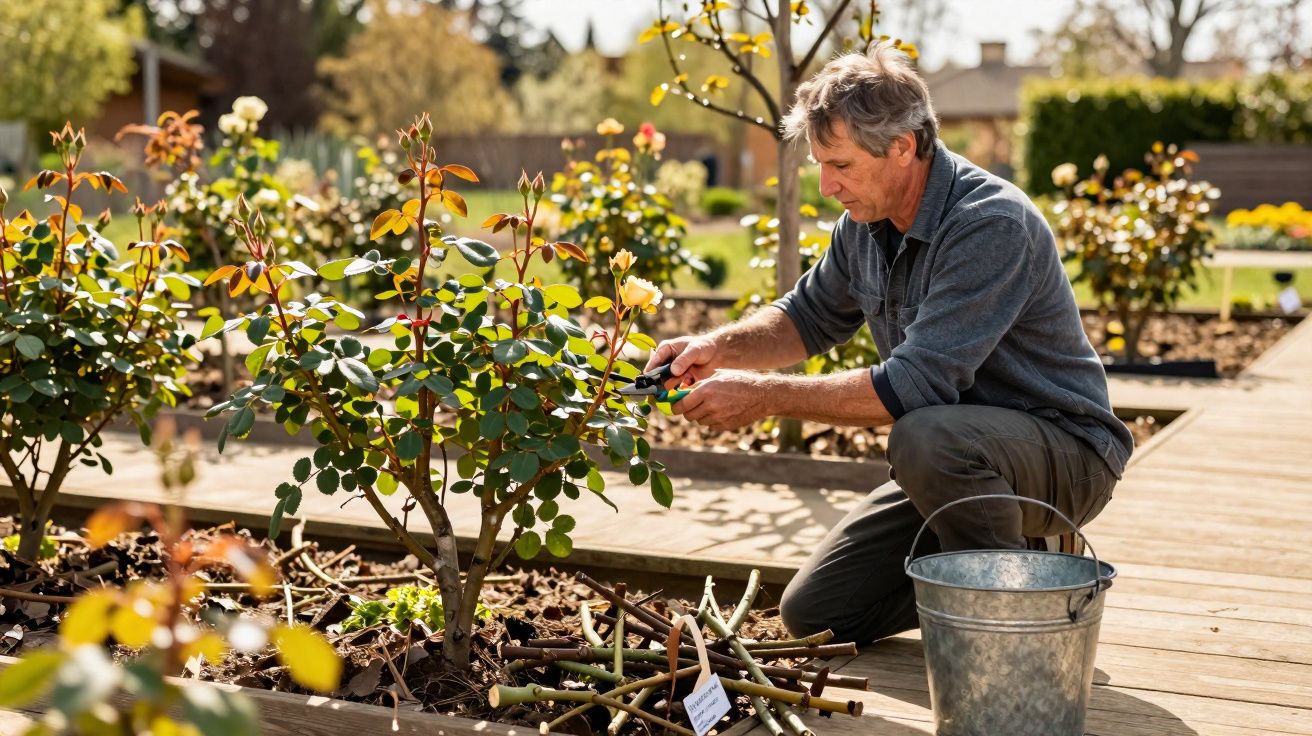
An experienced nursery gardener shares a surprisingly straightforward approach that starts with looking at your rose bush differently. Rather than hacking everything back in a rush, the aim is to understand the plant’s framework - and remove only what is genuinely holding it back. Gardeners who work this way often see noticeably more flowers in the first year, stronger new growth and a far more balanced shape.
Why “classic” spring rose pruning so often disappoints
In spring, many people prune roses by instinct: cut the whole plant back hard, remove a couple of stems, and call it done. It feels efficient, but it frequently produces the exact opposite of the desired result.
- Cutting back too severely weakens the plant because you remove a lot of wood and stored reserves.
- Pruning too cautiously leaves a tangle of thin, feeble shoots in place.
- The middle of the shrub stays crowded, damp and shaded - ideal conditions for fungal disease.
The result is fewer buds, more leaf problems, and a bush that flowers in patches without forming an attractive overall shape.
"Anyone who shortens roses ‘by ruler’ robs them of their strength and their natural form."
This is precisely where the nursery professional’s method begins. It treats each rose as an individual with its own growth habit - and prunes accordingly.
The nursery method for rose pruning: look first, cut second
The key difference is simple: the professional does not reach for the secateurs immediately. Instead, they spend one to two minutes “reading” the shrub.
They check:
- Which canes are old, grey, cracked or clearly dead?
- Where are branches crossing and rubbing against each other?
- Is the centre completely congested, or open and airy?
- Which shoots look strong, well ripened and carry healthy buds?
From those observations, the work follows a clear sequence.
How rose pruning is done the professional way
The gardener uses four easy steps that anyone can remember:
- Remove dead wood: Cut out anything blackened, dried out or snapped.
- Take out weak growth: Thin, soft shoots with few buds are removed.
- Cut crossing and rubbing branches: Create space, especially in the middle of the bush.
- Shorten strong shoots with purpose: Always cut just above an outward-facing bud (eye).
"The skill is not cutting a lot - it’s cutting the right things."
This creates an open structure built around a handful of sturdy main canes that grow outward and help “open” the plant. Light and air reach the leaves and buds more easily, and moisture dries faster. That significantly reduces the risk of fungal disease.
The right timing in spring
When to do this prune depends heavily on your region and the weather. Dates on the calendar are only a rough guide; the plant itself is more reliable.
- Buds are swelling and showing slight green tips.
- Severe night frosts are no longer forecast.
- The soil is no longer deeply frozen.
In many areas, this point falls between late winter and early spring. If you are a little late and can already see small new shoots, there is no need to panic. In that case, a gentler prune is enough - one that protects young growth as much as possible.
Roses are tougher than many people assume. Small mistakes are usually forgiven, as long as you do not prune brutally and without a system.
Practical rose pruning steps at the bush
Working to a clear plan makes you calmer and more confident. Before the first cut, pause briefly: walk around the rose and view it from every angle.
- Work from the base upwards so the structure stays obvious.
- Remove inward-facing, horizontal “trip branches” that will obstruct later shoots.
- From time to time, remove an older, very thick cane close to ground level so younger wood can replace it.
- For shrub roses, leave three to five strong, well-spaced main canes.
- Reduce each of those canes to a suitable length - but do not cut them all to exactly the same height.
Make each cut cleanly and at a slight angle. Sharp, clean tools prevent ragged wounds where rot and disease can easily take hold.
What height suits which rose?
How far you cut back should reflect the plant’s vigour:
| Rose type | Recommended pruning height | Note |
|---|---|---|
| Very vigorous bush | approx. 20–30 cm above the ground | Cut a little harder to encourage branching. |
| Medium-vigour variety | around 30–40 cm | Prune moderately; respect the variety’s character. |
| Weak or young plant | 40 cm and more | A softer prune so enough leaf mass remains. |
Reducing every rose to an identical height strips away both individuality and strength. Nurseries often compare rose pruning to a conversation: you listen to the plant first before you “reply” with the secateurs.
Common mistakes when pruning roses in spring
Many issues come from a few repeat errors.
- Pruning without a plan: A centimetre here, a branch there - the shape becomes messy and the bush stays too dense.
- Keeping old wood out of fear: Thick, tired canes may leaf up, but they suppress younger, stronger growth.
- Cutting far too close to the bud: If you cut right above a bud, it often dries out.
- Using blunt tools: Crushed stems instead of clean cuts create ideal entry points for pathogens.
"Leave a small piece of wood above each bud - about a centimetre is enough."
Following these simple basics prevents many of the classic “rose disasters” in your own garden.
What roses urgently need after pruning
Secateurs alone are not the whole job. After pruning, the plant must produce new shoots and rebuild leaf growth - and that takes energy.
Helpful actions immediately afterwards:
- If the weather is dry, water thoroughly once.
- Work in mature compost or a specialist rose fertiliser.
- Cover the root area with a layer of mulch.
Mulch helps prevent the soil drying out, cushions temperature swings and suppresses weeds. Using organic materials such as composted bark, chipped prunings or leaf mould improves soil structure over the long term.
In the weeks after pruning, it pays to keep a watchful eye. Fresh growth quickly shows whether the rose has handled the cut well. Strong, straight shoots arranged loosely are a good sign the pruning was successful.
How your view of garden roses changes
After just one season using the nursery principle, most people notice a difference: the rose looks more “ordered”, flowers more evenly across the whole bush, and appears healthier overall.
Over time, you develop a very different relationship with the plant. You learn which varieties respond well to a firmer prune and which need a lighter touch. At the same time, the pressure to cut “perfectly” fades - structure matters more than millimetres.
Practical notes for different rose types
The core principles stay the same, but a few details vary:
- Bedding roses: Cut back fairly firmly so they stay compact and well branched.
- Shrub roses: Thin out more than you shorten, to keep their characteristic, looser form.
- Climbing roses: Keep longer main canes, shorten side shoots, and replace old wood gradually.
If you know the cultivar name, you can also use the breeder’s recommendations as a reference - but do not let them unsettle you. What matters most is always the real plant in front of you, not a generic instruction.
Why this method means less work in the long run
At first glance, the observation-led approach can seem slower. In practice, the opposite tends to be true: a clearly structured, healthy bush needs less follow-up, fewer emergency cuts in summer, and is far less prone to disease.
Open, well-lit roses dry faster after rain. Problems such as black spot or powdery mildew occur less often and can usually be managed with gentle measures. If you also feed moderately rather than excessively, growth stays balanced: strong, but not overly soft and sappy.
That turns the annual rose pruning from an irritating chore into a short, focused task that produces visible results - often by the first flush of flowers in late spring.






Comments
No comments yet. Be the first to comment!
Leave a Comment