
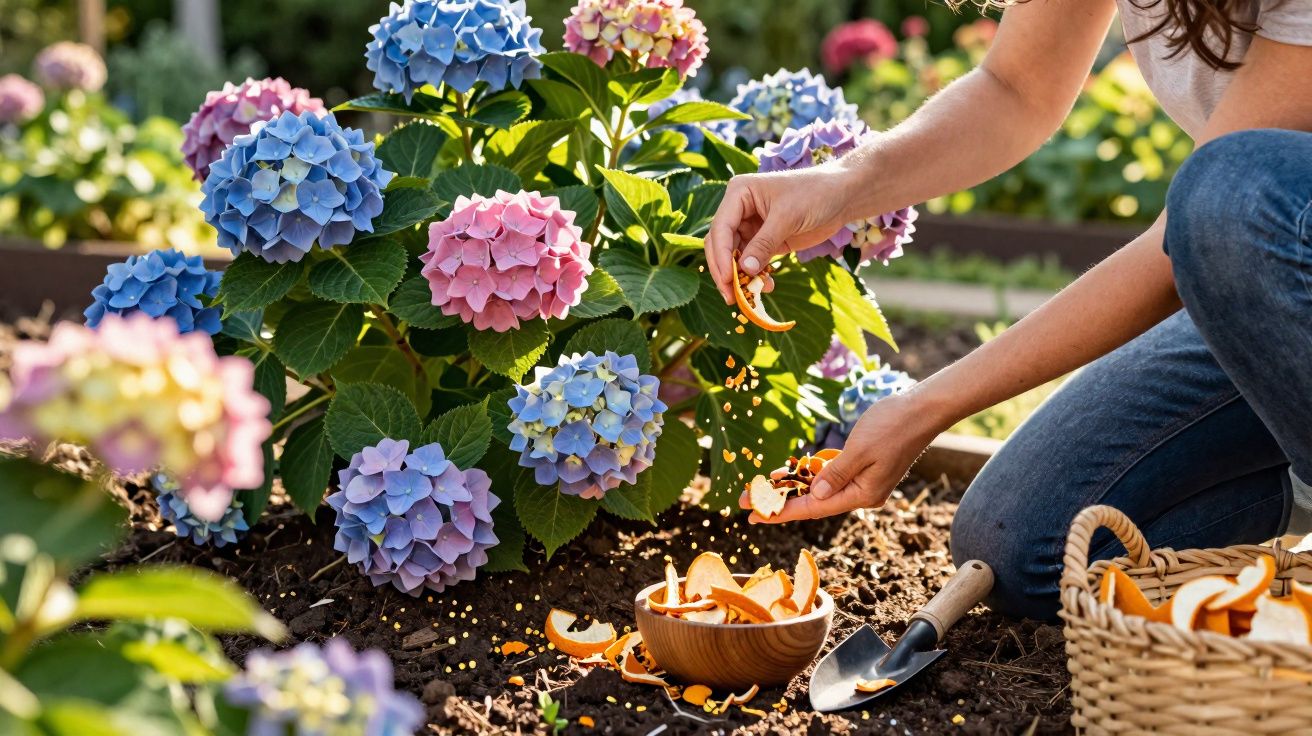
Anyone who steps into the garden in summer full of anticipation is hoping for dense, richly coloured flower heads on their hydrangeas. Yet all too often the reality is yellow-tinged leaves, smaller blooms and colours that look oddly washed out. Before reaching for an expensive specialist feed, it is worth considering a simple kitchen leftover that can do these shrubs a surprising amount of good.
Why hydrangeas react so strongly to soil conditions
Hydrangeas are classic acid-loving plants. They do best where the soil is slightly acidic, with a pH of roughly 5 to 6. In many gardens, however, the soil contains a lot of lime, which quickly throws the nutrient balance off.
The results show up quickly:
- Leaves turn pale green to yellow while the leaf veins stay darker.
- Shoots stay thin, grow less and can look weak.
- The flower heads develop smaller and are often fewer across the shrub.
The issue is not that nutrients are missing in the soil. In overly alkaline ground, roots struggle to take up iron and potassium in particular. This is exactly where a kitchen scrap can help, gently nudging the soil back towards a “hydrangea comfort zone” over time.
The unexpected helper: dried orange peel
Something that often ends up in the food waste bin can become a quiet ally in the ornamental garden: orange peel. It is mildly acidic, contains minerals, and offers an extra benefit as well.
“Dried orange peels act like a gentle, natural fertiliser for hydrangeas – and at the same time help to make the soil more acidic.”
Orange peel contains, among other things:
- Potassium – supports flower formation and sturdier shoots
- Nitrogen – promotes strong, green foliage
- Magnesium – essential for chlorophyll production
- Calcium – helps with cell structure and root development
That combination suits plants that like mineral-rich but slightly acidic soil. Compared with highly concentrated fertiliser products, orange peel works slowly and mildly, which significantly reduces the risk of overfeeding.
Preparing orange peel for hydrangeas properly
If you simply throw fresh peel under your hydrangeas, it often backfires: the pieces can go mouldy, attract insects and rodents, and break down very slowly. The key is to dry it first, then chop it up.
Step 1: Dry it thoroughly
First, the peel needs to be completely dried. Two approaches work particularly well:
- In the sun: Spread thin pieces on a tray or rack and place them somewhere warm with good airflow. They should end up hard and brittle.
- In the oven: Lay them on a baking tray and dry slowly at a low temperature (about 50–70 °C) with the oven door slightly ajar.
Only fully dehydrated peel stores well and will not go mouldy. If you eat citrus regularly, you can collect dried peel in a jar until you have enough to process.
Step 2: Chop it finely
Once the peel is dry and crisp, move on to grinding it down. The smaller the pieces, the faster they can release their contents into the soil.
Good options include:
- an old coffee or spice grinder insert
- a powerful blender
- a mortar and pestle for small quantities
You can make a coarse granule or an almost powder-like consistency. Both work, but powder spreads more evenly through the top layer of soil.
Using it in the bed: when, how often and how much?
Applying it in the garden is straightforward and takes only a few minutes:
- Loosen the top layer of soil in a ring around the hydrangea’s root area.
- Sprinkle the orange peel powder thinly over that area – do not pack it right up against the main stem.
- Work it lightly into the top 1–2 cm of soil.
- Water well afterwards so the nutrients are carried down towards the roots.
As a rough guide, a small handful of powder is enough for a medium-sized shrub. Apply it once a month during the growth and flowering period, roughly from March to the end of August.
“Using it once a month is enough: more orange peel does not give hydrangeas any extra benefit, and can disrupt the soil balance.”
Double benefit for hydrangeas: fertiliser plus a natural deterrent against pests
Orange peel does more than supply nutrients. It also contains a scent compound that many pests dislike, mainly d-limonene.
The sharp citrus smell can deter certain insects. Noticeable reactions are often seen from:
- various ant species
- some types of aphid
In this way, dried, crushed peel creates a light “scent barrier” around hydrangeas. It is not a substitute for measures needed in a serious infestation, but it can help if ants head for the buds or aphids settle on young shoots.
This approach can also suit other acid-loving ornamental plants, such as:
- rhododendrons
- azaleas
- camellias
- heathers and blueberries
What gardeners should watch out for
As with any home remedy, it pays to keep an eye on results. A few basics help avoid disappointment:
- Use unwaxed, untreated peel if possible: residues from plant protection products on citrus fruit can end up in your soil.
- Avoid leaving large pieces: they can attract wasps, slugs or mice and are more prone to mould.
- Check how it fits with other feeds: if you already apply specialist hydrangea fertiliser regularly, use orange peel more sparingly.
- Keep an eye on the soil: in very acidic ground, too much additional organic acidity can stress plants as well.
If you are unsure, a simple DIY-store pH test can help you judge whether the soil truly needs further acidifying or is already in a suitable range.
How orange peel influences bloom colour
Many hydrangea fans know the trick of using specialist bluing products to shift pink varieties towards blue. That depends on the interaction between pH level, aluminium availability in the soil and the plant’s variety characteristics.
Orange peel changes pH only gently and gradually. It is therefore better suited to:
- improving the plant’s overall vitality
- encouraging stronger foliage and more stable shoots
- helping the existing flower colour look clearer and more intense
If you want a specific bloom colour, you will still need products designed for that purpose. The orange-peel method is more about supporting the shrub’s basic health, which can also improve how the flowers look.
Why kitchen scraps are becoming more appealing for many gardens
Organic leftovers such as used coffee grounds, eggshells or citrus peel often go straight into the food waste bin or compost. For garden owners, though, they offer an opportunity: they can replace part of what would otherwise be bought as fertiliser.
With orange peel there is an extra angle: the scent can keep some insects away without the need for chemical treatments. In densely built-up areas with small gardens, the demand for simple, natural solutions that are easy to put into practice is growing.
So the next time you peel an orange on a winter evening, you can already be thinking ahead to summer. A few minutes of drying and grinding can turn an unremarkable kitchen leftover into a quiet helper that makes hydrangeas tougher and gives their blooms visible support.






Comments
No comments yet. Be the first to comment!
Leave a Comment