
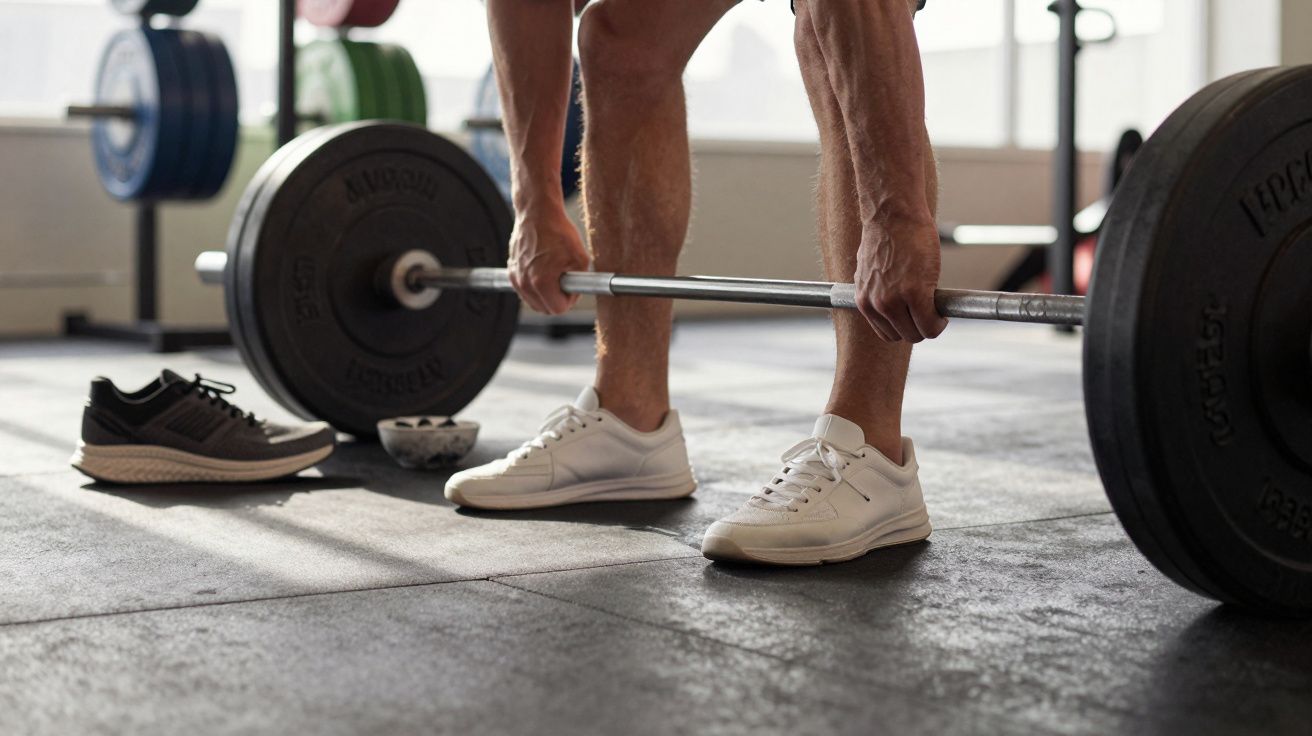
If you train at the gym regularly, chances are someone has warned you not to lift weights in running shoes.
The usual argument is that it will harm your performance and increase your risk of injury.
Is that actually true? Here’s what the research and biomechanics suggest.
What your feet are doing when you lift
Your feet play a central role in safe, effective strength training.
During walking and running, the foot behaves a bit like a spring: it stores and releases energy to help move you forwards with every stride. It also keeps you upright by managing balance and distributing your bodyweight.
When you lift weights-especially during compound movements such as squats-your feet work continuously to stop you wobbling and to keep you stacked over the floor, even if you’re not paying attention to them.
Researchers have also proposed that a more stable foot can help you apply force into the ground more efficiently. In practical terms, that can mean you’re able to lift a heavier load safely and with better control.
Footwear can influence how stable (or unstable) that base feels.
Can’t I just wear running shoes?
Despite how common they are in gyms, running shoes are built for running, not lifting.
Typically, they include:
- A raised heel
- A thick, cushioned midsole designed to absorb impact
- A curved “rocker” profile to help you roll from heel to toe
Those features are intended to reduce the pounding of running on the body.
In the weight room, however, that same cushioning can soak up some of the force you generate when you push into the floor. The result can be a less secure feeling underfoot-often described as feeling less stable, less strong, and less powerful. This is a key reason people advise against lifting in running shoes.
Some lifters worry that this instability could translate into injury risk.
A 2016 study reported that wearing running shoes during exercises such as squats can alter how the ankle and knee joints move. That said, there is currently no peer‑reviewed evidence directly connecting those movement changes to actual injury.
Footwear for weightlifting: what are my other options?
Beyond running shoes, most people lift in one of three footwear categories: minimalist (sometimes called “barefoot”), flat, or weightlifting shoes.
Minimalist (“barefoot”) shoes and flat trainers
Minimalist shoes are designed to mimic training barefoot. They usually have very thin soles with almost no cushioning, aiming to let your feet “feel” the ground more directly. Similarly, casual flat trainers (for example, Vans or Converse) generally have thin soles with minimal cushioning.
Because both options reduce squishiness underfoot, they can provide a steadier platform than running shoes, which may make them a sensible choice for many types of lifting.
Weightlifting shoes
Weightlifting shoes are purpose-built to support performance in the gym.
Common features include:
- A raised heel
- A firm, rigid sole with virtually no compression (often made from hard plastic or wood)
This design helps you stay stable at the bottom of a deep squat. It’s particularly helpful for movements such as squats, cleans and snatches, where getting into (and out of) deep positions is part of the lift.
But how do these different shoes stack up?
Research on footwear and gym performance is still fairly narrow, with most studies concentrating on the squat and the deadlift-likely because both are closely tied to leg strength.
A 2020 study comparing running shoes with weightlifting shoes found that weightlifting shoes enabled lifters to squat with a more upright torso and greater knee flexion.
That matters because it can reduce loading on the lower back and increase the demand on the leg muscles-essentially supporting the main goal of the exercise.
In line with that, a 2016 study reported that participants wearing weightlifting shoes felt more stable during the squat, implying they may be the better choice for that particular movement.
For the deadlift, a 2018 study found that running shoes reduced how quickly participants could apply force into the ground compared with lifting in socks. This could indicate that removing the running shoe (and its cushioning) improved stability.
However, the performance difference was small and hasn’t been reliably reproduced across studies.
Practical considerations beyond the studies
Two real‑world factors often shape the “best” choice more than lab findings.
First, gym floors vary. Soft, springy surfaces can make any shoe feel less stable, while hard platforms tend to reward firm soles. Second, gym rules and hygiene matter: some facilities do not allow lifting in socks or barefoot, and minimalist shoes can be a practical compromise.
If you use orthotics or have a history of foot/ankle issues, comfort and symptom control should also be part of the decision. In some cases, the “most stable” shoe is not the one that feels best for your joints.
So what shoes should I wear?
It ultimately comes down to your goals and circumstances.
If you’re prioritising squats, weightlifting shoes are often the strongest option. If your training is mainly deadlifts, flat shoes may give a small performance edge-particularly if your aim is to lift as much weight as possible.
If you compete as an Olympic weightlifter and must hit very deep squat positions in competition, weightlifting shoes are generally the ideal choice.
For most other gym‑goers, footwear choice may not be a major make‑or‑break factor. Choose what feels comfortable, suits your training, and allows you to lift with good control-and then focus on doing the work.
Hunter Bennett, Lecturer in Exercise Science, The University of Adelaide
This article is republished from The Conversation under a Creative Commons licence.






Comments
No comments yet. Be the first to comment!
Leave a Comment