
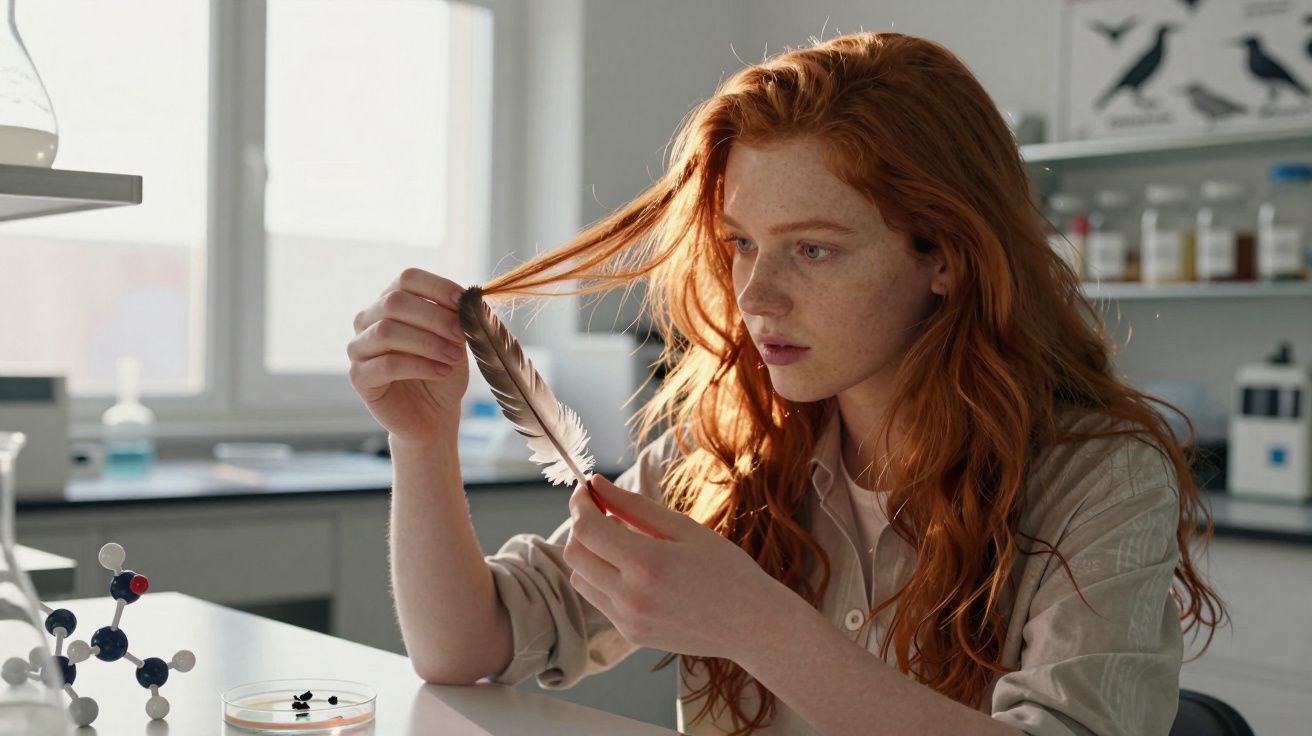
A colour-forming pigment linked with red hair may do more than change appearance: it can potentially transform a harmful biochemical surplus into visible colour.
Pheomelanin in bird feathers and red hair: a pigment with a protective twist
Researchers examining the orange-to-red melanin found in bird feathers report that making this pigment can help limit cellular damage. The pigment in question is pheomelanin, and producing it depends on the amino acid cysteine.
When cysteine builds up beyond what cells can safely handle, it can drive oxidative damage-the kind of stress that harms proteins, lipids and DNA. The new work suggests that diverting excess cysteine into pheomelanin synthesis may act as a kind of biochemical “pressure valve”.
Genetic variants, cysteine balance, and the National Museum of Natural Sciences
According to scientists at Spain’s National Museum of Natural Sciences, people carrying genetic variants associated with red hair may have cells that are particularly able to convert surplus cysteine-whether from diet or environmental exposure-into pigment. In this framing, pigment production is not merely cosmetic; it could also be a way of keeping cysteine levels in check.
Zebra finches and pheomelanin production: evidence from a model system
To test the idea experimentally, the team used zebra finches. In controlled experiments, male finches that were unable to synthesise pheomelanin showed greater oxidative damage after being given extra cysteine for four weeks than males that could still produce the pigment.
Female zebra finches, by contrast, do not naturally generate pheomelanin. They were unaffected by the drug used to block pheomelanin production. Although females fed additional cysteine showed a slight rise in oxidative damage compared with females not given extra cysteine, the difference was judged not significant.
Taken together, these results point to two linked conclusions: excess cysteine can contribute to cellular harm, and pheomelanin synthesis can shield against at least part of that harm-at least in the animals studied.
Where humans make pheomelanin, and what it means for melanoma risk
In humans, pheomelanin production is concentrated in areas such as the lips, nipples and genitals; people with red hair also deposit it in their hair and skin.
Pheomelanin has long been tied to a higher risk of melanoma, so its biology is often discussed in negative terms. However, the researchers argue that the genetic variants that encourage pheomelanin production may also provide a benefit: helping cells maintain cysteine balance by converting the excess into pigment.
“These findings represent the first experimental demonstration of a physiological role for pheomelanin, namely avoiding the toxicity of excess cysteine, leading to a better understanding of melanoma risk and the evolution of animal coloration,” the authors write.
Wider implications for oxidative damage and animal coloration
If pheomelanin truly serves as a route for disposing of surplus cysteine, this adds nuance to how scientists think about pigmentation and health: pigmentation pathways may have evolved not only to shape animal coloration, but also to manage internal chemistry under certain conditions. It also raises questions about whether individuals with higher pheomelanin production respond differently to oxidative challenges, depending on diet, environment, and baseline antioxidant defences.
At the same time, these findings come from a specific model species and controlled feeding conditions. Further research will be needed to establish how strongly this cysteine–pheomelanin relationship translates across species, and how it interacts with known drivers of melanoma risk in humans, including ultraviolet exposure and skin biology.
The study was published in PNAS Nexus.




Comments
No comments yet. Be the first to comment!
Leave a Comment