
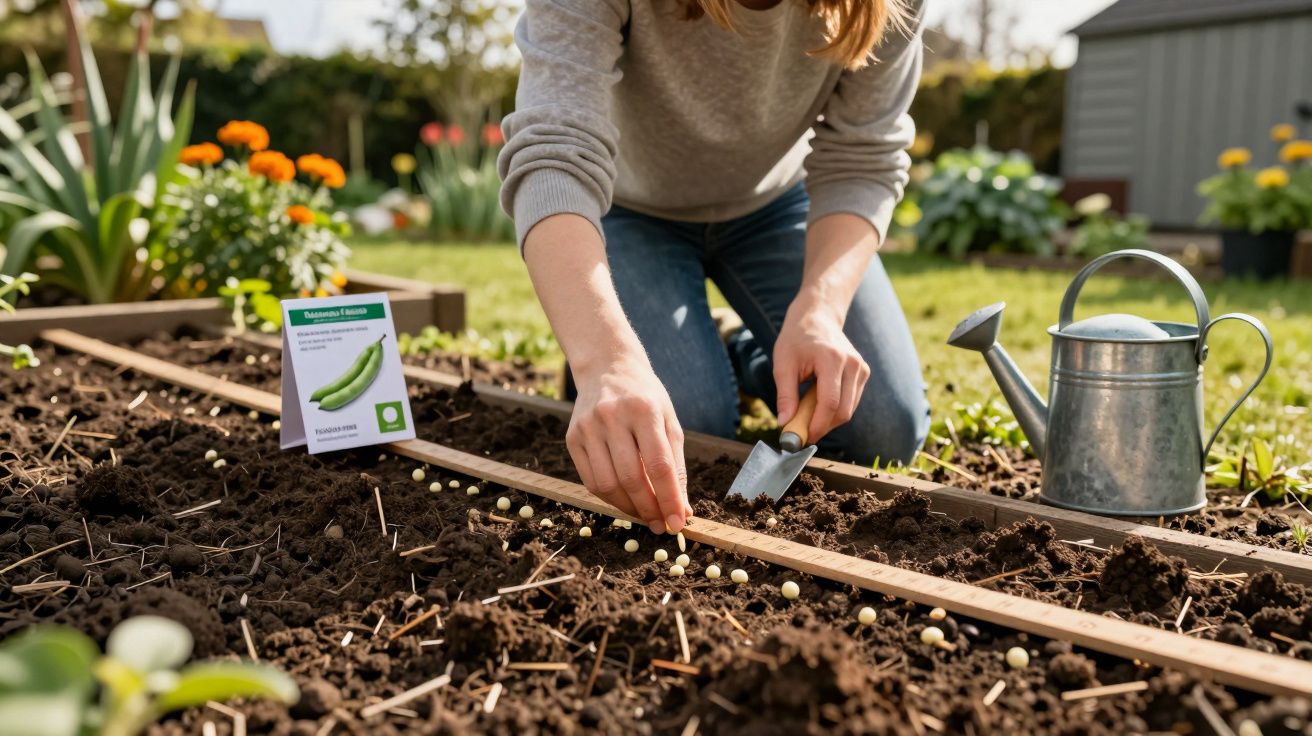
Bush beans look easy-going, yet they can be surprisingly fussy about cold and wet. Sow them too early and you can lose weeks-sometimes the entire batch of seed. Get the soil ready, watch the temperatures and plan your sowings sensibly, and you’ll be rewarded with bowls of pods in a remarkably short time.
Why timing is the make-or-break factor for bush beans
Bush beans are a staple in the vegetable patch: quick to grow, compact, and capable of cropping generously. The drawback is their strong dislike of frost and chilly, waterlogged ground. When the soil is cold and damp, the seed often rots long before any sprout appears.
Bush beans aren’t sown by the calendar-they’re sown by soil temperature. That’s the key to a fast harvest.
Aim for soil that’s at least 12°C, and ideally around 15°C. At those temperatures, germination can happen within a few days, and the plants move fast: it’s common for the first pickings to arrive about two months after sowing.
The best sowing window for bush beans by UK region
Rather than relying on the month alone, use your local conditions and your garden’s microclimate as the guide. A sheltered, sunny plot in the South warms up far earlier than an exposed garden in an upland area.
Southern, warmer areas (sheltered gardens, coastal spots)
In mild locations where the ground dries and warms quickly, the season often gets going from late March into April. Even then, make sure the last meaningful risk of frost has passed before you commit seed to the soil.
- First sowing: late March to April
- Further sowings: possible up to the end of July
- Early harvest: from late May / June
Temperate areas and mid-altitudes (much of England and Wales)
Across many gardens in the Midlands and similar climates, waiting a little longer pays off. Keeping within this window greatly lowers the chance of rotting seed and cold damage.
- First sowing: roughly late April to late May
- Last sowing: up to the end of July, occasionally early August
- Example: sowing early May – first harvest early July
Cooler areas, higher ground and exposed climates (Scotland, uplands, windy sites)
In colder regions and higher elevations, it’s usually better to delay. Starting too soon rarely speeds anything up; more often it stalls or fails.
- First sowing: usually late May to early June
- Main window: June to the end of July
- Example: sowing mid-July – harvest in September
A reliable rule of thumb is simple: sow only when the soil feels consistently warm. If you’re unsure, use a basic soil thermometer-or take a practical cue from the garden: once tomatoes can stay outdoors reliably, bush beans are generally comfortable too.
Preparing the soil for fast, even germination
Bush beans do best in soil that’s loose, airy and quick to warm. Heavy ground that stays wet slows growth and makes rotting more likely.
- Loosen the soil deeply with a garden fork or cultivator
- Don’t fully turn it over; break it up and open it instead
- Pay attention to any compacted patches and relieve them thoroughly
- Avoid digging in fresh farmyard manure right before sowing
Because bush beans are legumes, their roots host bacteria that help them fix nitrogen from the air. That means they can partly feed themselves. Heavy applications of nitrogen-rich fertiliser can upset the soil biology and are usually unnecessary.
When you sow bush beans, you can ease off on fertiliser-the plants supply part of their own nitrogen.
Extra note worth planning for: bush beans prefer a neutral to slightly alkaline soil (roughly pH 6.5–7.5). If your soil is very acidic, improving it with suitable amendments (based on a soil test) can make establishment and yield more reliable.
Step by step: how to sow bush beans in the bed
Once the soil is warm and properly prepared, sowing is straightforward.
Mark out rows and keep to the right spacing
Start by drawing shallow drills. There’s no benefit in burying seed too deeply-bush beans tend to germinate better when they’re closer to the surface.
- Drill depth: 3–5 cm
- Space between rows: 40–50 cm
- Spacing in the row: 5–10 cm between seeds
You can also sow in small clusters (often called “stations”):
- 4–6 seeds per station
- About 30 cm between stations
After placing the seeds, cover them with fine soil and press gently to ensure good soil contact, which supports quick germination.
Water properly and protect young plants
Moisture matters from the start, but the seed should never sit in a puddle.
- Moisten the drill before sowing
- Water gently again after covering
- Later, water at the roots rather than over the leaves
During flowering and pod set, beans are particularly sensitive to drought. Keeping moisture steady at that stage directly improves the harvest.
When plants reach about 15–20 cm tall, one small job can make a big difference: lightly draw soil up around the stems and add mulch between the rows (grass clippings, chopped straw, or leaf mould). This helps support the plants, keeps moisture in the ground, and reduces rapid drying.
Extra protection option: in borderline weather, a short spell under horticultural fleece or cloches can lift soil temperature and speed early growth. Remove covers once the weather settles so the plants get good airflow and don’t become soft or disease-prone.
How quickly bush beans reach harvest
Once seed is in warm ground, progress can be rapid. Seedlings often appear within 5–10 days, and after that the pace depends mainly on warmth and consistent watering.
| Stage | Timeframe (approx.) |
|---|---|
| Germination | 5–10 days after sowing |
| Leaf and shoot growth | 2–4 weeks after germination |
| Start of flowering | about 4–6 weeks after sowing |
| First harvest | around 50–60 days after sowing (bush beans) |
Bush beans are among the quickest crops you can grow in a bed: typically 50–60 days from sowing to the first pods. Pole beans usually take a little longer, but they crop for longer and climb higher.
If you sow a fresh patch of beans every two weeks, you can pick crisp pods all summer.
A proven approach is to begin the season with bush beans, which crop sooner. At the same time-or shortly afterwards-add pole beans to climb up a frame. That way you create an extended “bean relay”, producing from early summer through late summer and often into early autumn.
Harvesting the right way so plants keep producing
The more regularly you pick bush beans, the more they tend to flower and set new pods. Leave pods too long and they become tough and stringy-and the plant slows down because it’s moving towards seed production.
- Pick pods while they’re tender and snap easily
- In peak production, harvest every two days
- Remove over-mature, thick pods as well, even if you won’t eat them
This keeps the plant in “production mode” and maintains a steady supply for weeks.
Common mistakes-and how to avoid them
Most bean problems boil down to a few predictable missteps. Avoid these and the crop is far more dependable.
- Sowing too early: cold soil causes seed to rot-wait, then enjoy faster germination
- Waterlogged ground: avoid dips; consider slightly raised beds to prevent standing water
- Too much nitrogen: excess feeding gives lots of leaves and fewer pods
- Irregular watering: big dry spells can lead to misshapen or bitter pods
Practical additions: companion planting, risks and storage
Bush beans fit neatly into a well-thought-out bed plan. They pair well with many vegetables and, over time, can contribute to improved soil structure.
- Good neighbours: brassicas, beetroot, salads, cucumbers
- Less suitable right next to them: onions and garlic
- As a catch crop beforehand: radishes or spinach, harvested early
Disease issues are most likely in dense, poorly ventilated growth. Adequate spacing, keeping foliage dry, and choosing a spot with a bit of airflow all reduce the risk of fungal problems.
Another practical risk in many UK gardens is pest damage at the seedling stage-especially slugs. Checking at dusk, using barriers where appropriate, and keeping the area around young plants tidy can prevent seedlings being wiped out overnight.
To keep part of the crop for winter, trim the pods, blanch briefly in boiling water, cool them quickly in cold water, then freeze in portions. This helps maintain colour and texture-and makes the short growing season pay dividends well into the colder months.
Planned properly, bush beans are doubly rewarding: keep an eye on soil temperature, use the sowing window wisely, and stay on top of watering and picking. Do that, and you’ll not only harvest quickly-you’ll harvest steadily for weeks.





Comments
No comments yet. Be the first to comment!
Leave a Comment