
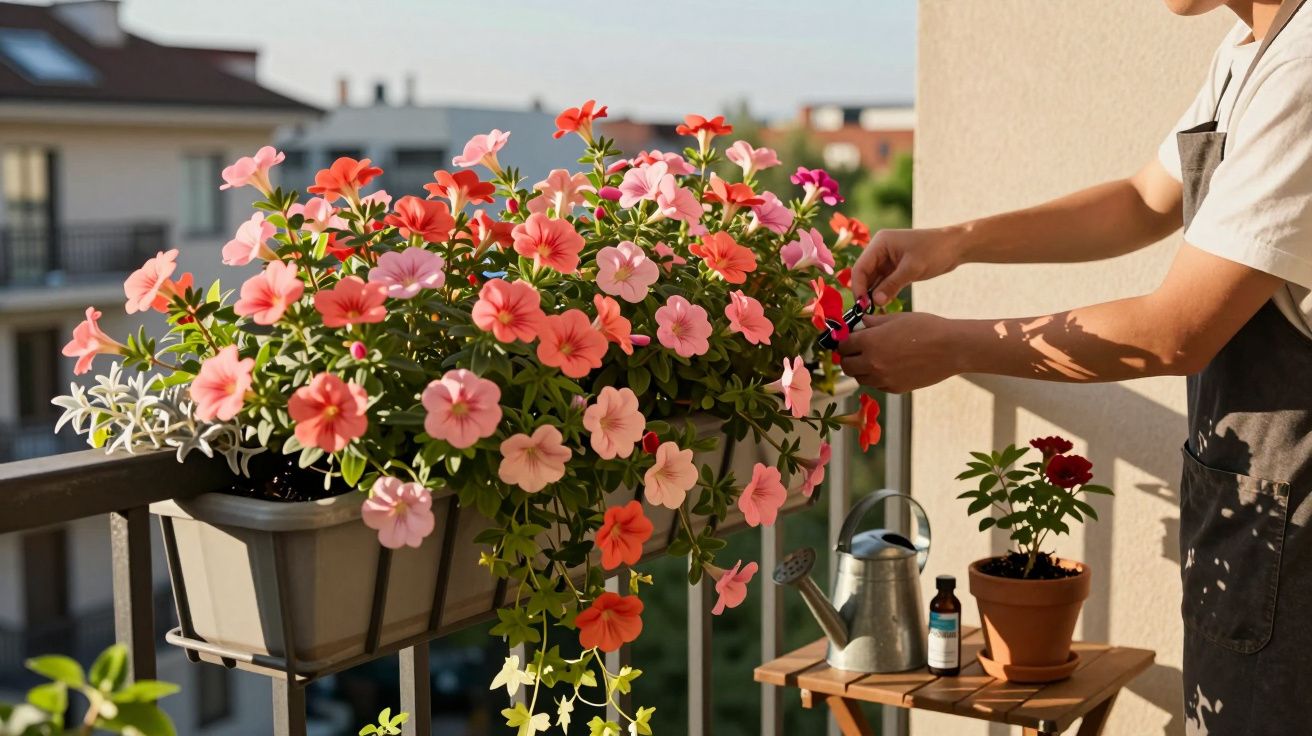
Many balcony gardeners dream of window boxes that overflow with colour from May right through to autumn. In reality, it often ends up as a few tired blooms and lots of leaves. One flower that’s still surprisingly overlooked can change that: Diascia, sometimes sold as twinspur. Give it the right spot in spring and support it with a few simple routines, and it will reward you with flowering that’s close to continuous.
Why Diascia (twinspur) delights balcony gardeners
Diascia comes from southern Africa and belongs to the figwort family. In the UK it’s usually treated as an annual summer bloomer, even though in milder areas it’s actually a small perennial. The plants stay neat and compact, yet they grow with a relaxed, trailing habit and produce countless flowers on thin, flexible stems.
Typical growth facts:
- Height: around 25–40 cm
- Spread: roughly 30–60 cm per plant
- Habit: bushy with a gently cascading form, perfect for the edges of window boxes
The flowers have five small lobes and appear in dense clusters. Colours range from soft apricot through to vivid pink, with varieties in white, orange and muted violet as well. That range is exactly what makes Diascia so useful for window boxes and hanging baskets where you want real, long-lasting colour.
If you want window boxes that keep flowering from spring to autumn, Diascia is hard to beat - it blooms with barely a pause.
Diascia looks particularly good in:
- classic window-box mixes with petunias, verbena or bidens
- hanging baskets where the stems can spill naturally over the rim
- shallow bowls on patio tables, creating a low “cloud” of flowers
- troughs or planters with a rock-garden feel, letting flowers drape over edges
The best timing and position for Diascia in window boxes
A long flowering season starts with getting the spring set-up right. Put young plants outside only once the risk of night frost has passed. In most areas this is between late April and mid-May, depending on the weather. If you’re sowing your own, start in March or early April indoors or in a greenhouse at around 15 °C.
How many Diascia plants per window box?
A common pitfall is planting either far too tightly or leaving the box looking sparse. A handy guideline is:
| Window box width | Recommended number of Diascia |
|---|---|
| 30 cm | about 3 plants |
| 50–60 cm | about 6 plants |
| 80 cm | about 8 plants |
This way the plants knit together quickly without competing too much. You avoid gaps and end up with a consistent “front” of flowers.
Light and soil: where Diascia feels at home
Diascia thrives in sun, but it also copes well with bright partial shade. The sweet spot is a position with sun in the morning or late morning, plus a bit of protection in the afternoon during the hottest part of summer. If it sits for hours in harsh midday sun combined with muggy heat, it can become stressed and slow down its flowering.
Your compost should be:
- loose and free-draining
- humus-rich
- moderately fertile (not overly rich)
- slightly acidic to neutral, around pH 6.0–7.0
In practice, a good-quality compost for bedding or patio plants works well, especially if you lighten it with a little sharp sand or expanded clay. That helps excess water drain away quickly so the roots don’t sit in soggy conditions.
Watering, feeding and cutting back: keeping Diascia in shape all summer
Diascia is refreshingly straightforward to care for if you stick to a few basics. The biggest mistake is watering heavily while the container drains poorly.
Water properly rather than “drowning” it
Diascia prefers evenly moist compost. It’s fine if the surface dries a little between waterings, but the root zone shouldn’t dry out completely. In window boxes and hanging baskets, regular watering is essential - especially in windy spots or full sun.
- water at the base, not over the flowers
- during hot weather, water in the evening where possible
- avoid waterlogging at all costs - drainage holes are non-negotiable
A feeding approach that supports long flowering
Too much fertiliser tends to push leafy growth at the expense of blooms. A restrained feeding routine works better:
- mix in a controlled-release fertiliser for patio plants at planting time or
- add a small dose of liquid feed to the watering can every 3–4 weeks
If your compost is already nutrient-rich, skip feeding for the first few weeks after planting. Start later only if flowering eases off and the plant needs a gentle boost.
Deadheading and cutting back for even more flowers
A little trimming can noticeably increase flowering. Pinch out spent flower sprays regularly so the plant doesn’t waste energy on seed production. If the plant becomes patchy in midsummer or flowering slows, a light cut-back helps.
Cutting back by about one third of the stem length in summer acts like a reset - Diascia shoots again and returns to strong flowering.
You can also pinch out the tips of occasional long shoots using your fingers. This encourages branching and keeps the plant compact, which looks especially tidy in window boxes.
Free new plants: propagate Diascia easily at home
If you’ve found a variety you love, you don’t have to rely on whatever the garden centre stocks next year. Diascia is simple to multiply from cuttings.
- in spring or early autumn, select non-flowering shoots
- cut pieces about 10 cm long
- remove the lower leaves, leaving only a few at the top
- insert into seed compost or a dedicated cutting compost
- keep lightly moist, never saturated
Place autumn cuttings somewhere bright and cool at around 10–15 °C, safe from frost. In spring, the young plants can move into window boxes or borders.
Common issues - and how to avoid them
Although Diascia is generally sturdy, it reacts badly to two things: persistent wet and heat stress. If compost stays waterlogged for weeks, roots rot and the plant can collapse quickly. On the other hand, if a box bakes in intense heat, leaves may curl and buds can dry out before opening.
Useful countermeasures:
- check drainage holes and drill extra ones if needed
- add a drainage layer of expanded clay or gravel to the bottom of the container
- on extremely hot days, provide temporary light shade
- water less often but more thoroughly, rather than frequent small sips
Pests such as aphids or whitefly usually appear only when plants are under stress. A firm spray of water and, if necessary, a mild soap solution or nettle tea is often enough.
Which plants pair well with Diascia
In mixed window boxes, Diascia is an easy-going partner for other sun lovers. Attractive, low-effort combinations include:
- petunias or calibrachoa for a full-on “summer balcony” look
- verbena in matching or contrasting colours
- silver foliage such as dusty miller or Helichrysum to make flower colours pop
- low ornamental grasses to add movement and structure
If you prefer a calmer scheme, stick to one or two tones - for example apricot Diascia with white companions - for a refined look that doesn’t feel busy.
Who Diascia is especially suited to
Balcony gardeners with limited time do well with Diascia because it copes if you miss a day of watering. It doesn’t demand complicated routines - just a few repeat tasks. It’s also a solid choice for beginners without much gardening experience.
Diascia is also appealing if you’d rather not redesign your window boxes from scratch every year. In warmer areas or sheltered courtyards, it can behave as a perennial if protected from hard frost. Even in colder regions, you can overwinter cuttings - a small balcony project that brings plenty of satisfaction.
Extra tips for stronger Diascia displays (window boxes and hanging baskets)
A little planning makes Diascia perform even better. Choose containers that are deep enough for a stable root run, and don’t skimp on drainage material - especially in hanging baskets, which dry out fast but also suffer if water has nowhere to go. If you expect heatwaves, positioning the container so it avoids the fiercest afternoon sun can be the difference between steady flowering and a midsummer pause.
For colour planning, Diascia works brilliantly as a “linking” plant: it can soften transitions between bolder flowers (such as bright petunias) and foliage plants. Repeating the same Diascia variety along the full length of a long window box also creates a more cohesive, professional-looking display than using lots of unrelated colours.






Comments
No comments yet. Be the first to comment!
Leave a Comment