
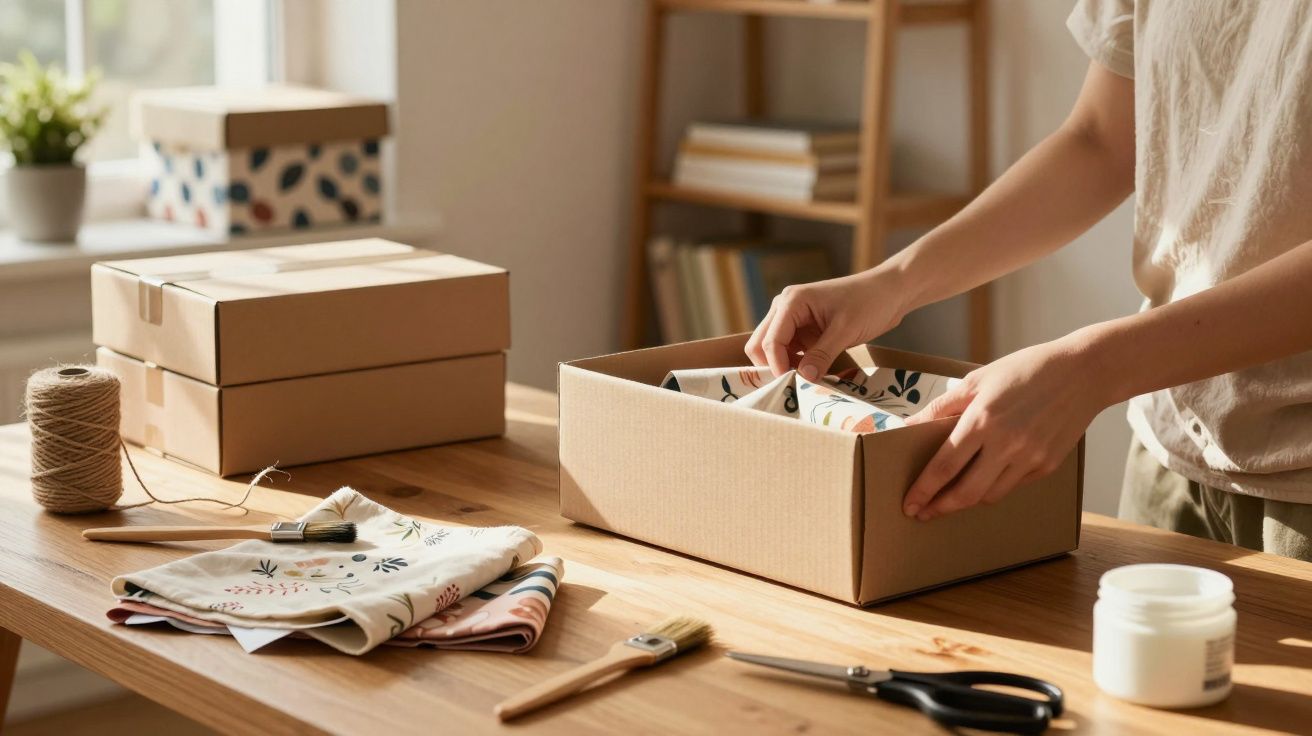
Many households end up stacking delivery cartons in the hallway and hoarding old textiles in the linen cupboard “because they might come in handy”. Most of it eventually gets binned anyway. This is exactly where a simple idea comes in: with a few cuts, a bit of glue and a suitable fabric, that plain brown block becomes a decorative box that looks like it belongs on a shelf in an expensive concept store.
Why upcycling with cardboard makes so much sense right now
The pressure to create less waste is increasing. The United Nations has been warning for years about soaring volumes of plastic. According to recent OECD figures, global plastics production could rise by around 70% by 2040 - and only a tiny fraction of that comes from recycled materials.
Anyone who creatively uses cardboard and fabric offcuts at home lightens the load on both the bin and their wallet - and very directly cuts down their share of plastic décor.
Instead of buying yet more plastic baskets, organisers and boxes, there’s an obvious alternative: use what you already have. Upcycling - upgrading what looks like waste - has long since moved beyond a hipster trend. It’s becoming an everyday tool: fewer purchases, less plastic, and more individuality.
From cardboard to design: the core idea behind the fabric-covered box
The concept is straightforward: a flat piece of cardboard, a sturdy fabric remnant and glue. The result is a small basket or box with a shape that’s reminiscent of bread or roll baskets. Your choice of fabric defines the look - rustic, minimalist, playful or boho.
Common fabric options include:
- Cotton (old bed linen, pillowcases, tea towels)
- Linen (tablecloths, napkins)
- Jute or other coarse natural fibres for a rustic finish
- Patterned shirts or blouses for colourful accents
That’s what makes each box feel different - and never like mass-produced storage.
Step-by-step guide: how to make your fabric-covered box from cardboard
Materials most people already have at home
- 1 sturdy cardboard box (for example, a delivery carton)
- Fabric offcuts large enough to cover it
- Scissors or a craft knife
- Glue (craft glue, wood glue or hot glue)
- Optional: cord, ribbon or wide gift ribbon
- Ruler and pencil for neat edges
How to build the box in just a few steps
- Prepare the cardboard: Cut a rectangle from the cardboard to the size you want your finished box to be. The larger the rectangle, the larger the basket.
- Cut out the corners: Remove a small square from each corner. The width of these squares will become the height of your box.
- Fold up the sides: Fold the edges upwards. You’ll end up with a shallow tray shape with open corners.
- Cover the outside: Place the fabric right side down on the table, position the cardboard in the middle, then glue the fabric tightly around the outer sides. Fold any excess to the inside and glue it down firmly.
- Finish the inside: Either line the inside with the same fabric or choose a contrasting fabric. A contrasting lining often makes the basket look more premium.
- Secure the corners: Use a hole punch - or carefully make a hole with scissors - in each corner. Thread cord through and tie it off; this pulls the sides into shape and gives the box its stable form.
The cord trick at the corners is what makes a once-flat piece of cardboard suddenly look like a finished product from a homewares shop.
Optional finishing touches (to make it look even more “shop-bought”)
To push the “concept store” feel a step further, add a simple label (cut from leftover gift wrap or card) and tie it on with the same cord, or glue a small fabric tab to one side as a handle. If you’re making several boxes, repeating one colour (for example, black cord across all of them) creates a cohesive look even when the fabrics differ.
Where the new box earns its keep in everyday life
The finished box isn’t a dust collector - it’s a proper workhorse around the house. You can use it in almost any room.
| Room | Possible use |
|---|---|
| Kitchen | Bread and roll basket, teabags, napkins, snack corner |
| Hallway | Keys, wallet, sunglasses, post |
| Bathroom | Cosmetics, cotton pads, hair ties, razor |
| Bedroom | Jewellery, watches, reading glasses, remote control |
| Children’s room | Pens, small figurines, trading cards |
| Home office | Pens, sticky notes, cables, chargers |
Depending on the size and the fabric pattern, the boxes can slot into different interior styles. Neutral linen reads Scandinavian and clean; bright checks feel more country; dark denim looks distinctly urban.
How upcycling changes the way you see household “leftovers”
Once you’ve started turning cardboard into decorative organisers, you begin to view everyday odds and ends differently. That old men’s shirt suddenly looks like a potential source of fabric. A stained tablecloth may still be perfect for lining the inside of a box. Even scraps of wrapping paper can be used in small doses - for example, as labels or simple appliqué details.
Almost without noticing, your attitude to shopping shifts too. When you spot cheap plastic boxes in-store, the question becomes: do I actually need this - or is the raw material already sitting at home?
Every box you make yourself replaces an item that would otherwise need to be manufactured, packaged, transported and eventually thrown away.
What can go wrong when crafting - and how to avoid it
This project doesn’t always go perfectly first time. Typical issues include:
- The fabric wrinkles: Either the glue went on too thickly or the fabric wasn’t pulled taut. Fix: apply glue in thin strips and smooth the fabric repeatedly as you go.
- The cardboard turns soft or wavy: The cardboard is too thin, or the glue is too wet. Fix: use sturdy cartons and store them somewhere dry before covering.
- The box twists out of shape: The corner squares weren’t cut evenly. Fix: measure with a ruler first rather than guessing.
- The cord tears through: The holes were made too close to the edge. Fix: leave a bigger margin, or reinforce the area on the inside with a small piece of tape.
If children are joining in, it’s best to swap hot glue for standard craft glue, and have an adult handle cutting the cardboard pieces.
Why this simple fabric-covered box is more than just décor
There’s more to a fabric-covered box than a pleasant afternoon with scissors and glue. It represents a different way of thinking about resources. Industry is already experimenting with upcycled textiles, circular plastic processing and new business models. On a small scale, you can mirror that at home - no machinery, no app, just what’s already in your cupboard.
If you make projects like this regularly, you’ll build up a personalised organising system over time: boxes for winter accessories, crates for Christmas decorations, little baskets for charging cables. Everything can match visually because you coordinate fabrics and colours - and each piece still carries its own story.
One point is often overlooked: handmade storage lowers the barrier to staying tidy. You tend to use what you’ve made more consciously and look after it better. That’s how an old cardboard carton becomes a small everyday project that combines style, sustainability and practical function in one.



Comments
No comments yet. Be the first to comment!
Leave a Comment