
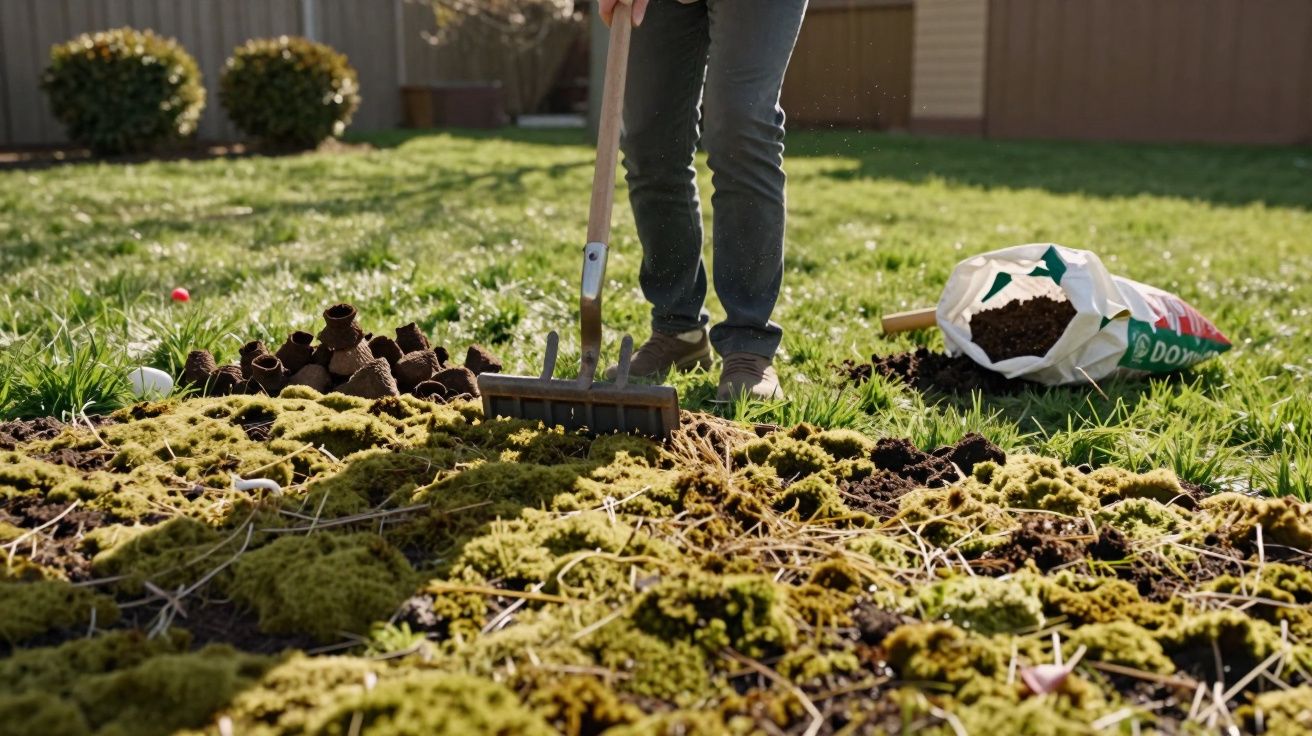
Instead of expensive specialist products, three surprisingly straightforward steps will do the job.
Plenty of keen gardeners get a shock in early spring when they look at the lawn: yellow patches, soggy areas, and cushions of moss where a rich green carpet ought to be. The encouraging news is that March is often the perfect window to make your lawn noticeably thicker for the long term and cut moss right back-using a bit of elbow grease, but no chemicals.
Why there is so much moss in your lawn – and what it really means
Moss is not an enemy in itself; it is a signal. It usually points to tired conditions in the soil: poor aeration, too much moisture, and often too little sun. Grasses prefer a loose, free-draining root zone, while moss thrives where water sits and the ground becomes compacted.
If you want moss gone for good, don’t fight the plant-fix what’s happening in the soil.
Over the years, almost any lawn becomes compressed: rainfall, children playing, garden furniture, and repeatedly walking the same routes all press the ground down. When that happens, water struggles to drain and grass roots are starved of air. Moss then settles in quickly-typically where you notice:
- patches that stay wet or turn muddy
- grey-green moss cushions in part shade
- areas that feel hard and “drummy” underfoot
- blades that look yellowish despite regular watering
A simple March routine tackles exactly these causes: open up the soil, improve it lightly, rake out the moss, then mow correctly.
The right timing: why March is (usually) the sweet spot
Start once the soil has begun to warm but hasn’t dried out. In many gardens that’s somewhere between early and mid-March; in particularly mild spots you can sometimes begin in late February.
| Area / exposure | Typical start point |
|---|---|
| Mild coastal and sheltered urban gardens | Late February to early March |
| Most lowland gardens | First half of March |
| Colder upland or exposed sites | Mid to late March |
What matters most is the ground condition: not frozen, not waterlogged-slightly damp is ideal. One dry afternoon is often enough to complete all three steps.
Step 1: Aerate the lawn thoroughly with a garden fork
The most important improvements happen below the surface. The technical term is aerating (often called aeration). In practice, a standard garden fork or lawn aeration fork is perfectly adequate for small areas; if you have a large lawn, hiring a machine can be worth considering.
How to aerate with a fork
- Wait until the soil is no longer frozen and isn’t squelchy-lightly moist is perfect.
- Push the fork tines about 8–10 cm into the turf.
- Gently pull the handle towards you so the soil cracks slightly and loosens.
- Step forward and repeat roughly 15 cm further on.
Give extra attention to the trouble spots-anywhere water lingers after rain or the ground feels especially solid when you walk on it. In those places, it’s fine to make the holes closer together.
The many small holes act like air and water channels: standing water reduces and oxygen reaches the roots again.
This step alone often leads to stronger, denser growth later, simply because the roots can “breathe” properly again.
Step 2: A finely spread soil mix (topdressing) helps the lawn thicken up
After aerating, apply a light surface dressing-commonly known as topdressing. This fills the holes you’ve made and improves soil structure right where the roots are working.
A simple soil mix for home gardeners
A loose, crumbly blend works best, for example equal parts of:
- finely sieved garden soil
- coarse sand (or sharp sand)
- mature, sieved compost or leaf mould
If you can’t make the ideal mix, don’t let that stop you. Even coarse sand on its own can make a real difference because it increases drainage and keeps the fork holes open.
How to apply the topdressing properly
- Sprinkle the mix thinly over the aerated areas-aim for no more than a light layer.
- Use a stiff brush (a hard yard brush works well) to work it in firmly until the mix disappears into the holes.
- Spread any leftover material evenly so you don’t end up with little ridges or mounds.
When worked in well, a topdressing improves both drainage and nutrient availability-grass gains the advantage and moss loses it.
The compost or leaf mould provides gentle, slow-release nourishment, while the sand increases air space in the soil. Often you’ll see the benefit within the same spring, with the lawn looking more even and a deeper green.
Step 3: Rake out moss vigorously, then mow a little higher
Once the soil has been opened and improved, tackle what you can see: moss and old thatch. A sturdy metal rake or a strong spring-tine rake is ideal; for larger lawns, a scarifier can also be used.
Raking correctly in spring
Work across the lawn in both directions (lengthways and sideways), pulling the rake through the turf with purpose. It can feel harsh, but it’s effective: dead material, moss, and built-up thatch loosen and collect on the surface in piles.
Dispose of this debris in the compost heap or your garden waste bin-don’t leave it lying on the grass. Afterwards the lawn may look alarmingly bare, which is normal and, to a degree, the point.
A slightly “bald” lawn for a week or two is the trade-off for a much denser green carpet later in spring.
The first cut: higher is better than lower
Straight after raking, it’s a good moment for the first mow-just pay attention to cutting height:
- In spring, mow on the higher side, around 4–5 cm.
- Never remove more than one third of the grass height in a single cut.
- Use a sharp blade so the grass is sliced cleanly rather than torn.
Grass that isn’t scalped develops stronger roots and closes gaps faster. Moss, on the other hand, benefits from very short turf that lets more light hit the soil surface-raising the mowing height helps prevent exactly that.
Typical mistakes with lawn moss – and how to avoid them
Many people reach first for a moss killer or a heavy dose of fertiliser. It can look good briefly, but the moss often returns because the underlying conditions haven’t changed. Avoid these common traps:
- Starting too early: if the soil is frozen, it can tear and the turf can be damaged for the season.
- Ignoring ongoing waterlogging: where downpipes, poor drainage, or water running off a slope constantly saturate the area, even the best topdressing has limited impact unless you address the water source.
- Cutting far too short: “golf-green height” weakens grasses and gives moss an opening.
- Treating shade like full sun: beneath trees and beside walls, lawns need different expectations and care-or an alternative planting choice such as shade-tolerant ground cover.
Two extra checks that make the March routine work even better
If moss is persistent year after year, it’s worth checking soil acidity (pH). Many grasses prefer slightly acidic to neutral soil; if your lawn is very acidic, moss can gain the upper hand. A simple garden pH test kit can guide you, and where appropriate, applying lawn lime at the recommended rate (and at the right time for your conditions) can help shift the balance back towards grass.
Also review your mowing and traffic patterns. Repeatedly turning the mower in the same spot, placing the same bench on the same patch, or using the same shortcut across the lawn compacts soil faster than you might think. Rotating routes and occasionally resting worn areas supports everything you’re doing with aerating and topdressing.
How March lawn care pays off through the rest of the year
By aerating in March, lightly improving the root zone, and raking moss out properly, you set the lawn up for months ahead. Growth becomes more even, the grass recovers faster after hot spells, and it copes better with wear.
In many gardens, repeating this routine once a year is enough. If your lawn takes heavy use-children’s play areas, or a lawn regularly used by dogs-planning a second aeration in late summer can be worthwhile. The work remains manageable, and the results are usually very noticeable.
Practical add-ons: overseeding, fertiliser and shade zones
After the March routine, check for bare patches. Where grass has disappeared entirely, targeted overseeding with a high-quality lawn seed mix can restore coverage. Lightly rake the seed in, firm it down, and keep it evenly moist for several weeks.
If you want to feed the lawn as well, choose a moderate, organic-leaning lawn fertiliser. After aerating and topdressing, roots can take up nutrients efficiently; overdoing it rarely creates better green growth and more often stresses the plants.
In areas of permanent shade-such as beneath dense trees-standard lawn grasses can struggle. Shade-tolerant lawn seed mixes may help, but in some spots a different approach (for example, shade-loving ground cover plants) is simply more realistic. That spreads your maintenance effort sensibly and gives moss fewer opportunities to take over.
Use a single dry afternoon in March with intent, and you stand a strong chance of a thicker, tougher lawn-while spending far less time worrying about moss later in the year.






Comments
No comments yet. Be the first to comment!
Leave a Comment