
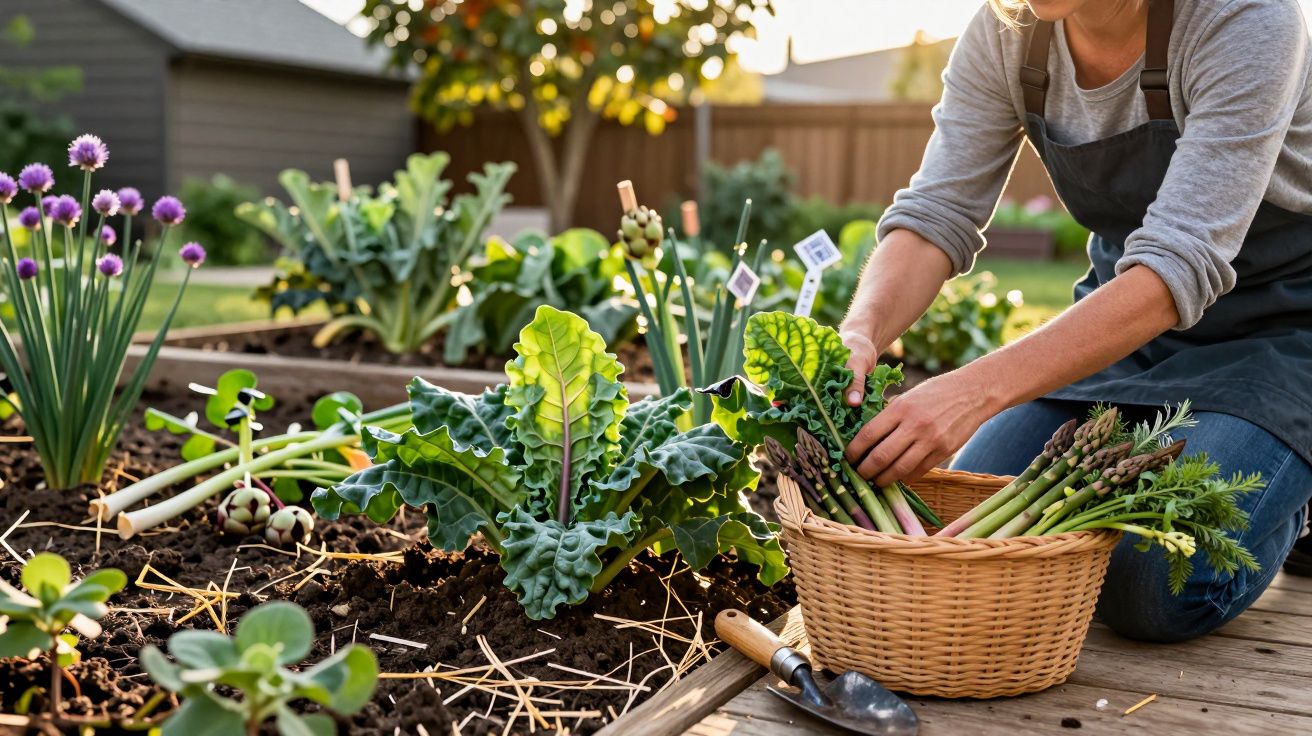
Many gardeners know the feeling: every spring you start again-sowing, raising seedlings, watering, weeding-only to find the harvest looks modest next to the effort. A classic annual veg plot is not the only option. By choosing perennial vegetables, you can cut the workload, use less water and avoid much of the usual frustration, while still picking regular harvests for your kitchen.
What the idea of “perennial vegetables” really means
Perennial vegetables are plants you don’t need to sow from scratch each year. They stay in the same spot for several seasons, or reliably return because they self-seed or regrow from their roots.
Well-known examples include asparagus, rhubarb, Jerusalem artichoke and perennial leeks. Once you’ve planted them carefully, many remain productive for years. The heavy work is mostly upfront-after that, they generally need only occasional attention.
The basic principle is simple: establish the bed once, then harvest for years-using far less effort and water than with traditional annual crops.
A major bonus is soil protection. Because you aren’t constantly digging and turning the ground, soil life thrives-earthworms and beneficial insects in particular. Perennials also add structure to the plot: they create shelter, provide insect habitat and can even offer a little privacy.
Why a perennial vegetable bed is so appealing
If you plan your veg garden with the long term in mind, the benefits stack up. A perennial vegetable bed fits perfectly with sustainable gardening approaches such as permaculture and wildlife-friendly gardens.
- Less work: much of the sowing, pricking out and planting out disappears.
- More reliable harvests: even when the weather makes one year difficult, many plants bounce back and crop again.
- Less watering: deeper roots can draw moisture from lower soil layers.
- Improved soil structure: less disturbance encourages humus and a loose, crumbly tilth.
- Greater biodiversity: flowers, foliage and roots provide food and habitat for beneficial wildlife.
Many perennial crops are surprisingly tough. They cope well with cold, tolerate average soils, and respond best to one simple gift: a generous mulch layer instead of constant watering.
The quiet stars: long-lived perennials worth growing
Long-term classics: asparagus, rhubarb and friends
Asparagus rewards patience. You typically wait two to three years before harvesting properly, but a well-made bed can then produce for 10 years or more. In ideal conditions, asparagus plantings can remain productive for up to 20 years.
Rhubarb is similarly long-lived. Give it a cool, lightly shaded spot and plenty of compost at the start, and it can provide stalks for over a decade-perfect for cakes, compotes and syrups. Sorrel, chives and perennial leeks also reshoot reliably each spring.
Self-renewing leafy crops for regular picking
If you cook with plenty of greens, perennial leaf crops can act like a living store cupboard:
- Perennial leeks provide slim stems and tender leaves over an extended season.
- Perennial kale (such as Daubenton’s kale) forms bushy plants that you can harvest from repeatedly.
- Sorrel offers fresh, tangy leaves for salads and soups.
- Lovage brings a bold, celery-like flavour and quickly becomes an impressive clump-forming plant.
These are particularly useful at bed edges or in mixed plantings. They give shape to the garden and are happy staying put for many years.
Aromatic, long-lasting kitchen herbs
A perennial vegetable bed pairs naturally with long-lived culinary herbs, including:
- Chives - excellent for sandwiches, salads and egg dishes.
- Perennial basil - variety-dependent and often frost-tender, yet surprisingly resilient in a sheltered spot.
- Hardy fennel - provides leaves, seeds and decorative flowers.
- Wild garlic (ramsons) - thrives in damp shade and spreads readily once settled.
With these herbs, fresh leaves are available for much of the year. Many also flower enthusiastically, which helps draw pollinators into the garden.
Roots and tubers that keep themselves going
Some of the most interesting perennials are underground. Several crops form tubers or roots where you can harvest some while leaving enough behind to maintain the patch:
- Jerusalem artichoke - a tall plant with sunflower-like flowers and nutty tubers.
- Crosne - little-known but delicious tubers with a delicate flavour.
- Horseradish - a powerful root that adds heat to sauces and can spread vigorously.
- Globe artichoke - a prized delicacy, perennial in sheltered locations.
These plants can spread widely. If you don’t want them taking over, contain them with root barriers, buried edging, sturdy paving stones-or grow them in large containers.
Planning a perennial vegetable bed: what to consider before you dig
Because most plants will stay in place for years, it pays to check the basics before you start.
| Criterion | What to look for |
|---|---|
| Space | Large clump-formers such as lovage or globe artichoke need noticeably more room. |
| Soil | Asparagus prefers light, free-draining soil; rhubarb does best in moist, humus-rich ground. |
| Light | Full sun suits most crops; shadier areas work for wild garlic (ramsons) and very early growers. |
| Kitchen habits | Choose more leaf crops, herbs or root vegetables depending on what you actually like to cook. |
If space is tight, prioritise compact choices such as chives, sorrel, perennial leeks and smaller herbs. Bigger plants are best placed at the bed edge or given their own dedicated area.
Getting started: building your perennial vegetable bed step by step
Starting doesn’t need to be complicated. A quick sketch helps you map sunny and shady zones, plus dry and damp patches, so you can place plants where they’ll thrive. After that, the focus is on soil preparation.
Prepare the soil-and keep it protected
Rather than deep digging, it’s often enough to loosen the ground with a fork or similar tool. Then add plenty of well-rotted compost. Finish by covering the bed with a thick mulch layer-straw, fallen leaves or grass clippings all work well.
Mulch cuts down watering, suppresses weeds and feeds soil life at the same time-making it a cornerstone of a long-lasting perennial vegetable bed.
Most perennial vegetables favour sunny positions and well-drained soil. Rhubarb and wild garlic (ramsons) are happier in slightly damp, partially shaded spots.
Control vigorous spread from the beginning
Some species grow with real enthusiasm. Jerusalem artichoke, horseradish and crosne can expand quickly via their roots. If you want to grow them, build in boundaries from day one-buried edging, robust borders, or large tubs set in place.
That way the system stays manageable, rather than turning into a thicket that smothers neighbouring plants.
Two extra habits that make perennials perform better (and last longer)
Harvesting style matters with long-lived crops. Take what you need, but avoid stripping plants bare-especially with leafy perennials and perennial kale. Regular, light picking encourages steady regrowth, whereas over-harvesting can weaken plants going into winter.
It’s also worth thinking about winter resilience. In colder or more exposed gardens, a thicker mulch layer around the crowns of globe artichoke and other borderline-hardy plants can make the difference between re-sprouting and losing them. Shelter from wind-fences, hedges or nearby shrubs-often helps more than extra feeding.
When the annual veg patch becomes a bonus, not a burden
Once a perennial bed is established and thriving, it changes how you view the rest of the garden. Seasonal crops like tomatoes, peppers and courgettes can become “nice extras” rather than your main source of produce.
Even a small core of dependable plants-perennial leeks, sorrel, chives, wild garlic (ramsons) and rhubarb-can cover a large share of everyday green cooking. You can then add more species gradually to match your tastes.
Many gardeners find spring becomes far calmer. Seed lists shrink, the rush around cold frames eases, and attention shifts towards light maintenance, observation and enjoyment.
Practical tips: getting the best from perennial vegetables
A few simple routines keep a perennial system productive year after year:
- Add a thin layer of compost to the beds once a year, in autumn or early spring.
- Top up mulch regularly so the soil is never left bare.
- Divide overcrowded clumps and replant elsewhere, or swap spare plants with neighbours.
- During prolonged midsummer dry spells, water deeply and selectively rather than sprinkling a little every day.
If you’re new to veg growing-or short on time-start with just a handful of species and expand over several years. That keeps everything manageable, and you’ll quickly learn which perennials genuinely thrive in your own garden.
Combining perennials with soft fruit bushes or small trees can be especially effective. Under currants or gooseberries, you can establish wild garlic (ramsons), sorrel or low-growing herbs, while sunny gaps can be filled with asparagus, globe artichokes or perennial leeks. Over time, you’ll build a garden that not only looks good, but also reliably supplies the kitchen-without having to start from scratch every year.






Comments
No comments yet. Be the first to comment!
Leave a Comment