
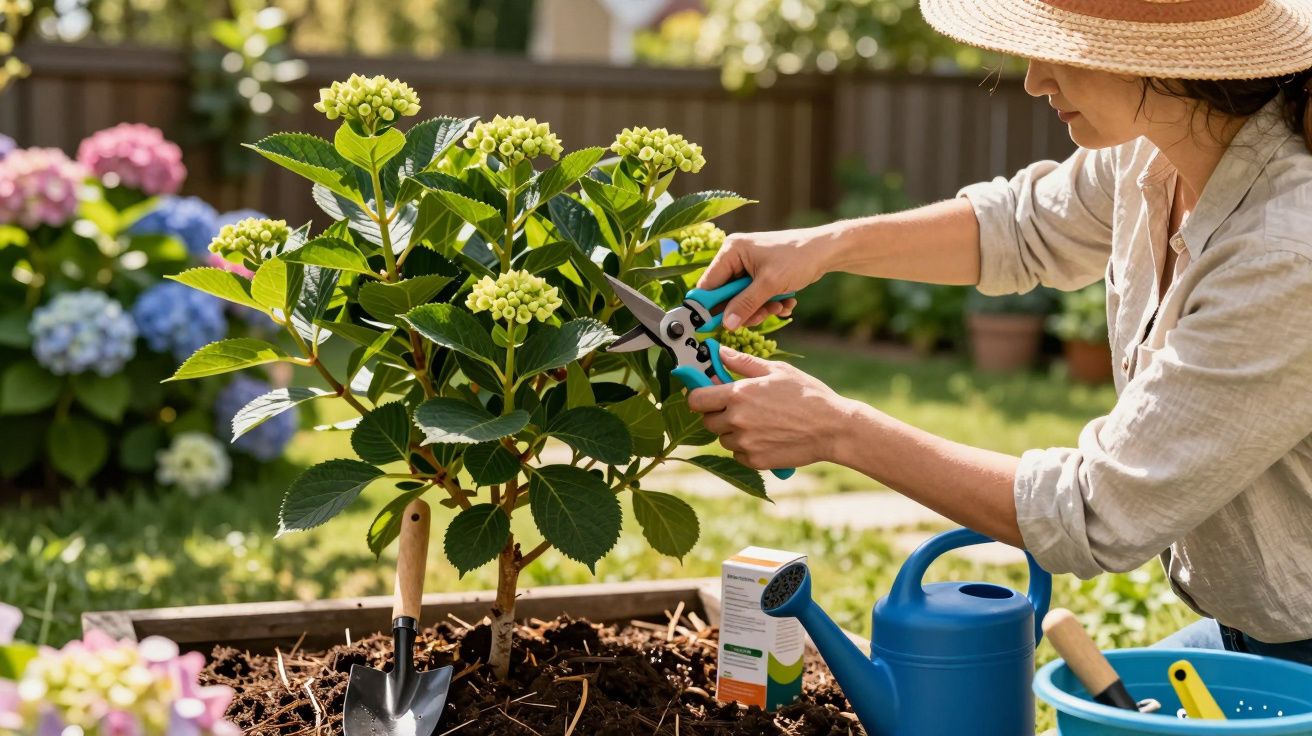
After a few years, many gardens see their hydrangeas produce fewer flowers even though the shrubs look perfectly healthy. The cause is rarely an unusual fungus or “just the weather”; far more often it comes down to missed or mistimed care in late winter and early spring. A handful of deliberate jobs during this window can bring back large, richly coloured flower heads for years to come.
Why hydrangeas suddenly stop flowering well
Hydrangeas are tough in many respects, but they are surprisingly sensitive to pruning and early-season care. Much of the flowering potential is set before the garden has properly greened up. If you shorten stems at the wrong time-or cut back too hard-you can literally snip off the developing flower buds.
Nutrition and water supply matter just as much. If the shrub is left to fend for itself after flowering, it may respond with lots of leafy growth but only small blooms, or very few blooms at all. The good news is that simple spring tasks can usually put this right.
The weeks between the end of hard frosts and the start of spring growth determine how floriferous the hydrangea will be for the entire year.
The best time to prune hydrangeas in late winter
Aim to prune as winter is easing, typically from late February to early March in much of the UK. By then, severe frosts are usually past, and the buds are visibly swelling but not yet opening.
Cutting too early increases the risk of frost damage at fresh pruning wounds. Cutting too late can rob the plant of energy and may remove growth that already carries flower potential. Try not to do a heavy autumn prune: strong cutting before winter can leave stems more vulnerable to cold.
Know your hydrangea type before you pick up the secateurs
The key question is what wood the hydrangea flowers on, because that dictates how bold you can be:
- Mophead hydrangeas (Hydrangea macrophylla), lacecap hydrangeas, oakleaf types, and climbing forms develop their flower buds on last year’s wood.
- Panicle hydrangeas (Hydrangea paniculata) and the well-known Hydrangea arborescens ‘Annabelle’ bloom on new growth made in the same year.
With the first group, a drastic cut can wipe out next season’s flowers in one go. With the second group, harder pruning often encourages vigorous new stems and bigger blooms.
Three straightforward pruning steps for mophead (Hydrangea macrophylla) and lacecap hydrangeas
Hydrangeas with rounded “pom-pom” heads or flatter lacecap blooms respond best to a gentle, planned approach:
Remove spent flower heads only
Cut off the old flower head, stopping roughly 1 cm above a strong pair of buds. This preserves the buds that will open into this year’s flowers.Thin out weak or dead growth
Take out thin, stunted, damaged, or dead stems completely. The shrub then directs energy into sturdier shoots that are more likely to flower well.Rejuvenate by removing a few old stems
Each spring, saw out one to three of the oldest, most woody stems right at the base. This keeps the plant youthful and promotes a steady supply of vigorous new shoots.
These steps maintain the familiar rounded shape without leaving the plant looking “scalped”. A common mistake is cutting far too low-then wondering why there are no flowers that year.
If you never cut mophead hydrangeas below the first strong pair of buds beneath the old flower head, you are generally on safe ground.
A bolder cut for panicle hydrangeas (Hydrangea paniculata) and ‘Annabelle’
Panicle hydrangeas are naturally vigorous and form their flowers on fresh spring growth, so you can remove much more without sacrificing bloom.
How to shorten panicle hydrangeas (Hydrangea paniculata)
Reduce stems by around one third to one half, making each cut just above an outward-facing bud. This helps build a strong, open framework that can carry heavy panicles without collapsing.
Leaving fewer buds tends to produce fewer but noticeably larger flower panicles. Leaving more buds gives you more panicles overall, typically a little smaller-choose the look you prefer.
How to prune Hydrangea arborescens ‘Annabelle’
The popular snowball hydrangea ‘Annabelle’ tolerates (and often benefits from) a very hard prune. Many gardeners cut every stem back in late winter to about 20 cm above ground level. The plant then pushes up robust new shoots and rewards you with big, round flower heads.
In windy gardens, prune a little higher so the stems are less likely to flop under the summer flower weight. In exposed, storm-prone areas, a loose support (such as bamboo canes or a perennial support ring) can make a real difference.
After pruning: soil care that keeps hydrangeas flowering for the long term
Pruning alone won’t deliver lasting performance; what you do at ground level straight afterwards is just as important:
- Clear the surface: Remove old leaves and dead plant debris so pests and fungal problems have fewer places to overwinter.
- Feed the root zone: Apply a layer of well-rotted compost or a dedicated hydrangea feed around the base.
- Mulch to stabilise moisture: Use bark chips, leaf mould, or shredded prunings to reduce evaporation and buffer temperature swings.
A well-fed, evenly moist root area is the foundation for strong shoots and vibrant flower heads year after year.
Extra spring feeding and tool hygiene (often overlooked)
If your hydrangea has been in the same spot for years, a single feed may not be enough. A light follow-up feed in late spring (once growth is clearly under way) can help maintain momentum-especially on lighter soils or where neighbouring plants compete for nutrients.
Also, keep secateurs and saws clean. Wiping blades between plants and removing any diseased-looking wood promptly reduces the chance of spreading problems from one shrub to another.
Water, protect, check: small routines that make a big difference
Hydrangeas prefer consistently moist soil. Young plants and container hydrangeas, in particular, benefit from deep watering in spring if dry weather lingers. A quick sprinkle is of little use because it rarely reaches the deeper roots.
Late frosts can damage swollen buds. On cold nights, drape horticultural fleece, an old sheet, or a light blanket over the shrub, then remove it in the morning so damp air does not sit around the stems.
As you move through the garden, give the plant a quick inspection: cut out any blackened, mushy, or split wood cleanly. This limits rot and helps keep the shrub vigorous.
Managing colour, choosing the right site, and avoiding common mistakes with hydrangeas
How to influence hydrangea flower colour
Many varieties respond to soil pH. In more acidic conditions-often supported by a specific hydrangea fertiliser and aluminium sulphate-blue tones are strengthened or maintained. In neutral to slightly alkaline (more limy) soils, flowers are more likely to shift towards pinks and reds.
If you want to keep a particular shade, test your soil pH regularly and match your feeding plan to it. Sudden colour changes are rarely due to the “wrong plant” and are far more often caused by the soil chemistry.
The best position for hydrangeas
Hydrangeas do best in bright light without intense, all-day sun. A spot with morning or evening sun and a little shade at midday is ideal. In harsh midday heat, leaves can droop and flower heads tend to fade more quickly.
Strong, drying winds are also unhelpful. If you lack a sheltered corner, consider creating protection with shrubs, climbers, or a screen to reduce wind stress.
Frequent spring mistakes
- Cutting hard on varieties that flower on last year’s wood (especially Hydrangea macrophylla mopheads and lacecaps)
- Pruning in autumn rather than in late winter
- Under-watering during dry spells after new growth begins
- Skipping feeding even though the shrub has been in the same soil for several years
- Leaving soil bare with no mulch layer to conserve moisture
What keeps hydrangeas strong and long-lived
Replacing a few old stems each year, keeping nutrition steady, and cushioning late frosts creates a reliable base for flowering. In return, hydrangeas tend to live longer and bloom more dependably-particularly in years when other plants struggle with unpredictable conditions.
It also pays to look at what is growing nearby. Shallow-rooted, hungry trees and shrubs can steal water and nutrients. Where competition is strong, a thicker mulch, occasional extra feeding, or even relocating the hydrangea slightly can transform its performance.
If you ring-fence a little time in late winter for pruning, soil care, and basic protection, you’ll often save yourself a summer of disappointment. Given the right start, the hydrangea usually returns to the abundant, showy flowering you remember-and keeps it going for many seasons.






Comments
No comments yet. Be the first to comment!
Leave a Comment