
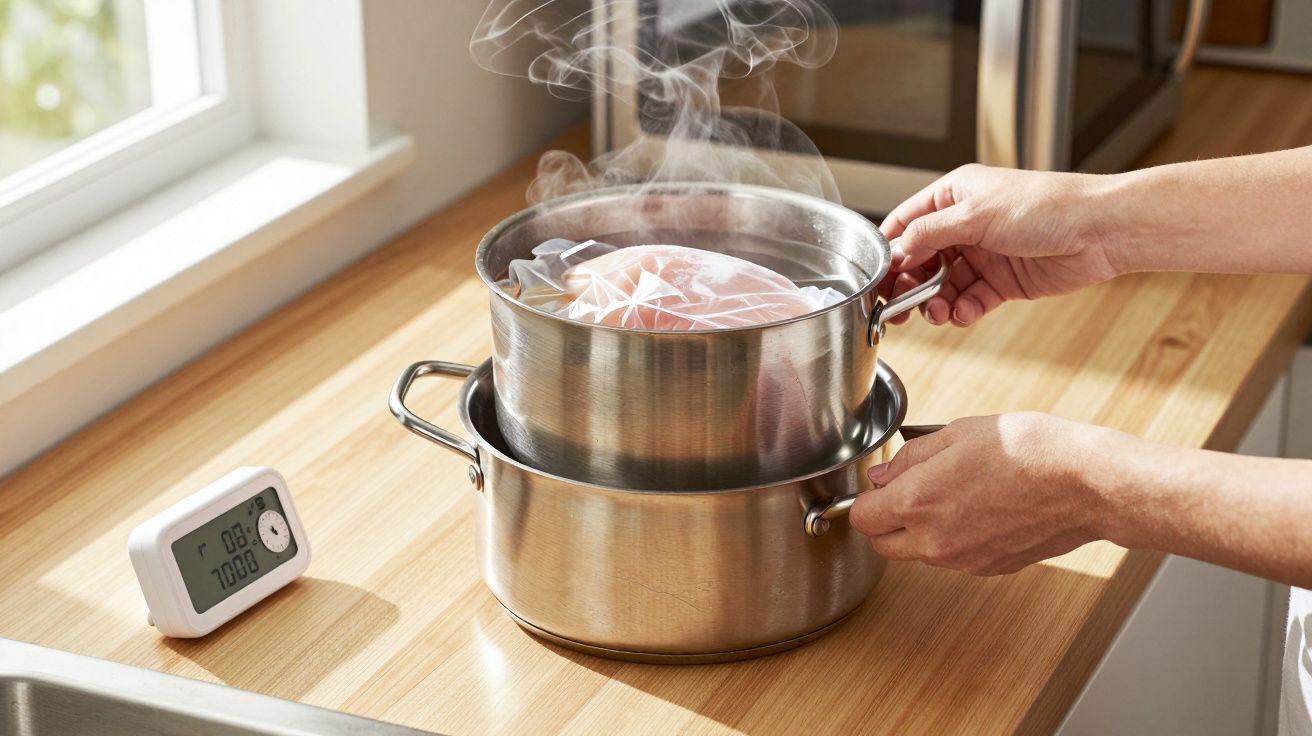
A surprisingly simple two-pot trick is being touted online as a quick fix.
Anyone who’s ever reached into the freezer in the evening knows the problem: the steak is solid as a brick, everyone’s hungry, and there’s no time for hours of slow thawing in the fridge. The two metal pots method is currently going viral because it avoids both the microwave and warm water-yet still claims to get meat ready for the pan far more quickly.
Why defrosting can become a real problem
Freezing doesn’t permanently kill bacteria; it merely puts them into a dormant state. As soon as the temperature rises again, microbes can become active-and with meat, that can happen quickly if it’s left too long at room temperature.
The result can be serious food poisoning. Common symptoms include:
- Nausea and vomiting
- Diarrhoea
- Stomach cramps
- Fever and an overall feeling of illness
Children, pregnant women, older adults and anyone with a weakened immune system are particularly vulnerable. For them, careless defrosting is more than just an inconvenience-it can be genuinely dangerous.
The classic fridge method: safe, but slow
Food safety professionals have been giving the same advice for years: the safest place to defrost meat is in the fridge. The temperature stays controlled and bacteria multiply far more slowly.
The downside is the time it takes. Smaller pieces typically require at least 2 hours, while larger joints often need overnight in the fridge before the centre softens.
A common alternative is defrosting in cold water: place the meat in a leak-proof bag, submerge it in a bowl of cold water, and move it around or change the water every 20–30 minutes. Using this approach, about 500 g can defrost in roughly 30 minutes.
Important: Once raw meat has been defrosted, do not put it back in the freezer. Cook it thoroughly and use it within 24 hours.
The two-pot trick for defrosting meat: pressure plus metal
This viral approach relies on two large metal pots or casseroles. The choice of material matters: metal conducts heat far better than wood, plastic or glass-and the hack takes advantage of that conductivity.
How to do the two-pot technique (step by step)
- Get two large metal pots, clean and completely dry.
- Turn one pot upside down so its base faces up on the worktop.
- Place the frozen meat on the upturned base-ideally flat-kept in its sealed freezer bag or original packaging.
- Put the second pot on top, the right way up, so the pot bases sit directly against the meat (base-to-base contact).
- Optional: add a little water to the top pot to increase the weight.
The lower pot absorbs warmth from the room and transfers it to the meat, while the upper pot gently presses the item flatter and improves contact on both sides. In effect, the metal acts as a heat bridge, shifting ambient heat to the frozen surface faster than air alone.
For thin steaks, schnitzels or minced-meat patties, many people report a noticeable change after around 10 minutes. After just under 30 minutes, the meat is often soft enough to slice or marinate without a struggle.
When the two-pot trick works well-and when it doesn’t
The two-pots method is best suited to flat, relatively thin items. Good candidates include:
- Beef or pork steaks
- Turkey or chicken schnitzels
- Chicken breast cut into pieces
- Minced-meat patties or uncooked burger shapes
- Fish fillets without a thick coating
With large joints, whole chickens or thick blocks of meat, the method reaches its limits quickly. The outside can turn soft and slightly warm while the centre remains frozen. That increases the risk of bacteria multiplying on the surface before the inside has even thawed.
Vegetables can also be partially thawed this way-for example frozen broccoli florets or green beans. However, delicate foods such as berries tend to be crushed by the weight, turning them into pulp; for those, gentle thawing in the fridge is a better bet.
Hygiene and safety: what you must pay attention to
To ensure the two-pot hack doesn’t end in stomach trouble, follow a few firm rules:
- Use only clean pots, free from grease and old food residue.
- Defrost meat in a sealed bag wherever possible so juices can’t leak out.
- After defrosting, wash the worktop and pots thoroughly with hot water and washing-up liquid.
- Cook defrosted meat promptly and cook it all the way through.
- If anyone at home is high-risk, stick with the fridge or cold-water method instead.
This trick can shorten defrosting time, but it does not replace a proper cold chain. If meat sits warm for too long, the risks rise sharply.
Kitchen physics: why metal speeds things up
Compared with many everyday materials, metal has high thermal conductivity-meaning temperature spreads through it quickly. When a frozen piece of meat is sandwiched between two metal surfaces, the temperatures equalise more rapidly. The pot pulls warmth from the surrounding air and passes that energy into the ice within the meat.
The gentle pressure from the top pot also flattens the meat slightly, increasing the contact area. More contact means heat transfers more evenly across the surface rather than in small patches. Adding water to the top pot increases the weight and can intensify this effect.
What can go wrong with microwaves and warm water
In a rush, many people turn to the microwave. It is fast, but it often heats meat unevenly: edges and thin areas may begin to cook while the middle is still frozen. That affects texture and flavour, and it can also distort your cooking time later.
Warm or lukewarm water is even riskier. Many bacteria thrive at these temperatures, giving them ideal conditions long before the inside has properly thawed. If the meat then isn’t cooked thoroughly, problems can follow.
Practical, everyday examples
A typical scenario: it’s a weekday, 19:00, and you suddenly fancy pasta with chicken strips. The chicken breast is frozen in a bag in the freezer. Using the fridge method, dinner wouldn’t be ready for at least 2 hours. With the two pots, you can claw back time: slice the chicken (if it’s already portioned), keep it sealed in the bag, place it between the pots-and after about 20–30 minutes it’s usually workable.
The same idea applies to frozen burger patties or thin pork schnitzels. If you cook spontaneously often, it helps to portion meat into flat shapes before freezing. The thinner the layer, the more effective the metal heat bridge becomes.
Extra safety boost: cook temperatures and avoiding cross-contamination
Quick defrosting is only half the story-safe cooking matters just as much. Use a food thermometer if you have one, especially for poultry and minced meat. As a practical guide, chicken should be piping hot throughout with no pink, and many kitchens aim for an internal temperature of around 75°C.
Also treat the defrosting stage as a cross-contamination risk: keep raw meat away from salad ingredients, bread, and ready-to-eat foods. Use a separate chopping board (or wash and sanitise it immediately), and wash hands after touching packaging or meat juices.
Where the limits are-and which alternatives still make sense
However clever it is, the trick can’t beat the fridge for reliability when you’re dealing with large quantities or thick cuts. If meat features regularly in your routine, the most dependable approach is still planning ahead-move the portion you need into the fridge in the morning or the night before.
A sensible compromise is to start defrosting in the fridge and then use the two-pot method briefly right before cooking to deal with any stubborn icy spots. That keeps most of the process in safer, colder conditions while still giving you flexibility at the end.
If you want the safest option for raw poultry or minced meat, stick consistently to the fridge or cold-water method. In that case, the two-pot trick is better reserved for sturdier items like steaks or fish fillets that will go straight into a very hot pan immediately afterwards.





Comments
No comments yet. Be the first to comment!
Leave a Comment