
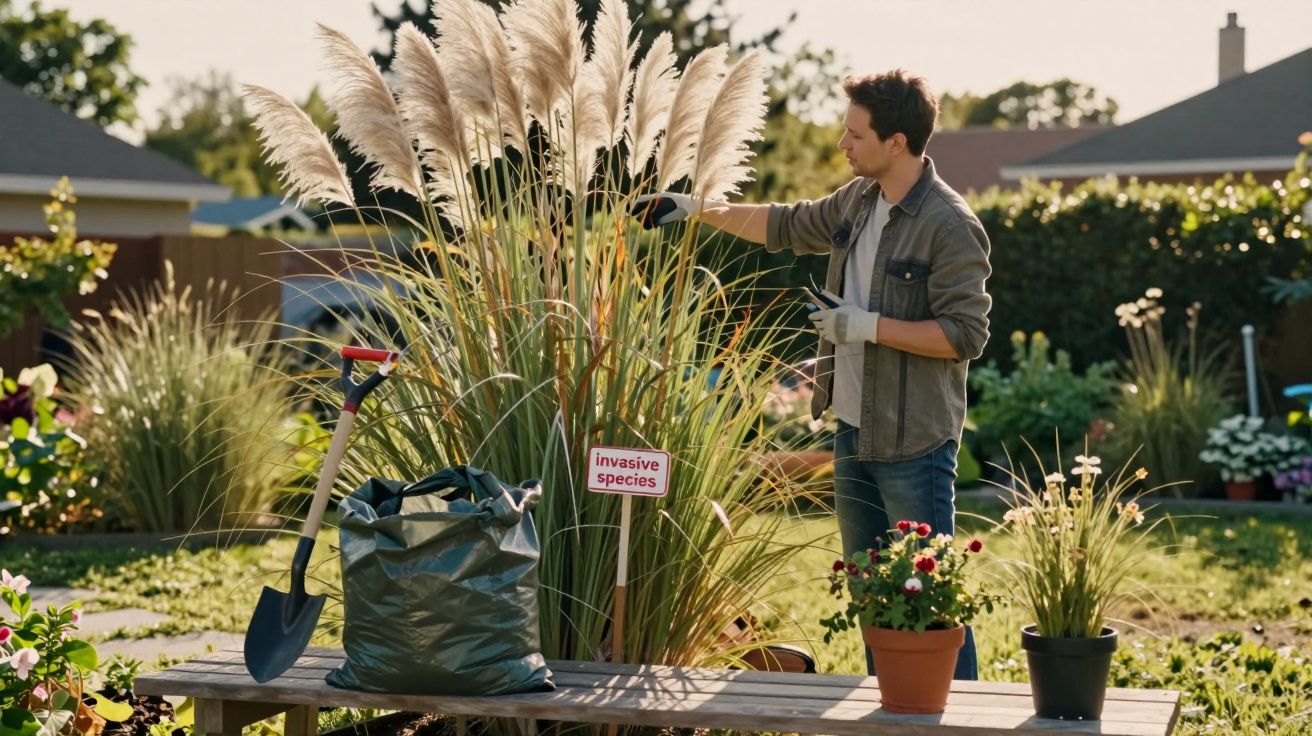
Pampas grass, with its elegant cream-coloured plumes, has been on a French ban list since 2023. Authorities and conservation groups no longer see it as a harmless Instagram backdrop, but as an invasive threat to native plant communities. Many amateur gardeners are now asking the same thing: could I get into trouble if I have pampas grass in a border - and do I really have to pull it out?
Why pampas grass (Cortaderia selloana) is considered a problem plant in France
Pampas grass (botanical name Cortaderia selloana) originates from South America. In gardens it forms dense clumps that can grow to well over 2 metres tall and roughly as wide. What looks striking in a flowerbed can become a serious issue once it escapes into the wider landscape.
Each of those decorative plumes can produce hundreds of thousands of tiny seeds. Wind carries them for kilometres - across dunes, embankments, road verges and neglected plots. They germinate in large numbers, outcompete native grasses and perennials, and can reshape entire habitats.
In France, pampas grass is now officially classified as an “invasive alien species” that can severely push back native flora.
The impacts are wide-ranging:
- Decline of rare plants adapted to very specific sites
- Loss of biodiversity in dunes, slopes and wetlands
- Changes to habitats used by insects, birds and small mammals
- More difficult access for maintenance work along roads and on banks
There are also very practical everyday downsides. The leaves are razor-sharp and can cause deep cuts. People with pollen allergies may react strongly during flowering. And when the clumps dry out, they burn readily - which can increase fire risk if plants are near homes or roads.
What the French ban actually covers (since 2023)
On the back of these risks, France introduced a specific order in 2023, rooted in environmental law and European requirements on invasive species. Since then, Cortaderia selloana has been on a national list of prohibited plants.
In France, all dealings involving living pampas grass are banned - from import to sale.
Legally prohibited in France for living pampas grass and any plant parts capable of propagation include, among other things:
- Importing and releasing it into the environment
- Keeping it in pots or borders for ornamental use
- Propagation, dividing clumps, and new planting
- Trading, swapping or transporting live plants or rhizomes
Garden centres, nurseries and landscaping firms had to remove stock from sale. Anyone still offering or importing live plants can face significant penalties under the Environmental Code, including large fines and even custodial sentences. In practice, enforcement tends to focus on professionals and imports, rather than long-established single plants in private gardens.
Important: dried plumes used in vases or decorative arrangements remain permitted in France. They are no longer considered living and cannot spread - provided no viable seed remains.
Can you keep pampas grass in your garden?
For many garden owners, the key question is straightforward: if the clump has been there for years, do you have to grab a spade immediately? In France, the legal answer is more nuanced.
For existing plants established before 2023, there is no blanket requirement for immediate removal. That said, owners are still expected to ensure the plant does not spread further.
The general advice is: if pampas grass remains in the garden, it should be kept under strict control - ideally with a plan to replace it in the medium term.
How to reduce the risk from an existing clump
If you already have pampas grass, the following precautions matter:
- Cut plumes early: remove the flower heads before the plumes fully mature, so seeds cannot be dispersed by the wind.
- Do not divide or give it away: no splitting the clump and no passing on plant pieces or roots to neighbours or friends.
- Wear protective gear: stout gloves, long sleeves/trousers and eye protection, because the foliage can cut like a blade.
- Dispose of waste securely: leaves, roots and plumes should go into sealed bags and be taken to the local civic amenity site - not put on your home compost heap.
Where gardens are close to sensitive areas such as dunes, wetlands or riverbanks, conservation authorities often issue clear guidance: pampas grass should be phased out completely. If you are dealing with a very old, oversized clump, hiring a professional can be sensible - the rootstock can be extremely tough and difficult to remove.
How to remove pampas grass properly and safely
Removing pampas grass is physically demanding and is best approached methodically. A staged approach is usually most effective:
- Preparation: cut back plumes and foliage as far as possible. This makes the clump easier to handle and reduces the risk of injury.
- Expose the rootstock: use a spade or pickaxe to loosen soil around the plant and uncover the main roots.
- Remove rhizomes thoroughly: the root mass often needs to be lifted out in sections. Collect every piece, because the plant can reshoot from leftovers.
- Check the site the following year: inspect the area in spring and remove any new shoots immediately.
If you have back or joint problems, it is wise to bring in a specialist rather than forcing the job. On slopes or near walls, poor tool use can also cause accidental damage to structures or ground stability.
A further practical point is disposal: many councils treat invasive plant material as controlled green waste. Even when rules differ by area, the safest route is sealed bags and an official collection point, rather than shredding, composting, or leaving cut material exposed where seed could still spread.
Which alternatives to pampas grass work well in the garden?
Many people love the airy, soft look of tall ornamental grasses. You can achieve that effect without encouraging invasive species. For much of Central and Western Europe, several decorative options are widely regarded as low-risk.
| Alternative | Growth habit | Notable features |
|---|---|---|
| Stipa tenuissima (Mexican feather grass) | Fine, mobile stems, up to about 60 cm | Very light, ideal for modern planting schemes |
| Molinia (moor grass) | Upright stems, depending on cultivar 80–150 cm | Autumn colour, suits more naturalistic gardens |
| Fescues (e.g., blue fescue) | Compact, semi-spherical clumps | Strong structure, also suitable for pots |
If you prefer larger, more imposing grasses, some larger Miscanthus cultivars (Chinese silver grass) can be an option - provided they are not considered problematic in your area. It is worth checking regional guidance or plant lists published by conservation organisations.
One caution that often gets overlooked: plants marketed as “sterile” or “seedless” are not always reliably risk-free in real-world conditions. Labelling can be inconsistent, and fertility may vary with climate, plant age or nearby cultivars. When in doubt, choosing clearly non-invasive, well-established alternatives is the safer route.
What gardeners in Germany (and beyond) can learn from the French case
Even though French rules do not automatically apply in Germany or Austria, the lesson is clear: a plant that is popular in garden centres can still become an ecological burden. Many invasive species first entered the countryside via ornamental planting.
If you are planning a new garden or redesigning borders, a few simple checks can make a real difference:
- Is the plant classed as invasive in my country or federal state?
- Are there regional warning lists or recommendations from environmental authorities?
- Are there native alternatives with a similar look?
In regions with particularly sensitive habitats - such as coasts, peatlands or river floodplains - professionals are increasingly focused on the risk of garden plants “escaping”. Grasses that mainly spread through division and produce little viable seed are generally seen as far less concerning.
How to spot invasive species risks in your own garden
Alongside pampas grass, other ornamentals are under scrutiny across Europe, including certain goldenrods, Himalayan balsam, and Japanese knotweed. As a home gardener, you can watch for a few practical warning signs:
- The plant starts appearing in joints, cracks and distant corners of the garden.
- It smothers smaller perennials or grasses within a short time.
- It produces unusually large numbers of seed heads that disperse widely.
If you catch these patterns early, you still have options: cut back before seed ripens, remove young plants promptly, and avoid sharing cuttings or root pieces with neighbours. That way, your garden stays attractive without becoming a source of problems for nearby natural areas.




Comments
No comments yet. Be the first to comment!
Leave a Comment