
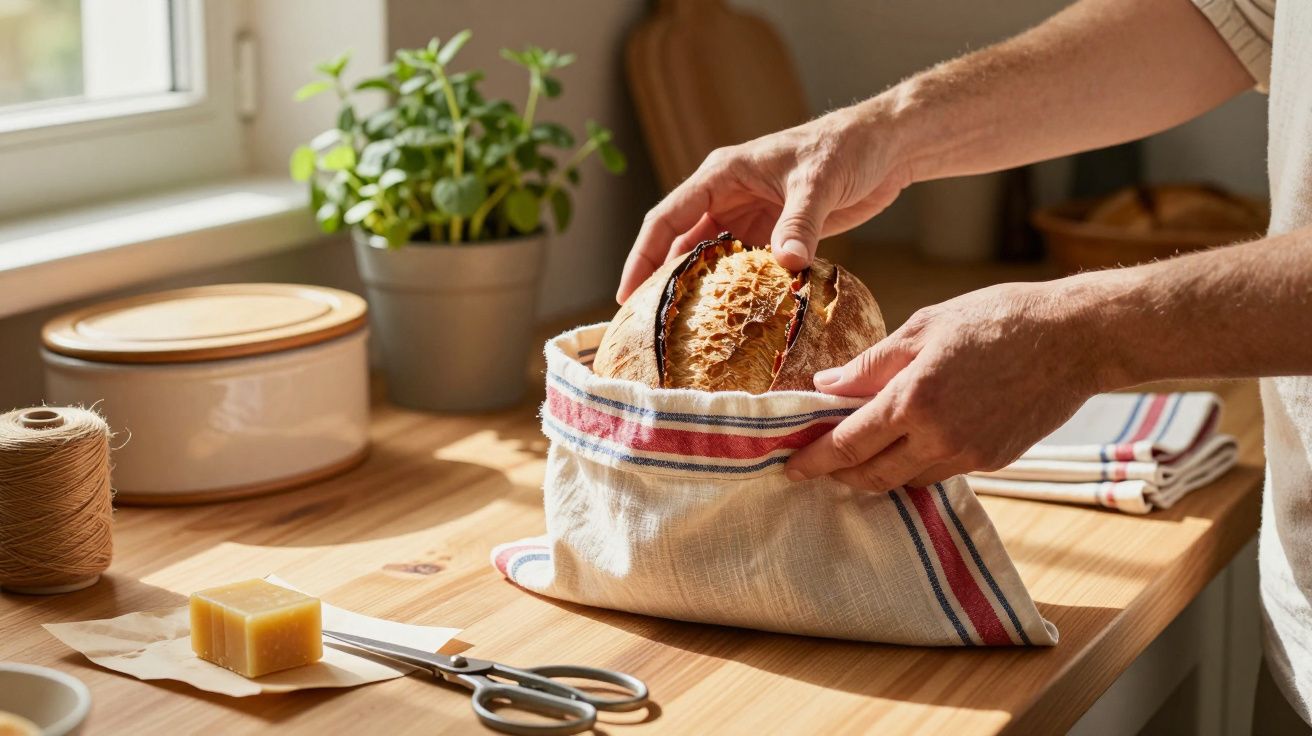
A surprisingly modern kitchen favourite can come from exactly this.
What used to be nothing more than an unremarkable kitchen helper is now turning into the poster child for a sustainable habit. With just a handful of straightforward stitches, old striped tea towels can be transformed into reusable bread bags-useful, stylish and genuinely practical for everyday life. If you bake at home or call in at the bakery most days, you can cut down on waste, save money and bring a touch of nostalgia back to the kitchen at the same time.
Why old striped tea towels are worth their weight in gold
Those well-worn towels at the back of the cupboard may look a bit tired, but they’re often better than many brand-new alternatives. A lot of the classics are made from pure linen, or from Metis-a traditional blend of linen and cotton. That combination makes them tough, pleasingly textured and impressively long-lasting.
These fabrics are ideal for reusable bread bags because:
- They’ve already been softened by years of washing and feel good in the hand.
- The fibres are hard-wearing and less prone to tearing.
- The familiar coloured stripes instantly add a country-kitchen look.
- Nothing new needs to be manufactured-the fabric already exists.
Reusing old tea towels saves resources and brings a little of traditional kitchen culture back into daily routines.
Environmental agencies such as France’s ADEME (the French Agency for Ecological Transition) advocate this exact approach: don’t bin natural-fibre textiles-repurpose them at home. A bread bag made from towels you already own fits neatly into a lower-waste lifestyle.
The trend: bread bags made from old striped tea towels
Scroll through Instagram, Pinterest and similar platforms and you’ll see them everywhere: homemade bread bags stitched from grandmother-style striped towels. They replace paper and plastic packaging, look good hanging on a rail of hooks, and suit everything from a sleek modern flat to a rustic farmhouse kitchen.
There’s also a clear financial upside. Bread bags made from new, handwoven linen can easily cost €15–€20 per bag (roughly £13–£17). If you use tea towels you already have, you’re usually only paying pennies for thread and a drawstring.
Striping tea towel bread bag: three simple steps
You don’t need professional sewing skills for your first bag. A straight stitch, a bit of patience and an iron are more than enough.
Cutting with care
Start by removing any areas that are badly worn or have holes. Keep the sturdy, striped sections. If you can incorporate at least one original hem edge, you’ll save time and get a neater finish with less effort.Strong seams that last
Fold the fabric lengthways with the right sides together. Sew along the long edge and the base. Turn the bag the right way out, then topstitch close to the edge along the same seam line. This creates an English seam (often called a French seam), enclosing raw edges and making the bag particularly durable.A practical drawstring closure
Fold a wide hem to the inside at the top and stitch all the way around, leaving a small opening. This “tunnel” is where a cotton cord runs through, allowing you to pull the bag closed.
If a sewing machine feels daunting, you can sew the seams by hand instead. It takes longer, but on thicker linen fabrics it works surprisingly well.
Sizing and shaping: making the bag work for your bread
Before you cut, it’s worth deciding what you’ll actually store. A long, narrow bag suits baguettes, while a squarer shape is better for tins and round loaves. If you regularly buy two small loaves, making one slightly larger bag often proves more useful than two tiny ones-and you’ll still be using the same piece of fabric efficiently.
Why linen keeps bread fresher for longer
Linen and Metis behave very differently from plastic or paper bags. The weave is dense, yet the fabric remains breathable, creating a small, natural microclimate inside the bag.
- The crust stays crisp because it isn’t “smothered” by condensation.
- The crumb dries out more slowly, keeping the inside pleasantly moist.
- Moisture can escape, which makes mould growth less likely.
A handy side effect is that linen tends to be less attractive to certain pantry pests. In a clean, well-kept kitchen, fabric storage is generally far less inviting to insects.
Beeswax for a “bee wrap” effect
If you want to extend freshness a little further, you can treat the inside of the bag with beeswax. Use pure, untreated beeswax pellets, or leftover beeswax from candle-making.
In practice, it looks like this:
- With the bag clean and fully dry, rub a thin layer of beeswax on the inside or sprinkle over finely grated flakes.
- Place a sheet of baking parchment inside, then warm gently with an iron until the wax melts and spreads evenly.
- Leave it to cool-once set, you’ll have a flexible, lightly waxed coating.
The bag stays breathable, but gains a natural protective layer that noticeably keeps bread fresh for longer.
To clean it, lukewarm water with a little mild washing-up liquid or a small piece of traditional soap is enough. Avoid hot water, as it can melt the wax-rinse gently and allow to air-dry.
A quick note on hygiene and food safety
As with any food container, keeping the bag clean matters. Only store bread once it has cooled, and avoid putting very moist baked goods (or anything with a wet filling) into a waxed bag, as trapped moisture can encourage spoilage. If you ever notice a musty smell, refresh the bag with a wash (or a lukewarm wipe-down if waxed) and dry it thoroughly before reuse.
Care, everyday tips and creative variations
Before the first use, run the tea towel through a hot wash to remove dust, storage odours and any lingering detergent residue. A quick press with the iron tightens the fibres and makes sewing easier.
For day-to-day use: let bread cool fully before it goes into the bag. Hang the bag on a hook or nail so air can circulate. If you bake often, washing every one to two weeks is a sensible rhythm-though if you’ve added a beeswax layer, keep cleaning brief and lukewarm.
No offcut needs to go to waste
Any fabric pieces left after cutting are perfect for other zero-waste kitchen and household helpers:
- Lavender sachets: stitch narrow strips, fill with dried lavender and hang in wardrobes.
- Bowl covers: cut circles and add elastic to cover bowls-an alternative to cling film.
- Bags for loose goods: smaller versions of the bread bag work well for rice, pasta or pulses when shopping at a refill/packaging-free shop.
Over time, you can build a whole set of reusable kitchen essentials from fabric that might otherwise have been thrown away.
Why the effort is genuinely worth it
Take a handmade bread bag to the bakery once and you’ll quickly notice the difference. It stands out, sparks conversations and quietly proves that sustainable habits don’t have to look like deprivation. Many bakers are familiar with reusable bags now and are happy to pop your loaf straight in.
The practical benefits add up too: less waste paper, fewer flimsy plastic bags and a clearer sense of what you actually consume. Using textiles you already own can reduce packaging use over the year and lowers demand for newly produced goods-an increasingly meaningful point as prices rise.
And there’s something else that’s hard to price: emotion. If the towel originally came from your grandmother’s kitchen, it carries family history. A forgotten piece of cloth becomes an everyday companion-full of memories, yet perfectly suited to modern life. That blend of nostalgia and practical sustainability is exactly why striped tea towel bread bags have become such a satisfying weekend project.

Comments
No comments yet. Be the first to comment!
Leave a Comment