
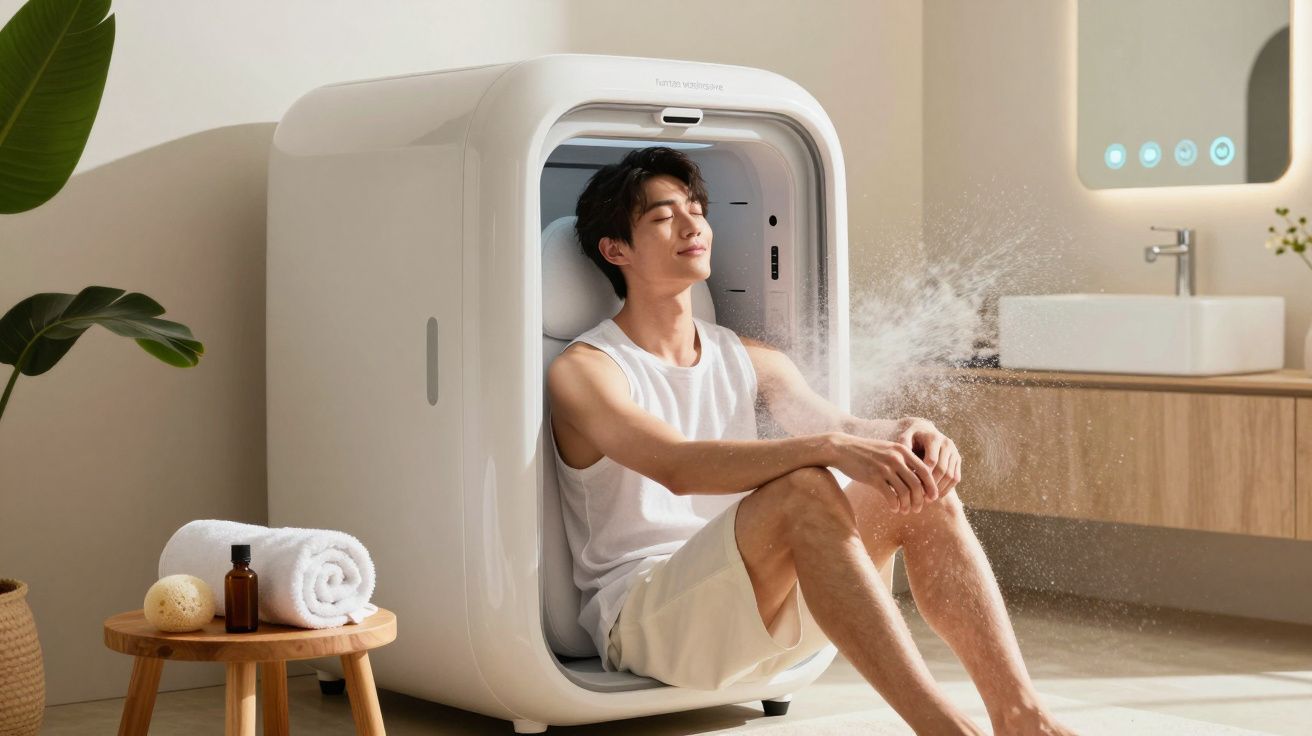
A new high-tech capsule from Japan might help explain why.
In plenty of households, the shower is no longer a daily ritual. Look a little closer and it becomes clear: this is about far more than simple convenience. Somewhere between saving energy, protecting skin health and futuristic washing capsules, our idea of personal hygiene is starting to shift in a fundamental way.
Showering less: a trend, a stopgap, or a healthier routine?
For years, showering every day was treated as the default. If you didn’t, you could quickly be labelled as unclean. That assumption is slowly beginning to unravel. Dermatologists are raising warnings, energy bills are climbing, water feels less plentiful - and at the same time, new technologies are emerging that reimagine hygiene from the ground up.
Younger people in particular are questioning the old “straight into the shower every morning” routine. Many now reach for shower gel only every other day, and some even less often. In its place, people are relying on flannels, aluminium-free deodorants, dry shampoo, or a quick wash at the basin.
The body needs cleaning - but not necessarily a full head-to-toe shower every single day.
People who shower less often usually have several motivations at once:
- Skin can become irritated by daily hot water and harsh surfactants
- Gas and electricity prices make long showers feel like a luxury
- Awareness of water use and finite resources is growing
- Working from home reduces the social pressure to look “fresh” all the time
Mirai Ningen Sentakuki: the Japanese high‑tech capsule that acts like a “washing machine for humans”
Alongside this shift, a company in Osaka is pursuing a radically different concept: washing the body as if you were inside a human washing machine. The futuristic system is called Mirai Ningen Sentakuki, which roughly translates as “washing machine for the human of the future”.
In practical terms, it is a sealed capsule that a person sits inside. In about 15 minutes, the body is washed and then immediately dried afterwards - without the user having to do anything themselves.
How the body capsule works in detail
The machine brings together several components:
- Enclosed capsule: the user remains seated in a pod-like chamber for the entire cycle.
- Microbubble technology: extremely fine air-and-water bubbles surround the skin, lifting away dirt, sebum and dead skin cells.
- No scrubbing: the cleaning process is gentle enough that mechanical rubbing is largely unnecessary.
- Drying system: once washing is complete, an integrated drying module takes over - similar in principle to a tumble dryer, except designed for people.
The promise behind the concept is maximum comfort paired with a more skin-friendly form of cleansing. It could be particularly useful for anyone with sensitive skin, or for people with limited mobility who find conventional washing difficult.
Showering less doesn’t have to mean neglecting hygiene, but it does require a bit of intention. Many people who cut back on full showers compensate by cleaning “key areas” more regularly (for example, underarms and feet), using a flannel and changing clothes more frequently - a practical approach that can sit alongside skin-care advice about avoiding overly hot water and aggressive washing products.
AI in the bathroom: when the shower knows your pulse
The real twist in the Japanese invention isn’t only the washing itself, but its digital control. The capsule is packed with sensors designed to record a range of bodily data.
This includes, for example:
- Heart rate
As bathroom tech becomes more data-driven, a separate question comes into focus: what should happen to that information? Even if systems like this are built for convenience and wellbeing, the idea of collecting biometric data while you wash naturally raises issues around privacy, storage and consent - topics likely to become just as important as comfort and cleanliness as these concepts move closer to everyday life.




Comments
No comments yet. Be the first to comment!
Leave a Comment