
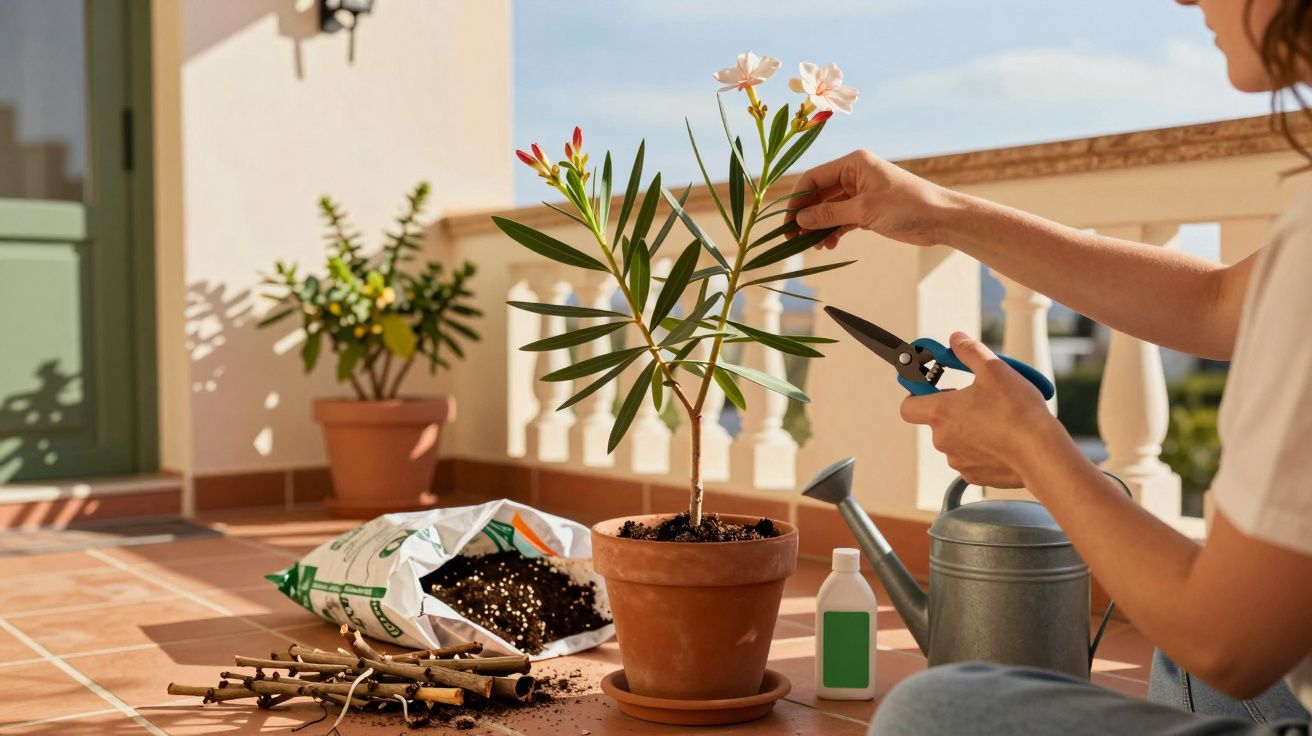
Many hobby gardeners know that sinking feeling in spring: the oleander sits forlorn in its pot or border, leaves scorched, twigs brown and brittle, almost bare. It’s a plant we associate with holidays, sunshine and weeks of flowers. The reassuring reality is that, in most cases, there’s still plenty of life left in the shrub-and with the right steps it can be brought back into shape for a generous summer display within a few weeks.
First, check whether the oleander is actually alive
Before you reach for secateurs, fertiliser or the watering can, take a clear-eyed look at what you’re working with. Many plants appear dead when they’re merely stressed.
The most reliable quick test is simple: lightly scratch the bark. If you see a green, slightly moist layer underneath, that shoot is alive. If it stays brown and dry, that section has died back. Work methodically from the tips down towards the main stems.
Pay especially close attention to the base of the shrub, which is usually the most sheltered part. Small, swollen buds or a hint of fresh green are strong signs that the plant is preparing to reshoot.
Green tissue under the bark and small buds at the base are the best indicators: the oleander still has substantial reserves of energy.
Timing the restart: when to move an oleander back outside
Oleander comes from warmer climates and is sensitive to late frosts. Putting it outdoors too early can cause a second wave of damage.
- In a pot: wait until night frosts are no longer forecast and nights are consistently around 10 °C or above.
- In the ground: remove winter protection gradually and keep an eye on the forecast.
- Colder areas: aim for around mid-April; in very mild locations it may be possible from late March.
For container plants, a short acclimatisation period pays off: start with a few hours a day in light shade, then increase exposure until it can cope with full sun. This reduces the risk of sunscald on already weakened foliage.
Pruning oleander to trigger strong new growth
Once frost risk has passed, a confident prune is often the quickest way to get an oleander moving again. The goal is to encourage fresh, vigorous wood-because flowers form on young shoots.
Typical pruning steps include:
- Cut all completely blackened or desiccated branches back to healthy, green wood.
- Remove shoots that cross or grow inwards so light and air can reach the centre.
- Shorten very long, weak stems by roughly one third to two thirds.
If the plant is severely damaged, a hard cutback can be the only option: reduce it to about 40 cm tall. It looks drastic, but it frequently prompts strong regrowth from the base-though flowering may be lighter in the same season.
Clean tools, clean cuts
Sharp, clean secateurs reduce crushing and lower disease risk. Aim for smooth cut surfaces rather than ragged tears. For very thick stems, use a pruning saw.
Repotting and soil: a root refresh for pot-grown oleander
Oleanders in containers often suffer over time because they simply run out of room. A tightly packed rootball struggles to absorb water and nutrients properly-something you can put right in spring.
Signs the pot is overcrowded:
- Roots are growing out through the drainage holes.
- Water runs straight down the sides and barely soaks in.
- The rootball feels hard and dense, almost like concrete.
In that case, move the plant into a new pot that is only slightly larger. Oleander does best in a free-draining, relatively coarse mix, for example:
- a high-quality compost for flowering plants,
- mixed with coarse sand or expanded clay,
- plus a little well-rotted compost.
If the existing container is already very large and heavy, a “partial refresh” is often enough: remove around 5 cm of old compost from the top, replace it with fresh, nutrient-rich mix, and then fertilise purposefully.
Feeding oleander: without potassium, the flower show fades
Oleander is a hungry plant. After winter-often with low light and limited nutrients-it needs a new “fuel tank” to rebuild.
From March to September, regular feeding with a potassium-rich fertiliser supports sturdy growth and abundant flowering.
A practical routine for container plants:
- add liquid feed to the watering can every 1–2 weeks,
- or apply a slow-release feed at the start of the season and top up later if needed.
Important: never fertilise bone-dry compost. Strong feeds on dry substrate can scorch roots. Water lightly first, then feed.
Watering correctly: avoiding both waterlogging and drought
A weakened oleander needs moisture-but in the right amount. Too much and too little can stress it just as badly.
Watering rules for pots
- Let the top layer of compost dry slightly between waterings.
- Water slowly at the root zone and keep the leaves as dry as possible.
- Empty the saucer after a few minutes so the pot is not left sitting in water.
In the ground, base watering on the weather. In hot summer spells, two deep soakings per week are often sensible. Loose, well-drained soil prevents roots from sitting in constant wetness. A thin mulch layer can help hold moisture for longer and reduce temperature swings.
Light and position: where oleander performs best
For a truly impressive bloom, oleander needs plenty of light. Partial shade nearly always results in disappointing flower production.
An ideal spot is:
- one with several hours of direct sun each day,
- preferably against a warm south- or south-west-facing wall,
- sheltered from cold winds.
After overwintering, don’t move the plant straight from a dim garage into blazing midday sun. The sudden change can burn already stressed leaves. Gradual exposure over several days works like gentle training and helps the plant adapt.
Common mistakes that can stop flowering entirely
A great deal of oleander trouble is caused by well-meant but unhelpful care. Avoid these pitfalls to dramatically increase your chance of months of flowers:
- Moving the plant outdoors too early and suffering late frost damage.
- Going straight from a protected porch to harsh sun without an acclimatisation phase.
- Keeping compost permanently wet out of fear it will dry out.
- Applying high doses of fertiliser to a dried-out rootball.
- Leaving a saucer constantly full so water stands around the roots.
If you balance light, water and nutrients-and steer clear of major care errors-you can turn even a badly battered oleander back into a dense, flower-covered shrub.
Extra checks: pests and stress symptoms on oleander
While recovery care is the priority, it’s worth inspecting leaves and stems as growth resumes. Aphids and scale insects can quickly take advantage of weakened plants, leading to sticky residue and sooty mould. Remove small infestations by hand, rinse with water, or use an appropriate insecticidal soap-always following label instructions and avoiding spraying in strong sun.
Yellowing leaves can also be a clue: it may indicate waterlogging, nutrient imbalance, or simply the plant shedding older foliage after winter. Correcting drainage, feeding consistently, and providing full light usually stabilises growth within a few weeks.
A holiday favourite-but poisonous: what many people overlook
However much you love the flowers, one point should never be ignored: oleander is highly toxic. All parts of the plant contain substances that can harm health even in small amounts.
Practical day-to-day safety:
- Wear gloves when pruning and wash hands thoroughly afterwards.
- Do not add prunings to the compost; dispose of them separately with household waste.
- Prevent children and pets from chewing leaves or twigs.
Despite this, oleander remains one of the most rewarding flowering shrubs for patios and balconies. With warmth, light, regular pruning and a sensible care routine, it can deliver years of spectacular bloom-even after a harsh winter makes it look, at first glance, beyond saving.






Comments
No comments yet. Be the first to comment!
Leave a Comment