
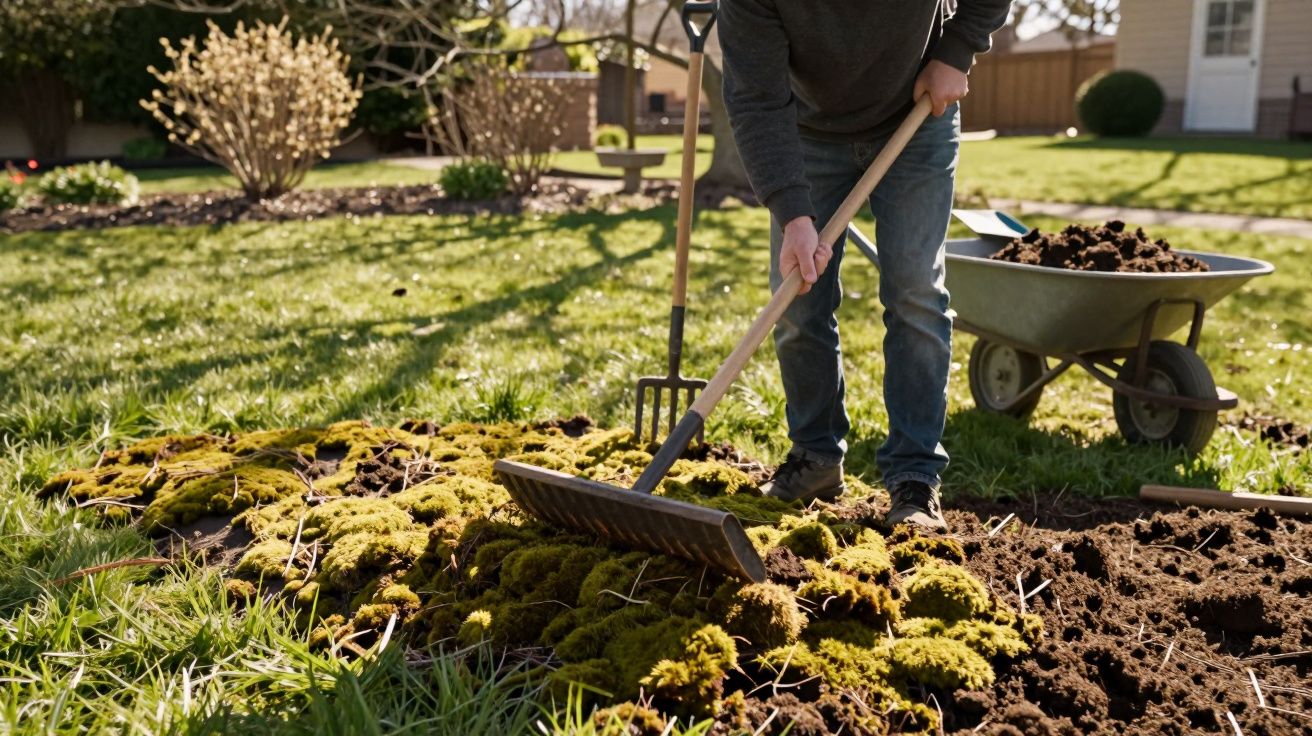
Instead of pricey specialist products, three surprisingly simple steps will do the job.
Many hobby gardeners get a shock in spring when they look out at the lawn: yellow patches, soggy areas, and cushions of moss where a lush green carpet ought to be. The good news is that March is often the perfect window to thicken the lawn for the long term and drastically reduce moss-through a bit of hands-on work, but without chemicals.
Why there’s so much moss in the lawn - and what it really means
Moss isn’t a personal enemy; it’s a sign something is off. It usually indicates a tired lawn soil: poorly aerated, too wet, and often shaded. Grass thrives in open, free-draining ground, whereas moss copes brilliantly with waterlogging and compaction.
If you truly want to get rid of moss, don’t fight the plant-fix the cause in the soil.
Over the years, every lawn becomes compacted: rainfall, children playing, garden furniture, and repeated footpaths all press the ground down. Water then struggles to drain away, and grass roots are starved of air. Moss quickly takes hold in these stressed patches-typically spotted as:
- areas that stay wet or muddy
- grey-green moss pads in partial shade
- hard spots that “drum” underfoot
- yellowing blades despite adequate watering
This is exactly where an easy March routine helps: open up the soil, improve it lightly, comb out the moss, then mow correctly.
Step 1: Aerate the lawn thoroughly with a garden fork
The most important work happens below the surface. The technical term is aeration. In practice, an ordinary garden fork (or a dedicated lawn aerator fork) is enough for small gardens; for large lawns, hiring a machine may be worthwhile.
How to aerate with a fork
- Wait until the ground is no longer frozen and not waterlogged-slightly damp is ideal.
- Push the fork tines around 8–10 cm into the lawn.
- Gently pull the handle back towards you so the soil cracks and loosens a little.
- Step forward and repeat about 15 cm further on.
Pay extra attention to trouble spots-where water sits after rain or the ground feels particularly hard underfoot. In these areas, you can make the holes closer together.
Lots of small holes act like air and water channels: standing water clears, and oxygen reaches the roots.
Even this step alone often leads to stronger, denser growth later on, because the roots can “breathe” again.
Step 2: A finely spread soil mix makes the lawn denser
After aerating, apply a light soil dressing-often called topdressing. This fills the holes you’ve made and improves the soil structure right where the roots sit.
A simple soil mix for hobby gardeners
A loose blend works best, for example equal parts of:
- finely sieved garden soil
- coarse sand (or river sand)
- well-rotted, sieved compost or leaf mould
If you don’t have the perfect mix to hand, improvise: coarse sand on its own is already useful because it improves drainage and helps keep the fork holes open.
How to apply the soil mix properly
- Scatter the mix thinly over the aerated areas-no more than a light layer.
- Use a stiff brush (a yard brush works well) to work it in firmly until it disappears into the holes.
- Spread any remaining material across the surface so it doesn’t form ridges.
Worked in well, a soil mix improves drainage and nutrient supply at the same time-grass thickens, and moss loses its advantage.
The organic portion (compost or leaf mould) provides gentle, slow-release nourishment. Sand increases air space in the soil. Often you’ll notice the benefit in the same spring: the lawn looks more even and richer in colour.
Step 3: Comb out moss vigorously and mow a little higher
Once the soil is sorted, tackle the visible issue: moss and old thatch. A sturdy metal rake or spring-tine rake with strong teeth works well; on larger lawns, a scarifier can help.
Correct raking in spring
Work across the lawn lengthways and then crossways, pulling the rake through the turf with real energy. It can feel harsh, but it’s the point: dead material, moss and thickened patches break free and collect in piles on the surface.
Put the debris on the compost heap or into the garden waste bin-don’t leave it on the lawn. Afterwards, the lawn can look alarmingly bare. That’s normal, and it’s even desirable.
A slightly “bald” lawn for a week or two is the price you pay for a noticeably denser carpet later in spring.
The first cut: higher is better than lower
Straight after raking, the first mow makes sense-just watch your cutting height:
- In spring, mow higher, around 4–5 cm.
- Never remove more than a third of the blade height at once.
- Use a sharp blade so the grass is cut cleanly.
Grass that isn’t scalped develops stronger roots and closes gaps faster. Moss loves very short turf with plenty of light at ground level-raising the mower setting helps prevent exactly that.
Timing matters: why March is (usually) ideal
Start these three tasks once the soil is gently warming but hasn’t dried out. In many areas, that’s between early and mid-March; in very mild spots it may be possible from late February.
| Region / setting | When to start |
|---|---|
| Mild wine-growing areas and river valleys | Late February to early March |
| Mid-altitude areas | First half of March |
| Cool, higher ground | Mid to late March |
What matters most is soil condition: not frozen, not saturated-just lightly moist. One dry afternoon is enough to complete all three steps.
Common mistakes with moss - and how to avoid them
Many garden owners reach first for moss killer or strong fertiliser. It may look effective in the short term, but the problem usually returns. It’s better to sidestep these typical pitfalls:
- Working too early: frozen ground can tear, permanently damaging the turf.
- Ignoring persistent waterlogging: if roof runoff or hillside water is continually flowing in, even the best soil mix has limited impact.
- Mowing extremely short: “golf green height” weakens grasses and encourages moss.
- Treating shady areas like full sun: under trees, lawns need different care-or an alternative such as shade-tolerant perennials.
How the March lawn routine pays off through the year
If you aerate with a fork in March, lightly improve the soil, and comb the moss out thoroughly, you set the lawn up for the rest of the season. Growth becomes more even, recovery after heat is quicker, and the turf copes better with wear.
In many cases, doing this once a year is enough. On heavily used lawns-children’s play areas or lawns with dogs-it can be worth planning a second round of soil aeration in late summer. The effort remains manageable, and the results are clear.
Practical additions: overseeding, fertiliser, and shade zones
After the March routine, check for bare patches. Where grass has disappeared entirely, targeted overseeding with a good-quality lawn seed mix will help. Lightly rake the seed in, firm it down, and keep it evenly moist for a few weeks.
If you want to feed the lawn as well, choose a moderate, organically weighted lawn fertiliser. After aeration and topdressing, roots can take up nutrients especially efficiently. Overdoing it rarely brings better green-more often it simply stresses the plants.
In permanently shaded spots-such as beneath dense trees-standard lawn grass reaches its limits. Shade-lawn seed mixes or entirely different ground cover plants are often a better fit. That way, maintenance is more sensible overall, and moss has fewer opportunities to take over whole areas.
Use one dry afternoon in March properly, and you’ll greatly increase your chances of a denser, tougher lawn-while spending far less time worrying about moss later in the year.
Extra checks that make moss less likely to return
To keep moss from regaining ground, it helps to look beyond the three core steps and assess the wider conditions. If your lawn sits in a low spot, consider whether you can subtly regrade edges so rainwater runs off rather than pooling. Likewise, check downpipes and drainage routes-diverting roof water away from the lawn can make a bigger difference than any product.
It’s also worth paying attention to traffic patterns. If everyone cuts across the same strip to reach the shed or washing line, compaction will quickly return. Creating a small path, stepping stones, or a mulched route protects the grass and keeps the soil structure you’ve worked hard to improve.





Comments
No comments yet. Be the first to comment!
Leave a Comment