
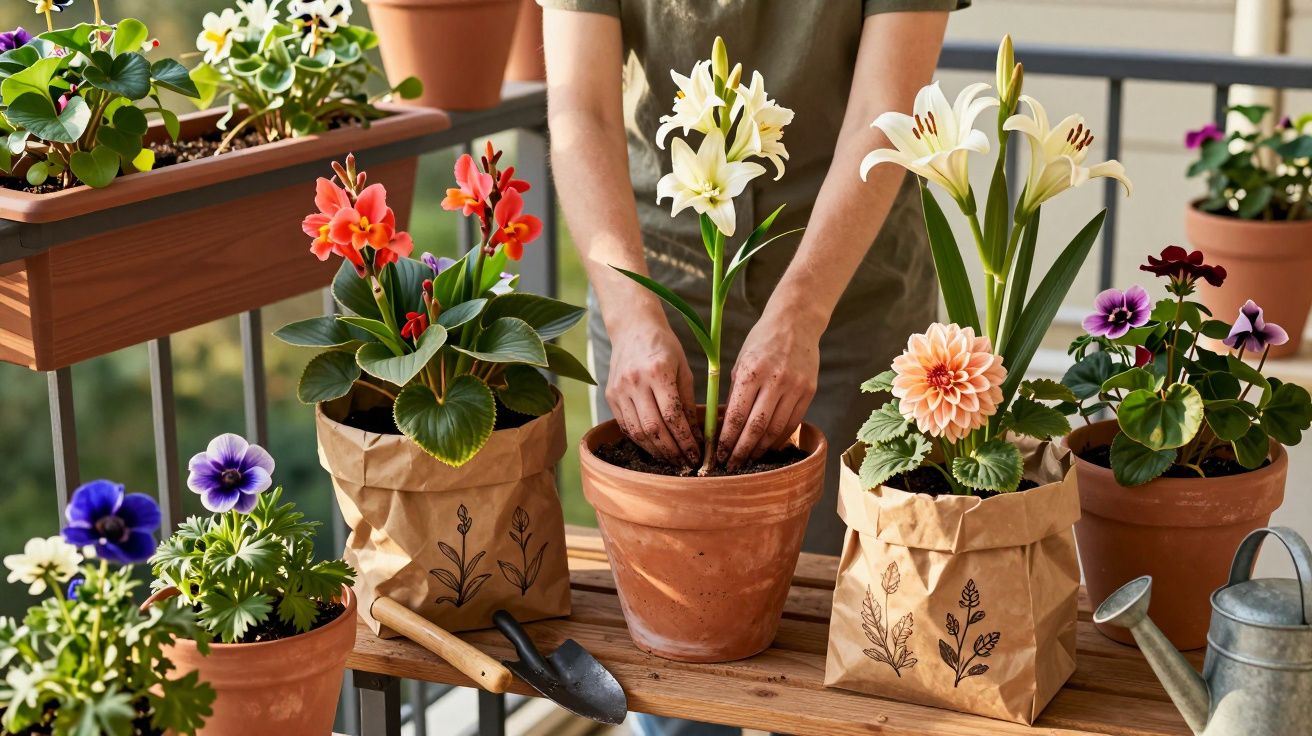
The winter bedding has had its day, borders look bare and window boxes feel a bit bleak. Right now is the moment that decides whether summer will be merely “quite nice” or an all-out riot of colour. Certain flower bulbs and tubers go into the ground in spring and then deliver fresh blooms for months-often returning for years-so you’re not starting from scratch every summer.
Why perennial summer bulbs are the smartest choice right now
When most people hear “bulbs”, they think of tulips or daffodils planted in autumn. For a real show in July and August, though, the heavy lifting is done by a different group: spring-planted bulbs and tubers that build quietly and then hit their stride in summer.
The big advantage: many of these summer bulbs are perennial and-handled properly-will come back for several seasons.
Many have already had their “cold period” while in storage. All they need is loose, well-drained soil. Depending on your region and the risk of frost, the prime planting window runs from the end of February through to the end of May. Miss that window and you give away a lot of flowering potential.
Just as important: water must not sit in the ground over winter. Waterlogging causes bulbs and tubers to rot. In borders, improve drainage with a crumbly soil structure; in pots, always include a drainage layer of gravel or expanded clay pellets.
How to plant spring bulbs for continuous summer flowers
Whether you’re dealing with a bulb, tuber, rhizome or corm, the planting routine is much the same-good news for beginners and anyone who wants quick results.
- Prepare loose, free-draining soil and remove weeds.
- Dig a hole roughly two to three times the bulb’s height.
- Place the bulb with the pointed end facing upwards.
- Backfill with fine soil and firm gently.
- Water thoroughly so the soil settles around the bulb.
For containers, add a base layer of gravel, broken terracotta pieces or expanded clay to let excess water drain away. Many summer bloomers actually perform better in pots, because you can manage warmth and feeding more precisely.
The 10 most important summer bulbs for gardens and balconies
A great display comes from mixing height, colour, scent and flowering time. The ten options below are especially reliable-both in borders and in containers.
Amaryllis for exotic, oversized blooms
Amaryllis, best known as an indoor winter feature, can also be impressive outdoors. Its huge, trumpet-shaped flowers sit on sturdy stems and do best in sunshine and free-draining soil. In a border it adds a hint of tropical glamour; in a pot it quickly becomes a terrace centrepiece.
Anemones for airy drifts of flowers
Anemones spread like a soft carpet, with delicate blooms that flutter in the breeze. They’re ideal for edging beds or filling gaps between perennials. In pots they look particularly natural when several tubers are planted close together.
Tuberous begonias for awkward shady spots
Where little else wants to flower, tuberous begonias step in. They thrive from partial shade to full shade and reward you with abundant, almost nonstop bloom. Plant the tubers into pots or window boxes in spring; in autumn, lift them and store them somewhere frost-free.
Caladiums as foliage stars rather than flower stars
Caladiums are prized less for their flowers and more for their dramatic leaves. Heart-shaped foliage patterned in white, pink, red and green looks almost hand-painted. The tubers are happiest in warm corners or on a sheltered city balcony. For storage, keep them dry and fairly warm-indoors is ideal.
Cannas for a tropical holiday feel
Cannas add real height to planting schemes. With large leaves-sometimes flushed red-and glowing flower spikes, they evoke warmer climates. Give them a sunny border spot or a large container on a roof terrace and they’ll shine as solo performers. In colder areas, lift the rhizomes before the first hard frost and store them somewhere dark and cool.
Crocosmias for fiery colour accents
Crocosmias send up slender, arching stems lined with dozens of small blooms from orange through to scarlet. They suit naturalistic borders, attract bees and butterflies, and are notably tough-especially if protected in winter with a layer of leaves or mulch.
Dahlias - classics that return year after year
Dahlias are often called the queens of late-summer borders. Their flowers range from simple star shapes to perfectly round pompons. Plant the tubers once the risk of frost has passed. If you lift them in autumn and keep them frost-free, you can grow the same plants for many years.
Gladioli for crisp vertical lines and cut flowers
Gladioli bring structure and clarity: their straight, upright spikes sit beautifully among lower plants. By planting fresh corms every two weeks, you can stagger flowering well into late summer. As cut flowers, they last a long time in a vase.
Lilies for scent and elegance
Lilies are among the most classic summer bloomers. Many varieties are strongly scented, making them perfect near seating areas or along paths. The bulbs often stay in the ground for several years, gradually forming larger clumps.
Tuberoses for evening fragrance on the patio
Tuberoses are less common, but a standout for fragrance lovers. Their white blooms release a powerful scent, especially in the evening. Place pots near the patio so you can actually enjoy the perfume. The tubers are not frost hardy, so they need to come indoors in autumn.
Which position suits which bulb?
To get the best out of your plants, match them to light levels and available space. Not every type copes equally well with full sun or shaded corners.
| Plant | Position | Note |
|---|---|---|
| Cannas | Full sun | Large containers or the back of the border |
| Dahlias | Sun to partial shade | Feed regularly and provide supports |
| Tuberous begonias | Partial shade to shade | Ideal for north-facing balconies |
| Caladiums | Bright shade | Not fully rainproof; choose a sheltered spot |
| Gladioli | Sun | Suitable for borders and cutting |
| Lilies | Sun, cool roots | Underplant with groundcovers to shade the base |
Helping perennial summer bulbs through winter
In milder areas, some plants-such as crocosmias or certain lilies-can stay in the ground as long as the soil is loose and not overly wet. A thick mulch of leaves or bark helps protect against frost.
Where winters are harsher, a simple autumn routine pays off: after the first frost, lift the tubers/rhizomes of dahlias, cannas, tuberous begonias, caladiums and tuberoses. Let them dry, remove old foliage, then store them in boxes with a little dry soil or sawdust. Keep them frost-free, dark and well ventilated-such as in a cool cellar.
Low-effort tips for busy gardeners and balcony owners
If time is tight, choose hardy pairings: dahlias with crocosmias in a sunny border, or tuberous begonias with anemones in partial shade. In large pots, lilies combine well with compact summer annuals, giving an instant “full” look from the start.
Another easy win is to mix in a controlled-release fertiliser at planting time so the bulbs have nutrients for weeks. Removing faded flowers regularly encourages fresh buds, turning one flush into a whole season of bloom.
One extra point that saves effort later: label containers and planting spots. Once the foliage dies back, it’s surprisingly easy to forget what went where-especially with stored tubers like dahlias and cannas that you’ll be replanting next spring.
What beginners should know before buying summer bulbs
“Perennial” doesn’t automatically mean a plant can stay in the soil through every winter. In warmer regions with light frosts that’s often fine; in colder areas, you’ll need to help by lifting and storing. If you only have window boxes, you may actually be at an advantage-containers can be moved into a cellar or stairwell with minimal fuss.
It gets more rewarding over time as you build up your own “favourite varieties”. Many garden enthusiasts swap tubers and bulbs with friends, or trial one or two new types each year. That way your collection grows alongside your experience-and summer won’t feel empty at all, even if March still looks bare.




Comments
No comments yet. Be the first to comment!
Leave a Comment