
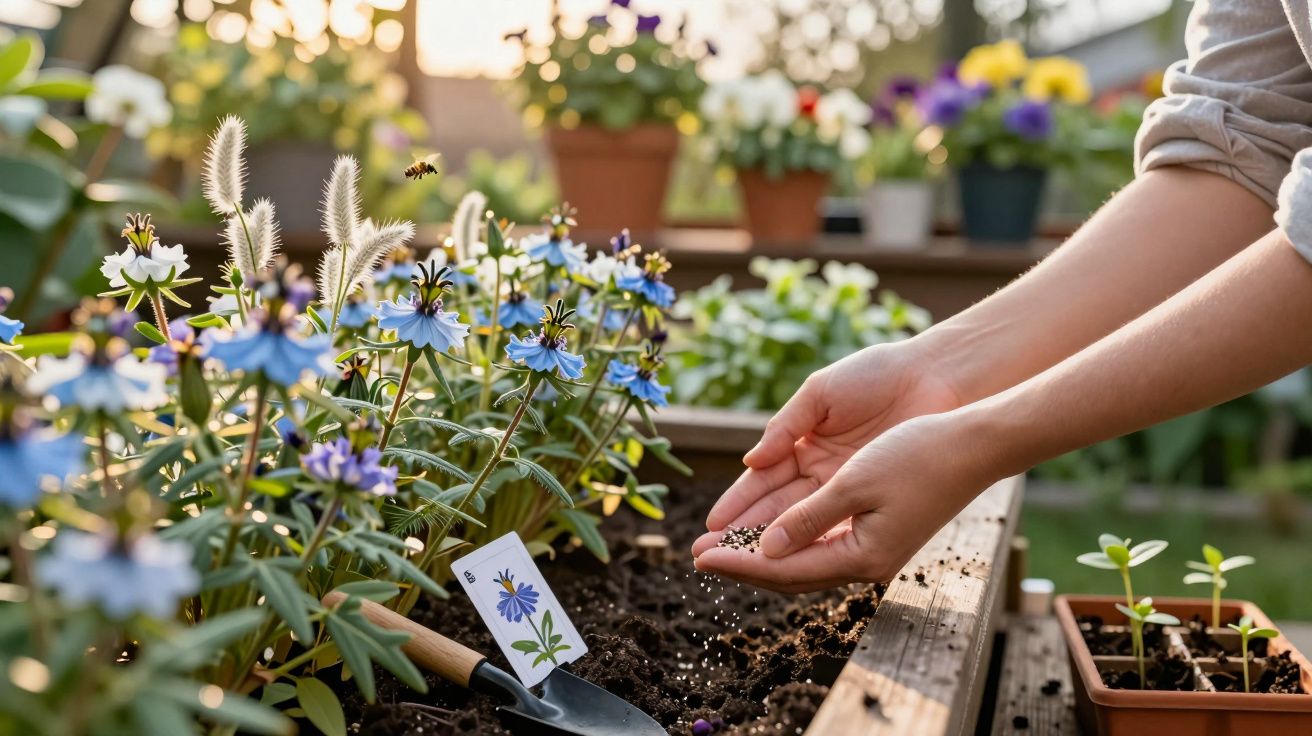
While plenty of hobby gardeners are still staring in confusion at packed seed racks, specialists keep recommending one standout summer flower that can flood borders, pots and even tiny balconies with colour from June to September. If you’re short on time but keen on a long flowering season, this easy-to-sow plant is well worth a closer look.
Why the “feather flower” should be in every garden right now: Nigella (Love-in-a-mist)
We’re talking about Nigella, best known in English as love-in-a-mist. With its fine, almost fern-like foliage and its airy blooms that seem to float, it looks like something lifted from an old cottage garden-yet it’s far tougher and simpler to grow than it appears.
Sown from March to May, Nigella can keep balconies, flower beds and front gardens colourful from June well into autumn with very little effort.
Garden pro Ish, who shares practical tips at @gardening.with.ish, calls Nigella his first pick each spring when it comes to fuss-free summer flowers. The benefits fit perfectly into a busy family routine:
- a long flowering period, roughly June to September
- a robust annual that doesn’t demand complicated care
- suitable for borders, raised beds, containers and narrow edge strips
- popular with bees and other pollinators
- lasts well in a vase for home-cut bouquets
For households that can’t be out in the garden all the time, Nigella offers an excellent effort-to-reward ratio: a single packet of seed often covers many square metres and can provide several vasefuls too.
What makes Nigella so special
At first glance, Nigella looks delicate. Its wispy, thread-like leaves form a green veil, with starry flowers rising through it. Depending on the variety, blooms appear in blue, purple, white or a soft pink.
Most plants grow to around 40–60 cm tall, stay light and open, and won’t smother other perennials-making them ideal for mixed planting schemes.
Colours, shapes and where to use it
Love-in-a-mist isn’t just about the flowers: the decorative seed pods are a big part of its charm. Many gardeners cut them in late summer, dry them, and use them in dried arrangements.
In the garden, Nigella slots into all sorts of settings:
- traditional mixed borders: a relaxed filler between roses and other perennials
- veg beds: among lettuce, cabbage or tomatoes to draw in insects
- pots and planters: in larger containers on a balcony or patio
- front gardens and driveways: a light, flowering edge along paths
Because the plants don’t spread much sideways, they’re easy to “tuck into” existing planting. If you’re faced with a bare gap and aren’t sure what will fit, Nigella is rarely the wrong choice.
How to sow Nigella properly: getting off to the best start
In most areas, the best sowing window is March to May, once the soil is no longer waterlogged and hard frosts are unlikely. Conveniently, Nigella can be direct sown outdoors or started in pots first.
Direct sowing in the ground
If you want the simplest approach, sow straight into the garden:
- Loosen the soil and remove weeds and stones.
- Draw shallow drills or scatter the seed thinly over the surface.
- Cover the seeds lightly with soil or compost, around 0.5–1 cm.
- Water gently so the seed isn’t washed away.
Many experienced gardeners intentionally sow a little more thickly and thin seedlings later. That way you end up with a strong, even display.
Sowing in trays and pots
If you only have a balcony, or your beds aren’t ready yet, you can raise Nigella in trays first:
- Fill a shallow tray or seed pot with loose compost.
- Sprinkle seed generously and dust with a very light covering of compost.
- Place somewhere bright and keep evenly moist (damp, not soaked).
- Transplant later into pots or beds.
Ish notes that Nigella copes well with this method. When planting out, space young plants about 20–30 cm apart so they can branch nicely and become bushier.
Location, soil and care: what Nigella likes
Despite its fine appearance, Nigella is impressively undemanding. Stick to a few basics and you’ll have very little to do over summer.
Choosing the right spot
Nigella thrives in sun. A position with at least 4–5 hours of direct sun each day encourages heavier flowering. It will grow in bright partial shade, but you’ll generally see fewer blooms.
For soil, loose and free-draining is better than heavy and waterlogged. If you have clay soil, mixing in a little sand or fine grit helps improve drainage.
| Factor | What Nigella needs |
|---|---|
| Light | sunny to bright partial shade |
| Soil | loose, free-draining, on the lean side |
| Water | steady moisture, but no waterlogging |
| Nutrients | ordinary garden soil is usually sufficient |
Care during flowering
Once established, the job largely comes down to two things: watering during prolonged dry spells and removing spent blooms.
Cutting off faded flower heads regularly encourages fresh buds-noticeably extending the flowering season.
Many gardeners combine deadheading with picking stems for bouquets, meaning new flowers appear naturally without an extra “job” to remember.
Months of flowers with a few simple tricks
With a couple of straightforward tactics, you can stretch Nigella’s display significantly in a home garden.
Sow in stages
Rather than using all your seed in one go, sow in several batches. If you sow a small amount every 3–4 weeks, you’ll have plants at different stages-creating a staggered, longer-lasting flowering period.
Let it self-seed
After flowering, distinctive seed pods form. If you don’t remove them all, some will drop seed and return on their own. Next spring, young plants often pop up in the same area.
Many gardeners deliberately leave part of the seed pods to enjoy an almost free “Nigella carpet” the following year. If you prefer a tidier look, you can collect seed and sow it exactly where you want next spring.
Nigella as a cut flower and a décor favourite
One major bonus is how well the delicate flowers suit the vase. Specialists report that fresh stems can last up to about 10 days in water, as long as you trim them cleanly and keep the vase out of harsh, direct sunlight.
The dried seed pods have their moment too, adding shape and structure to dried bouquets-especially alongside grasses, lavender or eucalyptus. In that way, a single sowing can brighten both house and garden from early summer well into autumn.
Helpful for bees-and for the family budget
Nigella is one of those plants that attracts insects without dominating the space. Bees and hoverflies feed from the flowers, which can be a valuable contribution-particularly in densely built-up neighbourhoods.
For families who often buy fresh flowers from the supermarket, the cost comparison is simple: one packet of seed is usually cheaper than two ready-made bouquets, yet with smart sowing it can supply cut flowers again and again throughout the summer.
If you’re curious about gardening but don’t have much experience, Nigella is an ideal starting point. It forgives small mistakes, delivers quick wins, and is enjoyable for children too-from sowing, to watching seedlings emerge, to arranging a bunch on the kitchen table.
Planning a fuller display around Nigella
For even more interesting borders, Nigella pairs beautifully with low calendula, airy cosmos or sweetly scented sweet peas. Together they create a lively, slightly wild look that appears far more intricate than the actual level of maintenance would suggest.
Making Nigella work on small balconies and tight spaces
On mini balconies or narrow ledges, choose deeper containers so the compost holds moisture more evenly, and group pots together to reduce how quickly they dry out on warm days. If you’re working with limited room, a few pots of Nigella can still deliver weeks of colour-plus enough stems for small, informal posies indoors.





Comments
No comments yet. Be the first to comment!
Leave a Comment