
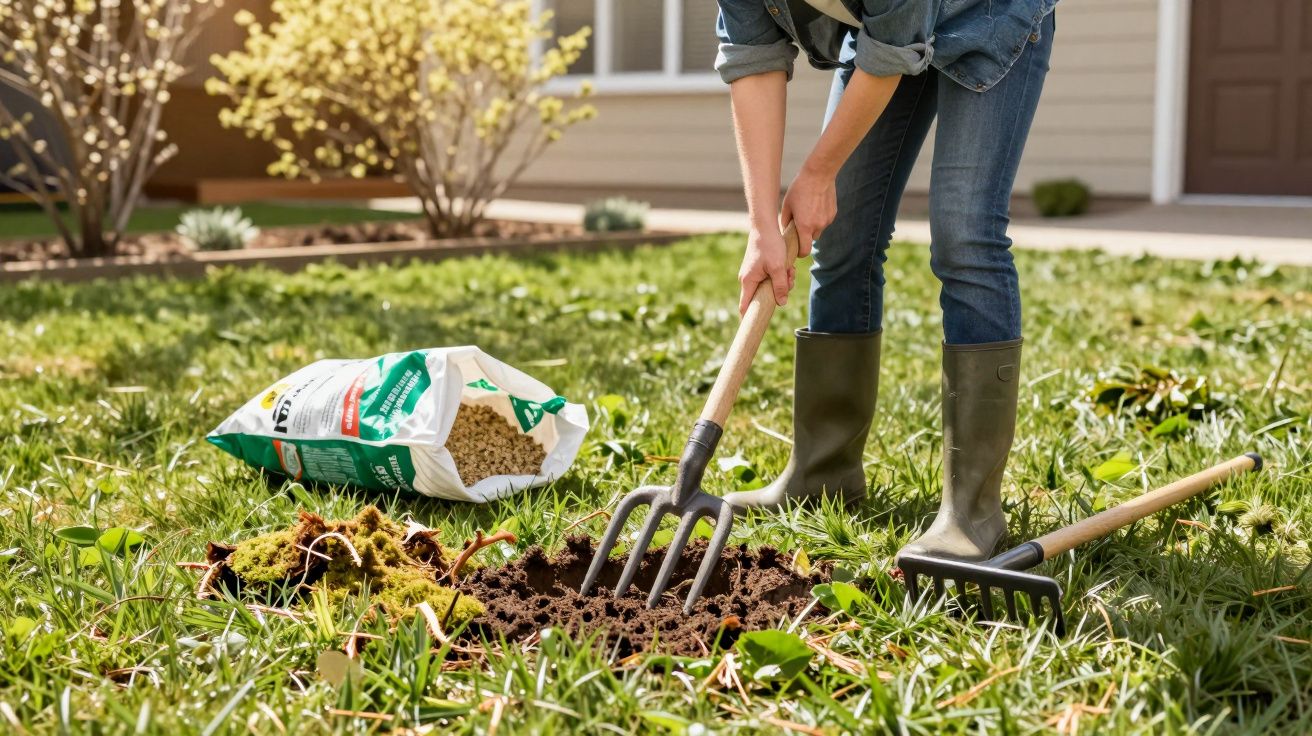
Reaching straight for chemical treatments in spring wastes a huge amount of potential. Lawn professionals focus in March on three simple hands-on jobs that strengthen the soil, push back moss, and help grass grow back noticeably thicker. You can do the lot in one dry afternoon - no specialist kit and no pricey garden-centre remedies required.
Why your lawn is full of moss after winter
After weeks of rain, snow and weak daylight, the ground beneath the lawn changes dramatically. Soil becomes compacted, wet and heavy - perfect conditions for moss and poor conditions for grass.
In reality, moss is less an “enemy” than a warning light. It usually indicates that:
- the soil lacks air (poor aeration)
- water is pooling and not draining away
- too little light reaches the surface, often due to shade from trees or buildings
- the lawn has been heavily used and the ground has been pressed down
Moss in a lawn is basically shouting: “The soil is tired and needs air.” Spreading moss killer tackles the symptom, not the cause.
That is exactly what the simple March routine targets: open up the soil, improve it, then remove the build-up on top. Grass typically responds with fresher, denser growth.
The best timing: late February to mid-March
In milder areas with little frost, you can start this lawn routine in late February. In cooler regions, it’s usually wiser to wait until the first half of March. The condition of the soil matters far more than the calendar.
Look for:
- no persistent frost and soil starting to warm
- ground that is no longer waterlogged, but still easy to work with a spade
- a dry afternoon with no rain forecast
Working on frozen or saturated ground often makes compaction worse. A garden fork will press wet soil tighter rather than loosening it.
Job 1 (March): aeration with a garden fork to help the lawn breathe
The single most important step is aeration. For smaller gardens, a basic garden fork is enough. Powered aerators can help, but they’re not essential.
How to aerate step by step
- Wait for a dry day when the ground isn’t muddy, but also isn’t baked hard.
- Push the tines of the garden fork about 8–10 cm into the soil.
- Gently lever the handle back so the soil cracks slightly - you’re not turning it over.
- Pull the fork out, move forward around 15 cm, and repeat.
Pay extra attention to places where puddles form after rain, or where the ground sounds “solid” when you tap it with the sole of your shoe. These areas are heavily compacted and benefit most from plenty of holes.
Lots of small holes act like air shafts in the soil. Water can drain downwards and oxygen can reach the roots - exactly what a healthy lawn needs.
Job 2: topdressing to fill the holes and improve soil structure
After aeration comes the real transformation: a thin top layer that adds structure and gentle nutrition. Gardeners call this topdressing.
Suitable topdressing mixes
A loose, slightly sandy mix works best. If you can, blend equal parts of:
- sieved garden soil or topsoil
- coarse sand (for example, washed sand)
- mature, sieved compost or well-rotted leaf mould
If you’re missing one component, coarse sand on its own can still be very effective - particularly on heavy clay soils. The key is that the material stays open and allows water to pass through.
How to apply topdressing properly
- Scatter the material generously over the aerated area.
- Use a stiff yard broom or a sturdy rake.
- Brush or rake it in so the holes fill up and only a light veil remains on the grass surface.
The lawn should not disappear under a thick layer. The aim is to fill the cavities and leave a thin organic “blanket” that improves the surface.
A thin topdressing improves structure long-term, boosts drainage, and acts like a gentle starter feed for spring growth.
Job 3: vigorously rake out moss and thatch (scarifying by hand)
Before the lawn properly enters the first mowing season, it needs one final - and decisive - treatment: a firm raking to remove moss and thatch.
Removing moss and lawn thatch
A traditional wire rake or a scarifying rake is usually more than enough for a home lawn. What matters is being willing to work with real pressure.
- Wait until the lawn surface has dried.
- Hold the rake at a slight angle and pull firmly through the grass.
- Work the area once lengthways and once crossways.
- Collect moss, dead grass and thatch and add it to the compost heap.
The lawn may look alarming afterwards: gaps appear, and the surface can look patchy. That is the point. Light and air can now reach the soil, and young shoots have room to spread.
First cuts of the year: mow higher and be patient
Once you’ve done aeration, topdressing and raking, the year’s first mow comes next. This is where many people go wrong by cutting too short.
- Set the mower to a higher setting for the first cut (around 4–5 cm).
- Save lower mowing for later, once the lawn is growing strongly.
- If the lawn is very weak, you can leave the first clippings as a thin layer, provided they’re not long and clumpy.
After this cautious first cut, the lawn can look “bare” for about a week. If you resist the urge to overseed immediately or scarify again, you’ll often be surprised: the grass thickens up and fills in on its own.
A few days of a “March lawn bald patch” often turns into a visibly denser carpet in April and May.
How shade, soil type and wear affect the lawn
These three March jobs work well on most lawns, but every garden responds differently. Three factors are especially important:
| Factor | Effect on the lawn | Sensible response |
|---|---|---|
| Heavy shade | Grass weakens, moss strengthens | Consider light-pruning trees; use a shade-tolerant lawn seed mix |
| Heavy clay soil | Water sits on the surface; compacts quickly | Aerate regularly; increase sand proportion in topdressing |
| Intensive use | Foot traffic, compaction, bare patches | Aerate yearly; choose hard-wearing sports lawn mixes; overseed patchily |
When overseeding helps - and when it’s unnecessary
After the March routine, you’ll quickly see whether the lawn will close up on its own or whether seed is needed. Bare patches larger than the palm of your hand usually benefit from targeted overseeding.
Overseeding method
- Lightly rake the soil and remove remaining thatch.
- Sprinkle lawn seed thinly (match it to use: ornamental, family/play, or sports).
- Cover the seed with a fine layer of soil or sand.
- Keep the area evenly moist for 2–3 weeks.
Small gaps often fill in naturally when the lawn gets enough light, air and nutrients. Aeration, topdressing and raking create the ideal starting point.
Two extra checks that make the March routine even more effective
If moss keeps returning year after year, it’s worth doing two quick, non-chemical checks alongside your March work. First, look at drainage after heavy rain: if water consistently sits for hours, consider improving run-off routes, loosening compacted paths where people walk, or adding a slightly higher sand content to your topdressing over several seasons.
Second, consider a simple soil pH test. Many moss-prone lawns are on the acidic side. If the pH is low, applying an appropriate lime product at the correct time and rate (based on test results) can support grass competitiveness without treating moss as the main problem.
Common spring mistakes - and how to avoid them
Many gardeners run into the same issues each year, even though they’re easy to sidestep:
- mowing too early: weakened blades lose energy when they’re cut back hard
- scarifying too deeply: instead of lifting thatch, you tear into roots
- relying only on fertiliser and moss killer: the soil stays compacted and moss returns quickly
- working on wet soil: every step compresses the ground further
If you stick to the March sequence - aeration → topdressing → raking → a higher first mow - you avoid most of these pitfalls automatically.
Long-term result: a more resilient lawn system
These three March jobs look simple, but they improve the lawn ecosystem at a deeper level. Roots receive more oxygen, soil organisms thrive, and organic material breaks down into humus. Together, that helps the lawn cope far better with heat, dry spells and periods of heavy rain.
Repeat the routine annually and combine it with moderate feeding, an appropriate mowing height and occasional overseeding, and you’ll rarely need drastic measures or chemicals - while enjoying a dense, largely moss-free lawn from spring through to autumn.





Comments
No comments yet. Be the first to comment!
Leave a Comment