
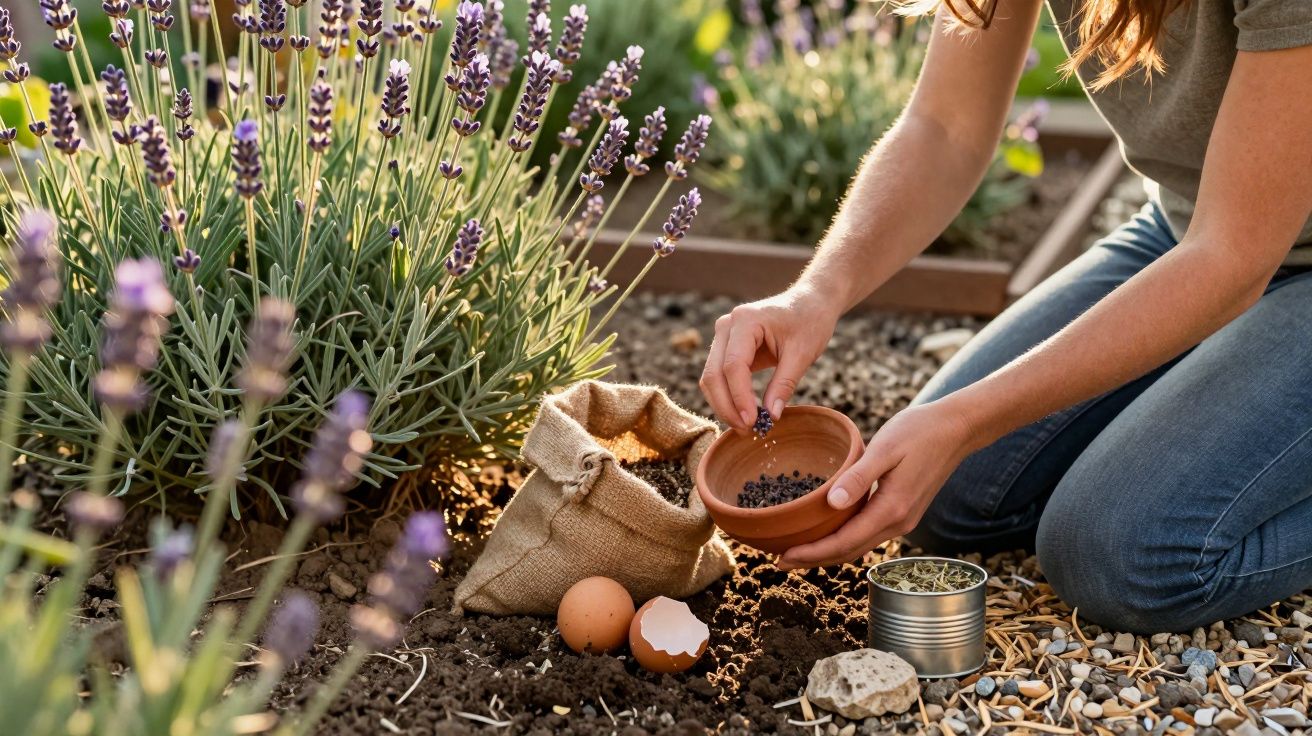
Many home gardeners ask themselves the same question every year: the lavender sits in full sun, it gets watered regularly, and yet by summer it looks more miserable than magnificent. The real reason is rarely found in July. It usually starts months earlier-down in the soil, and in the way the plant is fed in spring.
Lavender care in spring: why it only tolerates a light boost
Lavender originates from the sparse, stony landscapes of the Mediterranean. There it grows in lean, dry ground, with intense sunlight and virtually no added fertiliser. Those are still the conditions the plant is adapted to.
Put lavender into very nutrient-rich garden soil and you often lose flowers rather than gain them. The shrub typically shifts its effort into leafy growth, the stems become soft, and the flower spikes stay short. It may look lush and green, but it turns reluctant to bloom.
Lavender thrives in poor, free-draining, slightly chalky soils-and it generally needs just one, very precisely timed nutrient boost in spring.
The key care window is March to April. During this period, lavender builds the energy reserves and flower structures that later show up in July. Feed thoughtfully at this stage and you can influence the summer display almost like turning a dimmer switch.
The spring secret: a three-part blend of natural ingredients
Rather than using powerful all-purpose feeds, many experienced growers favour a simple but targeted combination of three everyday garden materials. Think of it as gentle conditioning instead of a high-octane booster.
The three natural elements at a glance
- Mature compost – provides mild nutrients and improves soil structure.
- Garden lime or dolomitic lime – raises lime content and nudges the pH towards lavender’s preferred range.
- A phosphorus source (for example, bonemeal) – supports root development and the formation of flower buds.
A classic “French-style” approach mixes mature compost, bonemeal, and garden lime in equal parts in a small bucket. The result is a soft organic–mineral blend that doesn’t “overfeed” lavender, but prepares it specifically for summer flowering.
Compost + a phosphorus source + lime-this is usually all lavender needs in spring to properly switch on in July.
How the blend works-simple, but effective
Compost contributes modest, broad-spectrum nutrition while encouraging soil life and improving aeration. For lavender, the structural benefit matters most: better texture means water drains away more readily, so the roots are less likely to sit in damp conditions.
Bonemeal (or another phosphorus-forward, slow-release source) helps build stronger roots and supports flower bud development. Phosphorus is less visibly dramatic than nitrogen, but it often pays off directly in midsummer through heavier flowering.
Lime gently lifts the pH. Many UK garden soils-especially in wetter areas-become more acidic over time. Lavender can respond with weaker growth and paler flowers. A small lime component in the spring blend helps move the soil towards conditions this Mediterranean plant copes with far better.
How to apply the three-part blend correctly in the ground
The method is straightforward; the timing is what makes it work. In much of the UK, the ideal window is typically mid-March to mid-April, depending on how quickly spring warms up where you live.
Step-by-step guide for lavender planted in the ground
- Wait until the hardest frosts have passed, but before the plant is in strong new growth.
- Fill a small bucket with equal parts mature compost, lime, and bonemeal.
- For a young lavender plant, scatter about one small handful around the root zone.
- For older, established plants, use two small handfuls.
- Gently work the mix into the top few centimetres of soil without exposing roots.
- Water lightly afterwards so the nutrients move into the root area.
Feed only once-then leave the lavender alone for the rest of the season. The plant can run on that spring ration well into midsummer.
Lavender in pots: less is more
Containers impose stricter limits. Compost volume is small, and nutrients concentrate quickly, so dosing needs to be restrained.
| Pot size | Spring amount of the mix |
|---|---|
| Up to 20 cm diameter | 1–2 teaspoons |
| 20–30 cm diameter | 1–2 tablespoons |
| Over 30 cm diameter | Maximum one small handful |
Potting compost for lavender should always be very free-draining. Adding a mineral portion-such as sharp sand or fine grit-greatly reduces the risk of waterlogging. In pots in particular, lavender is harmed by excess water far sooner than by a brief spell of dryness.
Common mistakes that ruin the July bloom
Lavender often struggles not because of cold, but because of well-meant care that doesn’t suit the plant.
Too many nutrients, not enough structure
- High-nitrogen fertilisers (for example, standard lawn feed) push leafy growth and can make plants age and collapse sooner.
- Fresh farmyard manure is far too strong for lavender and tends to keep the soil overly moist.
- Thick mulches of bark or grass clippings trap moisture around the roots and cool the soil.
These missteps commonly lead to long, soft stems that flop over, plus fewer-and often paler-flower spikes. The plant also loses its trademark compact shape.
The wrong site and soil conditions
Lavender wants sun from morning to evening. A part-shaded spot noticeably reduces flowering. Heavy, clay-rich soils are just as problematic because they hold water for a long time. If your garden has this type of ground, work in grit, sharp sand, or fine gravel before planting-or grow lavender in slightly raised, stony beds so excess water can drain away.
Full sun, dry lime-rich soil, and a single spring feed: in these conditions lavender can deliver its maximum flowering power.
What you’ll notice in July when the spring feed was right
If you apply the three-part blend of compost, a phosphorus source, and lime in spring, the payoff often arrives later-yet it tends to be obvious. Flower spikes are usually longer, more densely packed, and more richly coloured. The whole plant often looks tighter, sturdier, and more evenly formed.
There is another welcome side effect: bees, bumblebees, and butterflies treat well-flowering lavender as a beacon. More flowers means more nectar and pollen. Plant a few shrubs together and a patio or front garden border can quickly become a busy hub for pollinators.
Practical soil scenarios: how different gardens respond
If you are unsure whether your soil suits lavender, these common situations can help you judge what to do.
- Sandy soil in a dry area: close to ideal. A minimal amount of compost plus a little lime in spring is often enough to noticeably strengthen the July display.
- Heavy loam or clay: improve drainage first by mixing in grit or sharp sand. Only when water can run through properly does the spring feed deliver a real benefit.
- Strongly acidic soil (common on heathland): lime becomes especially important here. If you are uncertain, use a simple pH test kit from a garden centre to check your soil.
Risks and limits of natural feeding
Even natural ingredients can cause issues if the dose is wrong. Too much lime can shift pH so far that other plants nearby begin to suffer. In mixed borders, it can help to keep lavender’s root area slightly separate, or to apply some of the lime directly into the planting hole rather than across the entire bed.
Bonemeal can, on occasion, attract dogs or foxes that dig in the soil. If that is a concern, choose an alternative slow-release, phosphorus-rich fertiliser and work it carefully into the soil instead of leaving it on the surface.
Two extra essentials that support July flowering (without extra fertiliser)
Feeding is only one piece of the puzzle. Pruning and airflow strongly influence how well lavender performs, particularly in the UK’s changeable summers. After flowering, trim back the spent flower stems and lightly shape the plant, but avoid cutting into old, woody growth that may not reshoot. A neat, open shape helps keep the centre from becoming dense and reduces the risk of die-back.
Watering habits matter too. Lavender prefers a soak-and-dry pattern rather than frequent light watering. Once established in the ground, it typically needs little help except during prolonged dry spells. In containers, water thoroughly when the compost has dried noticeably, then allow it to drain completely-never leave pots standing in water.
How lavender feeding can benefit the wider garden
The combination of a light compost addition and a touch of lime doesn’t only help lavender. It can make the soil looser and better aerated overall. Nearby sun-loving herbs with similar preferences-such as rosemary, thyme, and sage-often benefit from the improved drainage and slightly higher pH as well.
Develop your beds in this direction over time and you end up with a robust, drought-tolerant planting style that copes far better with heatwaves. In that kind of scheme, lavender becomes a useful indicator: if it flowers abundantly in July and its scent carries across the garden, the soil has likely found the right balance of leanness, lime, and well-timed spring feeding.





Comments
No comments yet. Be the first to comment!
Leave a Comment