
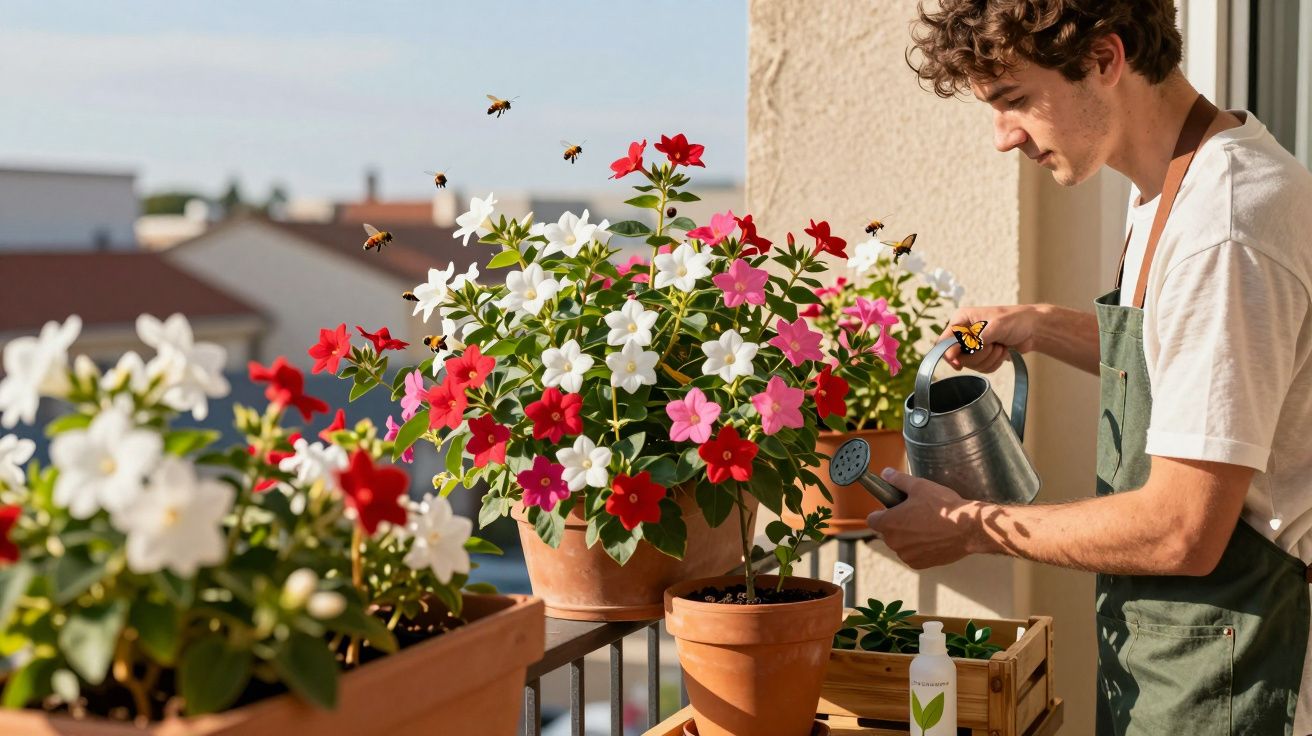
Many home gardeners greet spring with the same blend of excitement and pressure. You want a lively, colourful corner buzzing with insects, but you don’t want to spend every weekend with a watering can, secateurs and bottles of plant sprays. The good news is that a pollinator-friendly, high-impact outdoor space can often be achieved with just one smartly chosen plant.
The spring surprise: pentas, the “little stars” for low-effort gardeners
The star of the show is a plant that still flies under the radar in many gardens: pentas-botanically Pentas lanceolata, commonly known in English as the Egyptian star flower. The name fits: the plant forms rounded flower heads made up of countless star-shaped blooms. Depending on the variety, they glow in rich red, hot pink, white, violet, soft pink, or even yellow.
Pentas originate from tropical regions, where they grow as perennial shrubs. In the UK and much of northern Europe, they’re best treated as a lush summer bloomer. They form dense, bushy plants roughly 60–90 cm tall and can stay covered in flowers almost continuously right through to autumn.
Pentas are like a filling station for insects: nectar-rich, long-flowering and surprisingly easy to look after.
That high nectar content makes pentas a dream choice for anyone who wants to support bees, bumblebees, butterflies and other pollinators-without having to design a complicated perennial border.
Why pentas are so irresistible to pollinators
The starry flowers have small tubular centres where plenty of nectar collects. For many pollinator species, it’s the equivalent of an all-you-can-eat buffet. In particular, these benefit:
- Honeybees and solitary bees, which need reliable food sources over a long season
- Bumblebees, drawn to densely packed flower clusters
- Butterflies, whose long proboscis is well suited to tubular blooms
In warmer climates, pentas can flower for much of the year. In UK conditions, the main flush typically begins in late spring and keeps going until the first proper frosts. That late-season performance matters: in late summer and early autumn, when many other flowers are fading, pentas often continue to provide generous forage.
Perfect for small spaces: pentas in pots and window boxes
Because pentas naturally form compact shrubs and don’t require deep rooting, they’re ideal for pots, containers and window boxes. If all you have is a balcony rail, two to three strong plants can still make a noticeable difference-visually and ecologically.
The basics are straightforward:
- Position: as sunny as possible, ideally with some shelter from strong winds
- Compost: a loose, humus-rich, well-draining mix (a high-quality peat-free compost works well)
- Container: must have drainage holes so water can escape
Place pentas on a balcony and you get bright flower “pom-poms” plus a living display window for insects-brilliant for families with children, too.
Planting pentas in the garden: set them up for a flying start
In borders, pentas are happiest where it’s warm, bright and not waterlogged. Well-prepared garden soil is fine as long as it holds some moisture yet drains well and never becomes boggy.
For a consistently easy, tidy result, this approach works well:
- Plant outside only after the risk of night frosts has passed (often late May in much of the UK).
- Keep 30–40 cm between plants to allow airflow.
- Mix in a little organic slow-release feed or compost at planting time.
- Water in thoroughly once planted so roots settle in quickly.
- Add a thin layer of mulch or bark chippings around the root zone to help retain moisture.
With that preparation, plants establish quickly and fill gaps in the border. Within a few weeks you get a bold block of colour that often looks more intentional and “kept” than a busy mixed planting-perfect if you like a more organised style.
Everyday care for Pentas lanceolata: minimal effort, maximum flower power
Through summer, pentas usually need far less attention than their flower display suggests. Three points matter most:
- Water regularly, but don’t overdo it: aim for evenly moist compost/soil, never permanently wet. In pots, water thoroughly and then allow the surface to dry slightly rather than giving frequent small splashes.
- Feed now and then: a liquid fertiliser for flowering plants every 3–4 weeks keeps blooms coming. In borders, a good start feed plus a top-up in mid-summer is often enough.
- Remove faded flower heads: snipping off spent clusters encourages fresh buds, keeps plants compact and prompts new domes of flowers.
A quick tidy with the secateurs every week or two can pay off in an almost continuous blaze of colour.
Extra note (added): keeping plants healthy without harsh chemicals
Pentas are generally robust, but container plants can occasionally attract aphids or whitefly, especially in warm, sheltered spots. If you spot sticky leaves or insects gathering on new growth, try rinsing the plant with water, pinching off heavily affected tips, and encouraging natural predators (ladybirds and lacewings). Good spacing and ventilation also reduce the chance of problems-particularly if you’re overwintering plants indoors.
Frost-tender, not doomed: how to overwinter pentas
The one real drawback is a lack of frost tolerance. In mild climates pentas may survive outdoors, but across most of the UK they will be damaged or killed by freezing temperatures if left in the ground.
You have two practical options:
- Treat them as seasonal bedding: buy fresh plants in spring and clear them away in autumn-similar to pelargoniums or petunias. For many people, this is the easiest route.
- Overwinter in a pot: move containers indoors before the first frost to a bright, cool place such as a conservatory or a frost-free porch with a window. Water far less, stop feeding, then put them back outside in spring and prune back if needed.
If you have one or two standout plants you’d like to keep, overwintering in pots is worth it. Over time you can build bigger, sturdier specimens that often flower even more strongly the following summer.
Extra note (added): when to bring them back outside
To avoid a setback, reintroduce overwintered pentas gradually. Start with a few hours outside on mild days (out of strong wind), then increase exposure over a week or two. This “hardening off” reduces leaf scorch and shock, especially after a bright indoor winter spot.
Combine colours smartly: ideas for balconies and borders
One of pentas’ biggest strengths is its wide colour range, which makes it easy to create specific moods:
| Colour direction | Effect | Good partner plants |
|---|---|---|
| Red and pink | bold, energetic | with yellow marigolds (Tagetes), zinnias or yellow Bidens |
| White | calm, elegant | with lavender, blue Salvia varieties or blue lobelia |
| Violet and soft pink | romantic, playful | with verbena, heliotrope or silver-leaved plants |
If your priority is pollinators, mix pentas with other nectar-rich plants such as lavender, catmint (Nepeta), Salvia, coneflower (Echinacea) or sedum. This extends flowering across the season and offers different flower shapes to suit different insects.
Why now is the right moment
Many insect species are under pressure from shrinking habitats and a lack of food sources. That’s why gardens and balconies matter more than they did just a few years ago. Even a small number of insect-friendly plants per home can noticeably help stretch the availability of nectar and pollen through the season.
Pentas score twice: they provide plentiful nectar and they look so good that they often win over sceptics. If you normally reach for low-maintenance “flowering décor” plants that do little for wildlife, pentas offer an alternative that is barely more work-yet far more valuable ecologically.
Practical tip: how to choose good pentas in the garden centre
When buying, it pays to check plant quality. A healthy pot of pentas should have:
- strong green, slightly glossy leaves with no spotting
- some open flowers, plus plenty of unopened buds waiting
- a root ball that is neither bone-dry nor waterlogged
- no white fluff (a sign of pests) and no sticky leaves
If you’re buying several, choose plants that are slightly different sizes. The final display looks more natural than a row of identical heights.
One more bonus: more life right outside your door
Beyond the looks, pentas often change how a space feels. Where they grow, there’s almost constant movement-butterflies fluttering, bumblebees humming, bees landing and lifting off. Many people find they notice their surroundings more and pop outside more often simply to watch.
That may be the plant’s biggest, most underrated impact: with modest cost, minimal effort and a few containers, you can create a small, colourful mini-habitat that benefits pollinators-and the people living alongside them.




Comments
No comments yet. Be the first to comment!
Leave a Comment